Author Archives: Jeremy Smith

Jeremy Smith's avatar

About Jeremy Smith

I’m currently organising a programme of talks and workshops on a part-time freelance basis for Emerson College in Forest Row, East Sussex in the UK. I’ve worked in various branches of education since 1986, in both employed and self-employed roles. Before that, I was the arts and entertainments officer for one of the London boroughs and before that I trained as an actor at the Mountview Theatre School. I’ve had an interest in the work of Rudolf Steiner for many years and have spent several years as the education facilitator in a Steiner school. I’ve also been the trustee of another Steiner school, have worked as a member of the executive group of the Steiner Waldorf Schools Fellowship and have been a lay inspector for Ofsted inspections of Steiner schools. Biodynamic agriculture, another of Steiner’s initiatives, is a huge interest of mine and I’m a shareholder of the Tablehurst & Plaw Hatch Farms Co-op in Forest Row, East Sussex. I’m also an executive director of Tablehurst Farm and have a part-time role as registered manager for the farm's care home.

Israel, King Claudius and the Massacre in Gaza

It’s not often that the anthropopper gets so angered by something he hears on the news that he shouts at the radio and then stalks out of the room, saying: “I refuse to listen to any more of these obscene lies.”  Yet this is what happened a few days earlier when I heard Nikki Haley, the U.S. Ambassador to the United Nations, praising the Israeli Defence Force for its “restraint” after they had killed 62 demonstrators and shot nearly 2,500 more in the face of protests in Gaza a day earlier.

Haley went on to tell the UN Security Council that “”No country in this chamber would act with more restraint than Israel has. In fact, the record of several countries here today suggest that they would be less restrained.” She then blamed Hamas, the Palestinian Sunni-Islamist fundamentalist organisation which runs Gaza, for backing the demonstrations and encouraging protesters over loudspeakers to rush the border fence with Israel throughout the Gaza strip. She said it was Hamas — not Israel — that was making the “lives of Palestinians miserable.” Her comments came at the same time as the U.S. blocked a Security Council resolution calling for a probe into the violence.

These demonstrators from Gaza were marking the 70thanniversary of what they call the Nakba Day (‘Day of Catastrophe’), on 15th May. For the Palestinians it is an annual day of commemoration of the displacement of Palestinian Arabs that preceded and followed the Israeli Declaration of Independence in 1948.  Perhaps there are not many people today who are aware that the state of Israel was founded in 1948 on the forcible expulsion or displacement of over 700,000 Palestinians from their lands, to make way for 70,000 Jews. The Holocaust during World War II had given urgency to the question of a Jewish state, an idea first supported by the British government in the Balfour Declaration of 1917 – but in 1948 these Palestinians had next to no involvement with the persecution of the Jews and saw no reason why they should vacate their homes for the founders of the new state. They were driven from their homes during the Zionist ethnic cleansing of Palestine in 1948 for the simple reason that they were not Jewish.

As the Israeli historian Benny Morris has pointed out: “There could be no Jewish state with a large and hostile Arab minority in its midst.  There would be no such state.  It would not be able to exist. A Jewish state would not have come into being without the uprooting of 700,000 Palestinians . . . [therefore] it was necessary to uproot them”.  They have been denied the right to return to their homes ever since for the same reason: they are not Jewish, and their presence would upset the carefully-engineered demographic tables maintained by the state to preserve its tenuous claim to an exclusively Jewish identity.  The maintenance of that demographic balance and the suspension of the Palestinians’ political and human rights are inseparable from one another: the one enables, produces and requires the other.

So let us acknowledge it: the founding of Israel was the consequence of an historic injustice to the people already living there. Put yourself in the shoes of the Palestinians: would you have agreed to leave your home and go into exile to accommodate a group that came from outside the borders of your country, claiming a homeland lost two thousand years ago?

Now, you don’t need to tell me that Hamas is a terrorist organisation – I know. I think it likely that many of the 30,000 – 40,000 demonstrators attempting to break through the border fence were strongly encouraged to be there by Hamas. I’m also of the view that the Palestinian Arabs have been very badly served by their fractious and divided leaders (Hamas in Gaza and Fatah in the West Bank), who for decades have vowed to sweep Israel and the Jews back into the sea and whose only response to Israeli violence is more violence and virulent anti-Semitism. This Arab violence against Palestinian Jews long predated the birth of Israel, and prior to the 1948 war, it was usually one-sided. What’s more, I doubt that many of today’s Palestinian Arabs would be prepared to accept any size of Jewish state, however small, even if it was only based on Tel Aviv and the Jewish quarter of Jerusalem. It has been their violence, divided leadership and utter intransigence that has contributed so much to the present impasse. So please don’t tell me that there is long-standing hatred and terrorist activity on the Arab side – I’m fully aware of it.

My point is this: Israel was also born out of terrorism – witness the activities of the Stern Gang and Irgun, and their assassinations of Lord Moyne (the British Resident Minister in the Middle East) and Count Folke Bernadotte (the United Nations mediator), and many hundreds of others. Two of Israel’s most prominent statesmen, Yitzak Shamir and Menachem Begin, were terrorists. Later on, Jewish terrorists became legitimate leaders, presidents and prime ministers; and Begin and Shamir are among these.

According to Henry Siegman (president emeritus of the US/Middle East Project and a former senior fellow at the Council on Foreign Relations) writing in the London Review of Books, the leading political players in the U.S. “are probably unaware of, or simply refuse to know about, the extent to which terrorism and war crimes marked the creation of Israel. Those who are told about this history dismiss it as a fabrication. What they deny or ignore is that these charges have been fully documented not only by historians, including Israeli ones, but by Israel’s own military. The point of recognising this history is not to justify terrorism by either Israelis or Palestinians, but to acknowledge the outrageous double standard that has been applied to the two parties and has undermined the possibility of a peace accord. Without knowing that history, it is difficult, if not impossible, to understand the extent to which Israeli propaganda has succeeded in shaping a narrative about the creation of Israel that presents the Palestinians who were brutally expelled from their homes as the aggressors and the Jews as their victims. Without that history, it is impossible to understand the outrage Palestinians feel over having been portrayed as the bad guys for so long.”

Siegman goes on to say: “The point is not that Israelis have no right to defend themselves against Palestinian terrorism, but that the Israeli argument that there is no moral equivalence between Palestinian terrorism and Israeli preventive and retaliatory violence is deeply flawed. The relevant comparison is between the way the Jews acted during their struggle for statehood – not after they achieved it – and the way Palestinians,   still very much in the midst of their hopeless struggle for statehood, are acting now. It is also flawed because you cannot condemn terrorism if you do not offer people under occupation a credible route towards achieving viable statehood through non-violent means. That is something Israel has never offered the Palestinians.”

Israel, through the support of the U.S., currently has the whip hand over the Palestinian Arabs and uses it ruthlessly.  In Gaza, the Israeli army snipers were using high velocity bullets that left huge exit wounds, guaranteed to maim those who were not killed outright. Agreed, 30,000 to 40,000 demonstrators hurling rocks, Molotov cocktails, and attempting to lay explosive charges at the security fence and even to fly burning kites into Israel to set fields on fire, must have been a truly intimidating sight. But even so – why did the soldiers use live ammunition? Why did they not use tear gas, or rubber bullets? The Israeli death toll as a result of the storming of the Gaza fence was precisely nil.

Imagine yourself in the position of the ordinary people forced to live in Gaza. Gaza is 25 miles long, and between 3.7 to 7.5 miles wide, with a total area of 141 square miles. With a population of 1.85 million Palestinians, it ranks as the third most populated polity in the world. Since 2006 and the election of a Hamas government, it has been under an Israeli and U.S.-led international economic and political boycott. Due to the Israeli and Egyptian border closures and the Israeli sea and air blockade, the population is not free to leave or enter the Gaza Strip, nor allowed to freely import or export goods, or to fish freely in the sea. An extensive Israeli buffer zone and border fence within the Strip renders much land off-limits to Gaza’s Palestinians – it was this border fence that the Palestinian Arabs were attempting to breach. The population is expected to increase to 2.1 million in 2020. By that time, Gaza may be rendered unliveable, if present trends continue, with 95% of its water being unfit to drink, and electricity available for only a few hours each day, with access to food, medicines, and fuel also severely limited. Unemployment is 44%, rising to 60% for those between the ages of 15 and 29.

The UN’s leading human rights official, Mr Zeid Ra’ad al-Hussein, has said of the Gazans: “They are, in essence, caged in a toxic slum from birth to death; deprived of dignity; dehumanised by the Israeli authorities to such a point it appears officials do not even consider that these men and women have a right, as well as every reason, to protest.”  Well, how would you feel in their situation?  Would you not want to attack the border fence of your prison?

The demographer Arnon Soffer of Haifa University is the architect of the current isolation of Gaza.  In 2004, he advised the government of Ariel Sharon to withdraw Israeli forces from within Gaza, seal the territory off from the outside world, and simply shoot anyone who tries to break out.  “When 2.5 million people live in a closed-off Gaza, it’s going to be a human catastrophe,” Soffer told an interviewer in the Jerusalem Post (11 November 2004); “Those people will become even bigger animals than they are today, with the aid of an insane fundamentalist Islam.  The pressure at the border will be awful.  It’s going to be a terrible war.  So, if we want to remain alive, we will have to kill and kill and kill.  All day, every day.”  He added that “the only thing that concerns me is how to ensure that the boys and men who are going to have to do the killing will be able to return home to their families and be normal human beings.” In response to the current killing and shooting, a senior member of the Israeli parliament, Avi Dichter, reassured his audience on live television that they need not be unduly concerned.  Their army, he told them, “has enough bullets for everyone.”

Israel’s minister of defence, Avigdor Lieberman, has said that there are “no innocent people” in Hamas-run Gaza.  Lieberman’s opinion of the value of the lives of Palestinians mirrors the view expressed by Ayelet Shaked, Israel’s minister of justice. A year before her appointment in 2015, Shaked posted on her Facebook page an article by Uri Elitzur, a settler leader, in which he said that Israel should target not only militants but the “mothers of the martyrs, who send them to hell with flowers and kisses. They should follow their sons, nothing would be more just. They should go, as should the physical homes in which the snakes were raised. Otherwise more little snakes will be raised there.”

And yet Jews are the genetic brothers and sisters of Palestinians, Syrians and Lebanese, and they all share a common genetic lineage that stretches back thousands of years. That is why this massacre and maiming of Palestinians in May 2018 by the Israeli Defence Force reminds me ineluctably of King Claudius in Shakespeare’s Hamlet. Claudius, you may remember, murdered his brother the King of Denmark (father of Prince Hamlet), seized his throne, and to add insult to injury, then seduced and married Hamlet’s mother, his late brother’s Queen. Claudius tries to pray to ease his conscience, but finds that he cannot:

O, my offence is rank, it smells to heaven;
It hath the primal eldest curse upon’t,
A brother’s murder. Pray can I not,
Though inclination be as sharp as will:
My stronger guilt defeats my strong intent;
And, like a man to double business bound,
I stand in pause where I shall first begin,
And both neglect. What if this cursed hand
Were thicker than itself with brother’s blood,
Is there not rain enough in the sweet heavens
To wash it white as snow? Whereto serves mercy
But to confront the visage of offence?
And what’s in prayer but this two-fold force,
To be forestalled ere we come to fall,
Or pardon’d being down? Then I’ll look up;
My fault is past. But, O, what form of prayer
Can serve my turn? ‘Forgive me my foul murder’?
That cannot be; since I am still possess’d
Of those effects for which I did the murder, My crown, mine own ambition and my queen.

(Hamlet, Act 3 sc. 3, lines 36 to 55)

At the same time as young Israeli soldiers were slaughtering Gazans at the border, just fifty miles away a glittering champagne reception was taking place in Jerusalem to celebrate the opening of Donald Trump’s new embassy there.  Trump’s daughter, Ivanka, and her husband Jared Kushner, welcomed the Israeli prime minister, Binyamin Netanyahu and two Christian Zionist pastors, John Hagee and Robert Jeffress, to the embassy to lead the guests in prayer. Commenting on this, the former presidential candidate Mitt Romney quoted Jeffress as saying “you can’t be saved by being a Jew,”  “Mormonism is a heresy from the pit of hell” and Islam no better. Such a bigot, continued Romney (who is himself a Mormon) “should not be giving the prayer that opens the United States Embassy in Jerusalem”.

And yet he was. And Netanyahu was bowing his head and mouthing his prayers alongside him, obviously less troubled by conscience than was King Claudius. It seems strange to me that the Israelis are willing to take any amount of anti-Semitism from preachers who believe paradise will not come until the Jews accept the punishment of a jealous God and convert to Christianity. Presumably they are prepared to live with the insulting beliefs of the Christian Zionists, just as long as the result is that the Americans do nothing to prevent Israeli settlers from taking over more and more land in the West Bank.

For let us be clear: it is American domestic politics that is sustaining and prolonging the present situation in Israel, Gaza and the West Bank. Why did Trump take the controversial decision to move the U.S. embassy from Tel Aviv to Jerusalem, an action which has received worldwide condemnation? He did of course give his repeated backing to Israel during the presidential campaign in 2016 and needed to fulfil the expectations of his voters. In turn, this leads to a further question: why would Trump voters be especially supportive of the Jerusalem policy? The answer to this almost certainly lies with a type of evangelical Christianity, ie Christian Zionism, and one of its most fervent supporters, Trump’s vice-president Mike Pence.

As Professor Paul Rogers of Bradford University has written:

“To talk about the power of the “Jewish lobby” in the United States is actually misleading, when the more correctly described “Israel lobby” wields far more electoral power thanks to its reinforcement by Christian Zionists. They number tens of millions of voters compared with the far smaller American Jewish population who, in any case, will tend more often to vote for the Democratic Party. Nearly a third of Americans, around 100 million people, lean towards evangelical Christianity and of these perhaps a third embrace the Christian Zionist perspective. This is passionate in its support for Israel.”

To quote the evangelical preacher Jerry Falwell: “The Bible Belt is Israel’s safety net in the United States.” The consequence is that no Israeli government, as long as it has U.S. support, will uproot the illegal Jewish settlements on Palestinian land, which already make a contiguous, autonomous and independent Palestinian state impossible. It is obvious that the “two state solution” is finished – American political calculations and Israeli settlement building in the West Bank have ensured its death. This whole issue also comes at a time when what is becoming known as the “Israel Victory” political caucus is gathering influence in Congress. This caucus, which has plenty of support in Netanyahu’s government, takes a simple, binary view: Israel has won, the Palestinians have lost – and everyone had better get used to living in a Jewish state. Such hubris may cause anger and dismay among many Jews in the United States and Western Europe, but it is a driving force within the Trump administration. Perhaps most significant of all, it fits almost perfectly into the Christian Zionist vision. Almost one in three Americans believes Israel was given to the Jews by God as a prelude to the Battle of Armageddon and Jesus’ Second Coming.

This belief that Jesus Christ will come for a second time in a physical body has been said by Rudolf Steiner to be a complete misunderstanding, and that Christ will not return in physical incarnation. This was done once and for all time, and will not be repeated. But according to Steiner, Christ is here already, in the etheric body of the Earth. From the 1930s onwards, Rudolf Steiner said, the Christ would be visible in etheric form to those who have been able to develop their powers of spiritual perception. At first the Christ will be seen by only a few, but during the next three thousand years more and more people will be able to have this experience.

In a series of lectures given in 1917 (the same year as the Balfour Declaration), Rudolf Steiner also said the following:

“I have described the task for mankind in the fifth post-Atlantean epoch (i.e. our present age) as that of coming to terms with evil as an impulse in world-evolution. We have spoken of what this means from various points of view. The indispensable need is that the forces which manifest as evil when they appear in the wrong place shall be overcome by human endeavour during this epoch, so that men can begin to make out of these forces something favourable for the whole future of cosmic evolution. Hence the task of this fifth post-Atlantean epoch is quite specially arduous, and many temptations lie ahead. And as the powers of evil make their appearance in gradual stages, men are naturally much more inclined to give way to them in all realms instead of battling to place what appears as evil in the service of the rightful course of world-development. This, nevertheless, is what has to come about — up to a certain point evil must be turned to good ends.”

The fundamental objection to everything that is happening to the Palestinian Arabs is that it goes against the second part of the Balfour Declaration, that “nothing shall be done which may prejudice the civil and religious rights of existing non-Jewish communities in Palestine, or the rights and political status enjoyed by Jews in any other country.”  So how, to use Steiner’s expression, can the evil in Israel and Palestine be turned to good ends?

The two-state solution died because Netanyahu and previous Israeli governments were determined to kill it, Palestinian terrorism and violence encouraged the Israelis in that determination and American and other Western politicians who could have prevented its demise lacked the resolve and moral courage to do so. Therefore the only solution to this conflict that still remains is a pluralist, non-theocratic and secular state of Israel-Palestine, with a limited “right of return” and a settlement that gives Palestinian Arabs and Jewish Israelis the same, equal civil rights in ONE state.

Unless the almost inconceivable happens and the U.S. turns off the money and weapons taps, movement from Israel towards a one-state solution will never begin – one cannot really blame them when they have experienced so many Palestinian bombings and atrocities. So any progress now will be entirely dependent upon the Palestinians being able to find a leader cut from the same cloth as a Mahatma Gandhi or a Martin Luther King, a truly inspirational visionary who will lead them away from violent hatred and towards a campaign of non-violent civil disobedience.

Such a campaign is likely to cost Palestinian lives, but rather like Gandhi’s Salt March, it could be much more effective than violence in changing world public opinion. American journalist Webb Miller was on the scene of the Salt March and he later described what followed. “Suddenly,” he wrote, “at a word of command, scores of native police rushed upon the advancing marchers and rained blows on their heads…Not one of the marchers even raised an arm to fend off the blows. They went down like ten-pins.” Miller’s harrowing account of the beatings circulated widely in the international media, and was even read aloud in the U.S. Congress. Winston Churchill—no great fan of Gandhi—would later admit that the protests and their aftermath had “inflicted such humiliation and defiance as has not been known since the British first trod the soil of India.”

If the Palestinians were to adopt similarly peaceful means of protest, it would alert the whole world to what Israel has become under the influence of an ethno-nationalist, right-wing version of Zionism, transformed by successive Israeli governments into something that its nineteenth and twentieth century founders never intended. Public revulsion in the United States at scenes of Israeli brutalisation of Arabs could lead to the decline in America of the influence of Christian Zionism – and then there would ultimately be an opportunity for a one-state solution to emerge. The Israelis should remember that hubris is always followed by nemesis.

Let King Claudius have the last word, in his realisation that, however we may twist things to avoid justice while here in physical incarnation, ultimately we cannot escape our karma. God is not mocked.

“In the corrupted currents of this world

Offence’s gilded hand may shove by justice,

And oft ‘tis seen the wicked prize itself

Buys out the law. But ‘tis not so above,

There is no shuffling, there the action lies

In his true nature, and we ourselves compelled

Even to the teeth and forehead of our faults

To give in evidence.”

(Hamlet, Act 3, sc. 3, lines 57 to 64)
133 Comments

Filed under Christian Zionism, Donald Trump, Israel & Palestine, Zionism

Old Age & Anthroposophy – Part 2

In the first part of this two-part posting, we looked at old age from an anthroposophical perspective, and noted the physical and mental development processes that go on as we age, in both their negative and positive aspects. All of us want to have a fulfilling old age despite the infirmities and diminishing independence associated with the last phases of life. This implies that, alongside looking after our physical welfare, we also need to be able to express our soul and spiritual capacities.

The elderly are growing closer to the end of their physical lives and the process of excarnation (preparing to leave the body), just as, at the opposite end of the age spectrum, young children are involved in the process of incarnation, of grounding themselves here on Earth in their bodies. With young children, up until the age of 9 or 10, there is still a part of them in the spiritual world. With old people, the gradual loosening of the astral body (Soul) and the ego (Self) from the physical body as they move closer towards death, means that part of their being is also surrounded by spiritual forces.

In a lecture given just over 100 years ago, Rudolf Steiner spelt out the importance of developing our inner life in old age:

“In future, human beings, the older they get, will need to take in spiritual impulses if they want to be able to grow younger and younger and really develop their inner life. If they do so, they may have grey hair and wrinkles and all kinds of infirmities, but they will get younger and younger, for their souls are taking in impulses which they will take with them through the gate of death. People who relate only to the body cannot grow younger, for their souls will share in everything the body experiences. Of course, it will not be possible to change the habit of going grey, but it is possible for a grey head to gain a young soul from the wellsprings of spiritual life.”

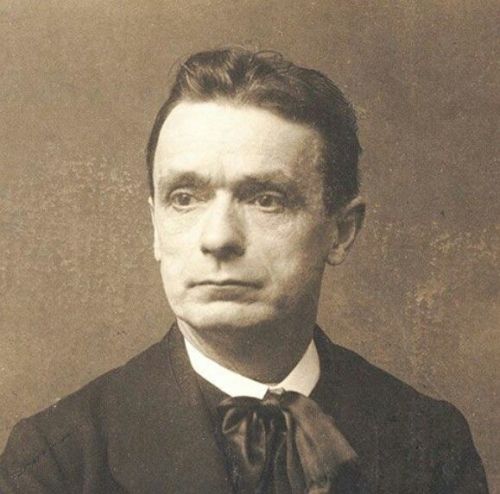
steiner 1917

Rudolf Steiner in 1917

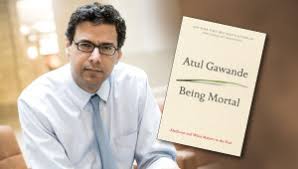
One important question for us today is: how can we, both as individuals and as society, help to create the circumstances in which old people can flourish? In Part 1, I quoted from Dr Atul Gawande’s book Being Mortal, in which he deplores the emphasis on the medicalisation of old age, and calls for a recognition that old people need to live in situations in which there is an understanding for the aspects of soul and spirit as well as physical care.  He describes the uninspiring nature of many nursing and old people’s homes as being “the consequence of a society that faces the final phase of the human life cycle by trying not to think about it. We end up with institutions that address any number of societal goals – from freeing up hospital beds to taking burdens off families’ hands to coping with poverty among the elderly – but never the goal that matters to the people who reside in them: how to make life worth living when we’re weak and frail and can’t fend for ourselves any more.”

atul gawande via austinup.org

Dr. Atul Gawande (photo via austinup.org)

In the UK, it is clear that we would be unwise to look to national or local government for any measures that might improve the situation. According to the Kings Fund, since 2009/10, local authority spending in England on social care for older people fell in real terms by 17% but in the same period, the number of older people aged over 85 and over rose by almost 9%. It has also become much more difficult for people to get publicly funded social care; numbers have fallen by 25 per cent since 2009 (from 1.7 million to 1.3 million) and in 90 per cent of local authorities only those with ‘substantial’ or ‘critical’ needs will get publicly funded services.

The Local Government Association (LGA) “State of the Nation 2017” report on Adult Social Care Funding recorded that local authorities will have managed £16bn reductions in funding from national government between 2010 and 2020.  Further, the LGA estimates a funding gap of £5.8bn by 2020, of which £1bn is for adult social care. Consequences of underfunding include:

  • An ever more fragile market;
  • Growing unmet need;
  • Further strain on informal carers;
  • Less investment in prevention:
  • Continued pressure on an already overworked care workforce;
  • Decreased ability of social care to help mitigate pressures on the National Health Service (NHS).

In the continuing absence of believable, long-term proposals from national government, it is clear that the State is losing the ability to provide well for the care needs of its growing older population. A new impulse is needed, one that not only puts more control into the hands of individuals as they address the challenges of later life, but also extends autonomy as far as possible and reduces pressure on our NHS.

What kind of living arrangements would support older people and help them to make the most of the last phase of their physical lives? Many initiatives have demonstrated the power of civil society to make a difference. A recent article by George Monbiot in The Guardian has shown that a community of like-minded people with shared needs and aspirations can successfully create the conditions for an extended and fulfilling old age.  The article describes how, over three years, the town of Frome in Somerset has initiated a collective project to combat isolation and has seen a dramatic 17% fall in hospital admissions as a result, while Somerset as a whole by contrast saw a rise of 29% in the same period.

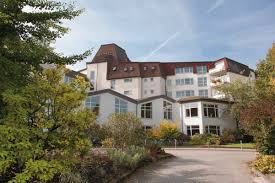
There are many examples from Europe and the USA of groups that have formally or informally come together for companionship and mutual support.  Atul Gawande, in the book mentioned above, cites instances of older people living with full control of their lives, not “being done to” – whether it be by the medicalisation of old age or well-intentioned strangers – but “doing” their lives for themselves. An example of such a facility is the Nikolaus Cusanus Haus in Stuttgart-Birkach, Germany, recently visited by a dear friend of mine, who was much impressed by it; and which describes itself as “a community in old-age that is based on freedom and independence and is inspired by the anthroposophical image of man.”

nikolaus cusanus haus.de

The Nikolaus Cusanus Haus in Stuttgart

Another idea which, with its emphasis on community, has the potential to make a real difference to the lives of older people, is co-housing. The concept originated in Denmark in the 1960s and quickly spread across Europe, the UK, US and Australasia. In co-housing schemes, people have their own fully self-contained house or flat but there are also shared facilities, usually in a Common House (a little like a community centre), which they can use 24/7 as much or as little as they wish.  Most co-housing communities will cook and eat together one day or more a week.  The typical Common House will thus contain a commercial style kitchen, a dining area, a large multi-purpose room (meetings, drama, film, parties, yoga, etc), a workshop for repairs, a laundry and a quiet room.  Co-housing is a cost-effective, fulfilling lifestyle for all ages but particularly suited to older people as it makes isolation virtually impossible.  Balancing this is the ability to participate as much or as little as people choose, allowing them to strike their own balance between community and privacy. UK examples of co-housing include Springhill in Stroud, Laughton Lodge in Lewes, Forgebank in Lancaster, LILAC in Leeds and the Threshold Centre in Gillingham, Dorset.

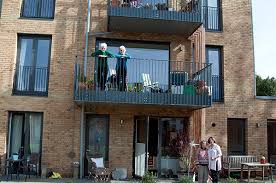
A good example of how co-housing can make a difference is OWCH (Older Women’s’ Co-Housing) in Barnet, North London. OWCH is a group of women over fifty who have struggled against the odds to create their own community in a new, purpose-built block of flats. As an alternative to living alone, they have created a senior co-housing community which is enriching the last years of many older women, and reducing pressures on local health and care services. What OWCH demonstrates is that a group from a variety of backgrounds and cultures, with ages ranging from early 50’s to late 80’s, who are all very different, with their own particular interests, family connections and work – (some of them are still working) – or health difficulties or disabilities, can nevertheless create the circumstances to keep themselves as self-dependent and active as possible as they get older.

owch.org.uk

OWCH (Older Women’s Co-Housing) in Barnet, North London

A similar aspiration is now seeking to come to expression at Emerson College, an independent adult education college in East Sussex, based on the principles of anthroposophy. Emerson College Trust, St Anthony’s Trust and the Anthroposophical Society in Sussex have joined forces to provide a co-housing scheme for older people at Pixton House in the heart of the Emerson College campus.  The examples mentioned above show the value that such a place could have in the quality of care, nutrition, social and cultural life provided to older people.

cropped-pixton-house-1

Pixton House at Emerson College

What we are calling the Pixton Third Age (P3A) Project will consist of the renovation, refurbishment and extension of Pixton House, a Grade 2 listed early 19th century mansion house, so as to create around 20 self-contained apartments for older people, together with some shared facilities.  The intention is that residents will be able to participate fully in their own Pixton community but also in the wider cultural life of the College, partially formalised into what is called the Emerson Living & Learning Community. Residents will be encouraged to contribute as much as possible to the wider community, sharing their skills and experience for the benefit of all ages. This project will give opportunities for inter-generational meetings and mutual support on the Emerson campus. The facility will be owned and run by an independent trust to include the residents, and in collaboration with Emerson College.

Even at this early stage, several people (individuals and couples) have expressed an interest in coming to live at Pixton. An architect, project manager, quantity surveyor and planning consultant are currently being appointed to take us to the point where a planning application can be submitted to Wealden District Council. We anticipate that apartments should be ready for occupation by late 2020, and over the coming months we will be bringing together prospective residents with the architect and project group in order to discuss the design and accommodation details that will best meet the needs of older people.

pixton third age

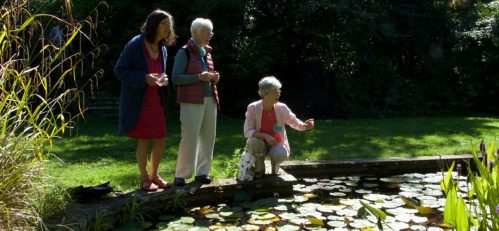
The Lily Pond on the South Lawn at Pixton.

It seems likely that the values for which co-housing stands – privacy combined with active community, resident control and autonomy –are sought after by a far wider group of the older population than is currently familiar with the term “co-housing.” The combination of community, looking out for one another and self-governance holds an appeal for what one might call the younger generation of older people, for whom outmoded models of social care no longer seem relevant or desirable. People like to be active in their own care whenever possible, and still wish to be able to contribute and feel needed, rather than to be the passive recipients of care that is “done” to them.

Of course, care from other people will be needed at times, although P3A will be a co-housing scheme rather than a registered care home. Many elderly people are no longer in situations where, for example, they regularly receive touch in a caring way. Their spouse and close friends or family may have already passed on or be in a depleted health situation. The warm, gentle, caring touch of a massage or other therapy can be a source of light and encouragement in an elderly person’s life. The provision of care as and when required, supplied by those experienced in anthroposophical therapies and medicines, will be an important component of the services available to P3A residents, and we are in the process of assembling a team of carers and anthroposophical nurses so that this can happen.

As an aside, I’ve recently read an interview between Emanuel Zeylmans (author of the 4-volume “Who Was Ita Wegman?”) and Wolfgang Weirauch, in which they discuss what Steiner would have done with the insurance money after the burning-down of the first Goetheanum, if he had been asked for his advice by the 15-member building association who controlled it:

“EZ: Of course there is no point in speculating what Steiner would have done with this money. But there is a problem connected with it, for insurance sums consist of money which does not derive from people who affirm anthroposophy. At today’s rate we are talking, after all, of a sum amounting to between seventy and one hundred million Swiss Francs. From all that I have read of Steiner’s views on the nature of money, I am fairly sure that he would not have used this sum for rebuilding the new Goetheanum. I think it is far more likely that he would have put it into other projects that would also have had real relevance for our present times.

WW: What kind of things do you mean?

EZ: In Dornach there was, for instance, no provision whatsoever for the elderly and I can easily imagine that he might, first, have set up a home for all those who needed it. He might also have been able to realise his dream of building a clinic behind the Goetheanum. In my documented research, I published proof that Steiner had planned a clinic on the orchard meadow behind the Goetheanum – a one hundred bed hospital in fact. In other words, he would have transformed the money by using it for another purpose. That is the important thing – to redeem money. This is only one example of how an intrinsically deeply creative person like Rudolf Steiner could have used the money. This would probably have led to quite a new sort of set-up in Dornach, through which he would then have received donations to rebuild the Goetheanum.”

To me, this exchange is deeply meaningful in the light of our own intentions for Pixton, both in terms of provision of accommodation for the elderly and also for provision of anthroposophical care. It indicates to me that our instincts are on the right lines and that by doing what we are doing, it will lead in ways we can’t yet identify to the unfolding of Emerson College’s future direction.  I hope it will also seem significant to you! If you would like to add your own support, one very tangible way would be to contribute to the funds currently being raised to support the preparatory work towards a planning application. You can do this online via the St. Anthony’s Trust website here. Thank you.


67 Comments

Filed under Co-Housing, Emerson College UK, Old Age, Ageing, Elderly People

Rudolf Steiner on The Meaning of Easter

(…) “We keep Easter, the festival of Resurrection, but in our materialistic outlook we have long ago ceased caring whether or not we have a real understanding of the Resurrection. We set ourselves at enmity with the truth and we try to find all manner of ingenious ways of accepting the cosmic jest — for indeed it would be, or rather it is a jest that man should keep the festival of the Resurrection and at the same time put his whole faith in modern science which obviously can never make appeal to such a Resurrection. Materialism and the keeping of Easter — these are two things that cannot possibly belong together; they cannot possibly exist side by side. And the materialism of modern theology — that too is incompatible with the Easter festival. (…)

The only possible way in these days for man to unite a right feeling with Easter is for him to direct his thought in this connection to the world-catastrophe of his own time. For in very deed a world-catastrophe is upon us. I do not mean merely the catastrophe that happened in the recent years of the war, but I refer to that world-catastrophe which consists in the fact that men have lost all idea of the connection of the earthly with that which is beyond the earth. The time has come when man must realise with full and clear consciousness that super-sensible knowledge has now to arise out of the grave of the materialistic outlook. For together with super-sensible knowledge will arise the knowledge of Christ Jesus. In point of fact, man has no other symbol that fits the Easter festival than this — that mankind has brought upon itself the doom of being crucified upon the cross of its own materialism. But man must do something himself before there arises from the grave of human materialism all that can come from super-sensible knowledge.

The very striving after super-sensible knowledge is itself an Easter deed, it is something which gives man the right once more to keep Easter. Look up to the full moon and feel how the full moon is connected with man in its phenomena, and how the reflection of the sun is connected with the moon, and then meditate on the need today to go in search of a true self-knowledge which can show forth man as a reflection of the super-sensible. If man knows himself to be a reflection of the super-sensible, if he recognises how he is formed and constituted out of the super-sensible, then he will also find the way to come to the super-sensible. At bottom, it is arrogance and pride that find expression in the materialistic view of the world. It is human pride, manifesting in a strange way! Man does not want to be a reflection of the divine and spiritual, he wants to be merely the highest of the animals. There he is the highest. But the point is, among what sort of beings is he the highest? This pride leads man to recognise nothing beyond himself. If the natural scientific outlook on the world were to be true to itself, it would have the mission of impressing this fact again and again upon man: You are the highest of all the beings of which you can form an idea. The ultimate consequences of the point of view that sets out to be strictly scientific, are such as to make a man turn pale when they show him on what kind of moral groundwork they are based — all unconscious though he may be of it. The truth is, we are today living in a time when Christ Jesus is being crucified in a very special sense. He is being put to death in the field of knowledge. And until men come to see how the present way of knowledge, clinging as it does to the senses and to them alone, is nothing but a grave of knowledge out of which a resurrection must take place — until they see this, they will not be able to lift themselves up to experiences in thought and feeling that partake of a true Easter character.

This is the thought that we should carry in our hearts and minds today. We still have with us the tradition of an Easter festival that is supposed to be celebrated on the first Sunday after the first full moon of spring. The tradition we have, but the right to celebrate such a festival — that we have not, who live in present-day civilisation.

How can we acquire this right again? We must take the thought of Christ Jesus lying in the grave, of Christ Jesus Who at Easter time vanquishes the stone that has been rolled over His grave — we must take this thought and unite it with the other thought which I have indicated. For the soul of man should feel the purely external, mechanistic knowledge like a tombstone rolled upon him; and he must exert himself to overcome the pressure of this knowledge, he must find the possibility, not to make confession of his faith in the words: ‘Not I, but the fully developed animal in me,’ but to have the right to say: ‘Not I, but Christ in me.’ ”


This extract comes from the lecture given on April 2nd1920 in Dornach.

With thanks to James Stewart and the invaluable Rudolf Steiner Archive.


8 Comments

Filed under Easter

Old Age and Anthroposophy – Part I

According to a recent report in the Daily Telegraph, old age does not now begin until one is 74 years old. For the anthropopper, that means he still has a few more years of late middle age until cheeky young whippersnappers can legitimately call him old. But that doesn’t mean that he hasn’t already begun to think about what it means to be old and how to prepare for it.

The experience of others hasn’t always been encouraging. Throughout the centuries, old age has held terrors for those approaching it. Here, for example, is the French poet, Pierre de Ronsard (1524 – 1585):

Ma douce jouvence est passée

Ma première force est cassée

J’ai la dent noire et le chef blanc

Mes nerfs sont dissous et mes veines

Tant j’ai le corps froid ne sont pleines

Que d’une eau rousse au lieu de sang


J’ai la tête toute étourdie

De trop d’ans et de maladies

De tous côtés le soin me mord

Et soit que j’aille ou que je tarde

Toujours après moi je regarde

Si je verrai venir la mort.


(Trans.)

My sweet youth has passed

My former strength is broken

My teeth are black and my hair is white

My nerves have gone and the veins

In my cold body feel as though they’re full of

Thin red water rather than blood.


My head is hare-brained now

After too many years and illnesses.

On all sides cares come up to bite me

And, whether I go forward or hang back,

Always I look behind me

To see if death is coming.


Poor Ronsard was only 61 when death came to claim him. But his poem lives on and has been superbly set to music by the composer Jacques Leguerney; you can hear it sung here by the baritone Bruno Laplante.

In more recent times, the Hollywood actress Bette Davis (1908 – 1989) was quoted as saying: “Old age ain’t no place for sissies.” She suffered much illness towards the end of her life and was speaking from bitter experience. The author Philip Roth put it even more strongly, in his novel Everyman: “Old age is not a battle. Old age is a massacre.”

As we age, our bodies become denser, drier, more fragile and start to lose flexibility. We become aware that that our vital functions don’t work as well as they used to do. Blood vessels, joints, the muscle and valves of the heart and even the lungs pick up substantial deposits of calcium and turn stiff. Our hair doesn’t grow as much as when we were younger, and ageing symptoms become more visible. Our strength diminishes, our mobility is reduced, we feel fatigue more rapidly. Sight and hearing begin to fail. Alongside these physical changes, our memory can become undependable and our mind may work more confusedly.

This reduction in our physical and mental powers can also involve us in further unhappy consequences. We retire from our job, and if we have not been able to build up savings or a personal pension, our income becomes so much reduced that we may find ourselves living at little more than subsistence level on a state pension. And yet worse things can happen during this period. We may lose our life-companion; our children might move away or forget us; our friends die off. We can become isolated and lonely.

And then there is a big change: it may come through a sudden medical emergency or it may be a long, slow decline, but there is an unquestionable, inescapable crisis awaiting us in the business of living. The ebbing of the life forces means that the daily chores of shopping, cooking meals, cleaning and physical hygiene become ever more strenuous until one reaches the stage where one cannot do it anymore and neglect begins to creep in. We are leaving behind what has been the normal, natural self-dependence of the main part of our adult life and entering upon the dependence on other people that basically characterises old age. One can see why Bette Davis concluded that old age was no place for sissies.

This all sounds quite grim, and can indeed be so. But what it leaves out are the soul and spiritual qualities of the human being. From an anthroposophical perspective, old age – like childhood, youth and adulthood – is a phase of life in which certain developmental processes take place. Old age and early childhood can be compared. The spiritual being of the child still only surrounds and does not yet penetrate the physical body, and because of this we feel the child is near to the spiritual world from which it recently came. This is part of the reason for the feeling of protectiveness which it draws out in us. In elderly people the spiritual forces are withdrawing from the physical body and also surround it, so that old people, too, are near to the spiritual world to which they will soon return. In both children and old people we can see a certain helplessness and clumsiness because they have not yet, or have no longer, the power in their limbs possessed by the fully incarnated adult. Yet though the bodily forces diminish in old age, there are still positive developments to discover as we prepare for excarnation.

Looking at the life forces in old age, one can see that, as they become freer from predominantly physical tasks, they can be used in the service of further development of thinking. The famous Japanese painter Hokkaido declared that everything he did before he was 73 was quite worthless. Titian painted his most powerful works when he was almost 100. Verdi composed Falstaff – his last, and one of his best operas – as he was approaching the age of 80. It seems likely that they were able to do these things because, with increasing age, the path that leads inwards progresses on and on, while what is going on in the outside world becomes less important and everyday events become less interesting. As we age, greater insights arise concerning the big questions of life and a new understanding emerges as to what is essential, and what no longer matters.

The wisdom which comes to many people with old age can also be of benefit to younger people. A good example of this is the tribute written here for the late Nick Thomas by a pupil. Such wisdom in the third and last phase of our life can be seen as the “fruit” of having lived consciously, while continuing to work on oneself and cultivating an active inner life. But a fruit also contains the seeds, which is actually what is happening to us in old age: we are developing desires and motives for a new life, with the intent to find balance for the past chapters.

Neither we as individuals nor society as a whole are very good at providing the circumstances in which these more positive aspects of old age can come to fruition. There is a kind of transitional stage, which for most people is likely to be somewhere between the ages of 75 – 85. Before this stage most people are still independent, while beyond it most are either partially or totally dependent on help. We are reluctant to prepare ourselves for this gradual or sudden loss of independence. Perhaps we are not very realistic about assessing our position, or perhaps the idea of anything less than the complete independence we have got used to during our adult life is intolerable. But gradually, (and there are of course a few exceptional cases of people who can manage on their own into their late 80s or even 90s), for most of us a mild or total dependence on others comes about. All this can be regarded as an expression of the fact that in old age the astral body (Soul) is becoming loosened from the physical body and the ego (Self) is gradually withdrawing from the earthly realm. *

As our ability to be independent fades, we look to others for help. Such help was traditionally supplied by the family, but that is becoming unusual in today’s social conditions. Usually what happens is that we go into a care home or a nursing home. The prosperity of society in the West has enabled even the poor to expect such homes to provide nutritious meals, professional health services, physical therapy, bingo and a lounge with a television on at all times. These homes have eased old age for millions of people and made proper care and safety a norm to an extent that would have been unimaginable a few generations ago. Yet, still, most of us consider modern old age homes to be frightening, desolate and undesirable places in which to spend the last phase of our lives. We need and desire something better.

According to Dr Atul Gawande, in his book Being Mortal, in which he deplores the emphasis on the medicalisation of old age, “this is the consequence of a society that faces the final phase of the human life cycle by trying not to think about it. We end up with institutions that address any number of societal goals – from freeing up hospital beds to taking burdens off families’ hands to coping with poverty among the elderly – but never the goal that matters to the people who reside in them: how to make life worth living when we’re weak and frail and can’t fend for ourselves any more.”

We can and should do better than this. It should be a matter of the greatest importance that old people are supported by a community in which there lives an understanding for the aspects of soul and spirit as well as physical care. Maybe old people do not need more care-giving, but greater understanding for the role of old age and its mission. The homes in which old people live should be centres of culture, with lectures, musical evenings, creative courses and opportunities for the residents themselves to contribute their own gifts. We all need a purpose, and a sense of being needed – and there should also be opportunities for inter-generational contacts from which both young and old can benefit.

In the second part of this post, I will write about some encouraging examples of such communities, including one which is being planned for Emerson College in the UK.


* Rudolf Steiner’s view of the human being includes the idea that each of us has four bodies (the physical, and three non-physical “bodies”: the etheric, or life body, the astral body or Soul and a fourth one, called the ego or Self. The etheric body is essentially an energy body that contains and forms the physical. It is this etheric body which maintains the physical body’s form until death. The astral body (Soul) provides us with awareness and self-awareness, our emotions and our feelings and intentions. The ego or Self is the immortal and inalienable core of a human being, which goes with us from one incarnation to the next. There are another three bodies in potential – the spirit self, the life spirit and spirit man – which are to come to full development in later stages of human evolution.

18 Comments

Filed under Old Age, Ageing, Elderly People

Anthroposophy and the Twilight of Culture

A regular correspondent to this blog, Steve Hale from the USA, has forwarded to me an article which appeared in the British communist daily newspaper, the Morning Star, on December 7th 2017. The article, under the byline of one Peter Frost, highlights events at the Rudolf Steiner School, Kings Langley (RSSKL), which has been threatened with de-registration by Ofsted.

Ofsted (the Office for Standards in Education, Children’s Services and Skills) is the non-ministerial government department in England which inspects and regulates schools, including independent schools. The de-registration of a school is a serious matter, because it means in effect that it is no longer lawful to run that school. RSSKL is currently appealing against the de-registration verdict of Ofsted, citing the drastic changes it has put in place to deal with the shortcomings identified by the Ofsted inspectors. The final verdict is not yet in but we shall no doubt hear before too long as to whether the school has done enough to cause Ofsted to withdraw its de-registration order.

I worked at RSSKL up until 2014 and know some of the people concerned. I don’t wish to add any comment about that school’s particular difficulties, except that I very much hope they can turn the situation around. They have strong support from their parent and pupil bodies, which should stand them in good stead if the school is able to get past this immediate crisis. But the RSSKL problems, although in an extreme form, are emblematic of the problems that many other anthroposophical institutions are experiencing nowadays. Let us quote Peter Selg here:

“…it is quite obvious that most of the anthroposophic institutions (…) including Waldorf schools and curative education homes, and also individual clinics and one anthroposophic medicine producer, are currently facing existential crises. And these crises are not primarily or exclusively financial in nature, but concern their spiritual substance and inner identity, their spirit and what they see as their task; that is, their unique contribution to our culture. Many anthroposophic institutions have hardly any anthroposophists left working in them any longer, or even people who have a real interest in anthroposophy, or who work on the basis of the anthroposophic understanding of the human being. It cannot be ignored that many places have only retained the name that bears such promise, without being able or wanting to honour the expectations associated with it – a situation that leads to the misrepresentation of facts, and in reality damages the standing of anthroposophy.” 1

To return to the Morning Star article, the author lists not only Waldorf education but all the other topics employed by critics to attack Rudolf Steiner and anthroposophy. There is nothing original in what he says but I encourage you to read the article for yourself, so as to get the full flavour.

There are all sorts of comments one could make about this. Frost gets some of the details wrong, and I would bet that he has never actually read any Steiner for himself, relying instead on the extensive online criticism of Steiner and Waldorf for the main thrust of his attack. One might add that communists have never liked Steiner, right from the time when he was lecturing to the workers at the Berlin Workers’ School and refused to amend his lectures to suit the party line. Indeed, Steiner was very scathing about both Lenin and Trotsky, whom he described as “the gravediggers of modern civilisation, of whom it may be said that, if their rule continues too long, even in a few places, it will signify the death of modern civilisation and must of necessity lead to the destruction of all the attainments of modern civilisation.” 2 Steiner was of course equally scathing about the Nazis.

But in a way, all this is beside the point. The critics hurl their accusations and the anthroposophists, on the whole, do nothing about it. Thus the critics make all the running in the online debate, and so it is their views which largely influence public perceptions of Steiner, Waldorf and anthroposophy. The critics just need to say: Steiner was a racist, then add in an apparently outrageous quotation and that’s it; job done. Any anthroposophists who wish to put an alternative perspective then need to write reams of explanation and justification, setting the context and making their involved and detailed case, but they are in fact just wasting their time – the simpler one-line message of the critics is what achieves cut-through with the public, who will never have read any of Steiner before and certainly don’t intend to start reading wordy justifications from anthroposophists now. No, they’ve got the message – Steiner was a racist. If they know nothing else about Steiner, this is what they know.

But of course they actually know nothing about Steiner, or about anthroposophy, or the true nature of what it means to be a human being. Does this matter? Does it matter if the adversarial powers have it all their own way and can convince most people that physical, material existence is the only reality?

I used to think that it mattered. It used to upset me greatly that Steiner is so traduced and willfully misunderstood. It also upsets me that certain schools, through weakness and sheer mismanagement, give the critics such ammunition to attack Steiner and Waldorf. But, sadly, it is futile to look to Dornach or the national anthroposophical societies to respond, or to make any effort whatsoever to defend Steiner. I know – I’ve tried. After meetings with some members of the Vorstand and several European general secretaries, in London, Vienna and Dornach, it’s clear that nothing of substance is going to be done. (I except the British general secretary, Marjatta van Boeschoten, from this criticism, because she and I tried very hard to make the case for Dornach to create a media unit for the purpose, among other things, of presenting an alternative view to that of the critics.)

This experience with Dornach made me remember something that Steiner said, (the source of which, annoyingly, I can’t now find), ie that in his next incarnation he may find himself having to work against the Anthroposophical Society. One recognises the good things that the Society does, but defence of Steiner and anthroposophy should be part of their core purpose, and at present it doesn’t appear to be a priority.

The late Sergei Prokofieff made the point: “When anthroposophists encounter (…) these lies – many of which (…) have become common worldwide – and do not stand up against them with courage and decisiveness, then, whether they wish to or not, these anthroposophists work together with the opponents towards the destruction of anthroposophy. (…) ‘If (…) in response to the opposition nothing is done, then the mission of anthroposophy will fail’, said Rudolf Steiner. And if, especially at the Goetheanum in Dornach, not enough is done in this direction, then the process of annihilation and disintegration will be yet further accelerated.” 3

As I say, I used to think it mattered. Nowadays, I’m not only tired of the laissez-faire attitude of many anthroposophists to the critics but I’m also weary of futile arguments with Steiner’s opponents. But even so, I can’t resist one little sally: in Peter Frost’s article, he accuses Steiner of “weird ideas about almost everything (…) even the lost continent of Atlantis.”

Well, yes, Peter, I’m sure many of Steiner’s ideas do sound weird within the newsroom of the Morning Star, and also within many other contemporary citadels of culture – but that doesn’t mean that he was wrong. Steiner as an initiate and highly developed clairvoyant was able to research these matters and in a lecture given on March 7th 1909 in Munich, he spoke extensively of what he had discovered. You can read the whole lecture for yourself, but what I would like to focus on here is the comparison Steiner draws between the Atlantean catastrophe and our situation today.

When it became clear that the submergence of Atlantis was unavoidable, a person Steiner calls the Initiate of the Sun Oracle sent out a call to gather together a group of Atlanteans who would survive the cataclysm and gradually establish the post-Atlantean cultures, ie the ancient Indian, Persian, Egypto-Babylonian-Hebraic and Graeco-Roman cultures. But Steiner says that the leader assembled the most simple and despised people in Atlantis, because those who were then at the highest level of cultural life were not suitable material to be led through and beyond the great Atlantean catastrophe. And here is what is really interesting and relevant for our present-day situation:

“(…) a similar call is once again going out to humanity. To be sure, this appeal is what is appropriate for today, a time when humanity sees only what is in the physical world. (…) As with Atlantis, a catastrophe will occur, and afterwards a new culture imbued with spiritual capacities will arise, and it will be linked to what we call the idea of the universal brotherhood of humanity.

But today, as in Atlantean times, the call cannot go out to those who stand at the highest levels of cultural life because they will not understand. The Atlantean clairvoyants and magicians, who were in a way destined to die out with their culture, occupied a position similar to that of people in contemporary life who occupy the highest positions in the realms of scholarship and external industrial life – the great inventors and discoverers of our time. No matter how much the present leaders feel there is still to be done, they nevertheless occupy the same position as their Atlantean counterparts. Contemptuously they look down on those who are beginning to feel something of the spiritual life to come. (…) When leading representatives of modern culture look contemptuously down at these small circles, those who are participating diligently in the preparation of future conditions must say to themselves that the intellectual giants of today cannot be counted on to lead the way in this task. It is precisely the people who are held in contempt because they are not considered to have reached the heights of contemporary erudtion who are being assembled today, just as the leader of the Sun Oracle once gathered around him the simple people of Atlantis. These disdained people are being assembled to prepare the dawn of a new culture whereas erudition of the modern form will bring about the twilight of our culture. This is mentioned in passing to fortify those who have to endure and hold their own against the attacks of the people who consider themselves to be on the cutting edge of contemporary culture.”

And actually, I’m not surprised that so many people find all of this outlandish, bizarre and beyond anything they wish to engage with. That’s because they are so caught up in materialism, that it is impossible for them to understand how human beings can and must free themselves in future from this confinement in the corporeal. It’s because they are imprisoned within their sense-bound thinking and cannot conceive of the possibility that within themselves they possess inner organs that will at a future time perceive the psychic and spiritual within nature and within the human being. So – until you are able to wake up – mock on, good people, while unbeknown to you the shoots of the new culture are quietly sprouting all around you.


1 From the foreword to “Rudolf Steiner’s Intentions for the Anthroposophical Society” by Peter Selg, published by Steiner Books (2011). ISBN: 978-0-88010-738-9

2 from Lecture 1 of the series “The Social Future”, given in Zurich in October 1919.

 3 from page 102 of “Crisis in the Anthroposophical Society” by Sergei O. Prokofieff and Peter Selg, published by Temple Lodge (2013). ISBN: 978 1 906999 43 8

51 Comments

Filed under Critics, Dornach, Morning Star, RSSKL, Waldorf critics

The timeless wisdom of the Oberufer Christmas plays

I gave the following address at Emerson College on December 24th 2017, during the Christmas Festival organised by the Anthroposophical Society in Sussex. Since I first got to know the Oberufer Christmas Plays by acting in them some years ago, I’ve been aware of the timeless wisdom that they contain about human beings and our situation here on Earth. As I’ve referred to some of these themes in earlier blog posts, I apologise for the repetition here; but partly excuse myself because I have added some further thoughts in this address.


Throughout the Advent period and up until the end of the school Autumn term, teachers and other staff in Steiner Waldorf schools around the world are to be found busy in rehearsals for one or more of three Christmas plays, which they perform as a kind of gift to the pupils, their families and friends over the holiday period.

These plays – the Paradise Play, the Shepherds’ Play and the Kings’ Play – are known as the Oberufer Christmas Plays, after an island in the Upper Danube where these plays were first noted down and collected by one of Rudolf Steiner’s university professors, Karl Julius Schroer.

For those of you who’ve not come across them before, what are these plays about? The first one, called The Paradise Play, is quite short and tells the story as described in the book of Genesis of the creation of the world and the subsequent expulsion from Paradise of Adam and Eve, after they had succumbed to Satan’s strategem to get them to eat the fruit of the Tree of Knowledge of Good and Evil, the one tree in the Garden of Eden that God had forbidden to them. Today, Christmas Eve, is I believe called the Feast of Adam and Eve in the Catholic Church, and the Christmas tree, of which we have a lovely example here, is sometimes called the Paradise Tree, and it represents the Garden of Eden. The Paradise Play is usually performed just before Christmas together with the second play, the Shepherds’ Play, which tells the story of the proclamation of the Birth of Jesus to the shepherds in the field. This is the nativity story as told in the Gospel According to St Luke. We’ve recently seen a performance of the Shepherds’ Play at Michael Hall school on 14th and 15th December. The third play, the Kings Play, tells of the visit of the three wise men, the Magi , to the birthplace of Baby Jesus, and then of the murderous atrocities of Herod in his attempt to destroy the boy he assumed would take over his throne, and it is traditionally performed on 6th January, the feast of Epiphany. This is the nativity story as told in the Gospel According to St Matthew.

Of course, Christmas in our own time has become a secular rather than a religious holiday – you’ve probably noticed that many people now prefer to say “Season’s Greetings” rather than “Merry Christmas.” I saw recently a cartoon in a newspaper, which showed two people looking at a nativity scene in a shop window. One person was saying to the other: “Now that’s what I call really tasteless, bringing Jesus into Christmas!”

But there was a time when Christmas was not primarily about over-indulgence and conspicuous consumption. For Rudolf Steiner, who grew up in the rural Austro-Hungarian villages during the latter part of the 19th century, Christmas was still a time which was not primarily about consumerism, but was instead a festival when love, philanthropy and what you might call “right living” was given a fresh impetus in human hearts. As Christmas approached, these villages were suffused by a mood Steiner later described as a kind of magical breath that filled the homes and streets with joyful, hopeful anticipation. Even the poorest peasant householder would dedicate a corner of their dwelling to a nativity scene made from figures they had carved themselves from wood.

As a boy, Steiner would see these nativity scenes when visiting his neighbours. It’s easy for us to forget that he was born into the rural working-class and this was the milieu in which he grew up. As an adult, he expressed his empathy with poor working people as a natural result of having grown up among them. The villagers of Steiner’s childhood not only decorated their homes with nativity scenes but they also took part in traditional seasonal pageants. On Christmas Eve they would re-enact the biblical stories of Adam and Eve and the expulsion from Paradise; and on Christmas Day the story of the Shepherds as told in the Gospel of St Luke. Despite their simple settings, props and costumes, the villagers took these plays very seriously, with preparations beginning at the end of the harvest season and with rehearsals taking place by lantern and candlelight. The actors were men and boys only, including those playing the roles of Mary and the angel. Those taking part in the plays had to observe certain rules and uphold high moral standards.

Steiner tells us that from his own observations of knowing the people involved, there were what he calls “utterly good-for-nothing fellows who would not dare to be dissolute as the days shortened. At Christmas time those who were invariably the most quarrelsome, quarrelled less and those who quarrelled only now and then stopped quarrelling altogether. A real power was active in souls at that time of the year and these feelings abounded everywhere during the weeks immediately before the Holy Night.” Steiner went on to say that “anyone who has lived among village people knows what the first rule of conduct signifies. The first rule was that during the whole period of preparation none of the actors might visit a brothel.” (I trust that the Waldorf teachers today are showing similar restraint.) A second rule was that no-one was allowed to sing bawdy songs or get drunk and the boys taking part were expected to be God-fearing and be capable of absorbing into their character the essence of the Christmas mood. The actors were also obliged to learn how to speak in strict rhythm and rehearse every movement and gesture in minute detail.

So when in later life Steiner was introduced to the Oberufer Christmas plays by his university professor Karl Julius Schroer, he immediately recognised what he described as the same “warm, magical breath of the Christmas mood” that he remembered from the village plays of his childhood. Schroer had collected these three plays in the local dialect from the island community of Oberufer in the Danube, where they had been performed for hundreds of years. Nowadays, as I mentioned, these plays are performed during the Christmas season at Steiner Waldorf schools around the world.

I think we can be fairly sure that Steiner further adapted Schroer’s texts of these plays. We may also assume that Steiner brought out and strengthened the ancient wisdom inherent in the plays. Now Steiner was perhaps one of the busiest people there has ever been – he must have been under greater time pressure than any of us can imagine, as the work he packed into his 63 years would have been more than enough for ten ordinary people. And yet we know that he gave much time and attention to the rehearsal and production of the plays at Dornach, and he provided a spoken introduction to every performance whenever he could. So what was it about these plays that was important enough to make Steiner want to attend hundreds of rehearsals and many performances over the course of his years at Dornach?

When I worked in a Steiner school and sometimes took part in these plays, I found there to be a special, intangible quality about acting in them. It may sound fanciful but I experienced this almost as a blessing, a sense of grace. I found this particularly to be the case when playing Balthasar in the Kings’ play, but also when playing God in the Paradise play (typecasting, some might say). Of course, those playing the Devil or Herod might have quite a different experience!

There is real wisdom in each of these plays and the text repays careful study and attention. Take the Paradise Play, for example, and the final speech that God makes just after Adam and Eve have been cast out of Paradise and after he has rebuked Satan for beguiling Adam and Eve into tasting the fruit of the Tree of Knowledge. It’s both powerful and thought-provoking:

“See now this Adam, such wealth he has won

Like to a god he is become

Knowledge he has of Evil and Good

He can lift up his hand on high

Whereby he liveth eternally”

I was playing the part, so I had to try to make sense of these lines. They reminded me of an earlier scene in the play, just after God has created Adam, and is showing him the Earth for the first time. God says to Adam:

“The earth with hills and mountains steep

I give thee – fishes of the deep and

Birds of Air, that by this hand I made,

I give to thy command.

Share thou with me my domination

And be the lord of all creation.”

God is inviting Adam to become a co-creator, the steward of the Earth, although a steward who is so far lacking in the wisdom to run things properly.

So what do those last two lines I quoted earlier mean, when God says that Adam “can lift up his hand on high, Whereby he liveth eternally”? Through Satan’s cunning, Adam has acquired premature knowledge of good and evil, before he was evolutionarily ready to take this on, but in doing this, Adam has also taken on the potential to become a god.

The image of Adam lifting his hand on high (and surely it’s his right hand he lifts) reminded me of a king with orb and sceptre. Picture a king with a sceptre in his right hand, which is used for directing and willing and with the orb in his left hand, which is used for receiving and holding – so Adam has become like a God or a co-creator with God and who now must learn to use his power with wisdom, which implies that there will be all kinds of painful lessons to be learned as mistakes are made along the way. And isn’t that a perfect image of humankind today, as we grapple with cloning and nuclear energy and genetic modification and all kinds of new technologies? We have the godlike powers but we are still trying to learn the godlike wisdom to use them properly.

What lies behind these plays? We could perhaps say that the Paradise Play is to do with the forces of Will, depicting as it does the beginning of Humankind.

We might say that the Shepherds’ Play is about Feeling and the light that gives warmth to simple shepherds’ hearts. It’s about empathy, the wisdom of the heart, the caring for one another that the birth of Jesus will reinforce and strengthen throughout the world.

And we could say that the Kings’ Play is about Thinking – and indeed it seems to me the play most closely aligned to anthroposophy, because the Three Kings are a kind of image of the seeking after of higher spiritual knowledge or the truths of esoteric Christianity. The Kings’ Play is traditionally performed at Epiphany on 6th January.

Epiphany comes from a Greek word meaning “manifestation” or “vision of God” and in the Christian tradition it refers to the visit to the newborn Jesus child in the stable at Bethlehem by the Three Kings; or in other words, the revelation of God the Son as a human being to the Three Kings or Magi. Epiphany is sometimes called the Festival of the Three Kings for this reason, and Rudolf Steiner had some interesting things to say about it. He said that in our present time less importance is attached to Epiphany than to the Christmas festival itself but in the future, Epiphany will assume greater and greater significance as we begin to understand its symbolism.

The Shepherds’ Play and the Kings Play are telling us of two proclamations of the birth of Jesus: the Shepherds’ Play shows us that one proclamation is made to the shepherds in the fields, as told in the Gospel According to St Luke; while the Kings’ Play shows us the proclamation made to the three Magi from the East, who follow a star leading them to the Jesus child. This is the Nativity as related in the Gospel According to St Matthew.

So these plays are showing us two ways in which higher knowledge came to exceptional individuals in earlier times. Individuals such as the simple shepherds in the fields who with their great purity and kindness of heart still possessed a certain power of clairvoyance that came over them like a dream.

And the Kings’ Play shows us that there were individuals who had reached the heights of learning, like the three Magi from the East, in whom the ancient faculty of gazing into the how and why of cosmic happenings had been preserved.

Let’s take a closer look at the knowledge possessed by the three Magi. It’s clearly indicated in the Kings’ Play that these Magi (another word for spiritual masters or initiates), were able to read the secrets of the movements of the stars. This ancient knowledge of the secrets of the stars also contained the secrets of happenings in the world of human beings.

Steiner posed the question: “What has become of the wisdom possessed by the Magi?” And his answer was that it has become the mathematical astronomy of today. However, unlike today’s astronomers, the Magi were able to gaze at the world of the stars, not only with their eyes but also with their inner vision and their esoteric knowledge and thus they were able to see the secrets of the universe and of humankind. In a way we can scarcely understand today, the Magi could also perceive the stars talking to them. However in our present age, today’s mathematics has become pure abstraction, says Steiner, but he also says that the same forces that are unfolded in mathematical thinking can again be filled with life, enriched and intensified in imaginative perception. Then, from our own inner forces, we can once again behold the heavens through inner perception, inner vision, as the Magi discerned the secrets of the Christ child.

Perhaps it is thoughts like these that prompted Steiner to give the following meditative verse at Christmas 1923:

The stars once spoke to Man.

It is world destiny that they are silent now.

To be aware of this silence

Can become pain for Earthly Man.

But in the deepening silence

There grows and ripens

What Man speaks to the stars.

To be aware of this speaking

Can become strength for Spirit Man.

In our present age, the verse seems to suggest, we need to recognise that the spiritual world has withdrawn from us in order to advance the next step of our own evolutionary journey. In Steiner’s account of how humanity is evolving, since the 15th century we have lost the atavistic sense of clairvoyance which we used to have, and thus lost our awareness of the connection with the spiritual world. This was a necessary but very dangerous step in the evolution of humankind. It was necessary because as humans we have the unique privilege of developing freewill, which could only happen by entering an age in which our connection with the divine-spiritual beings and their will for our future appeared to be severed. And it was dangerous because this apparent severance from spirit existence has given the adversarial powers an opportunity they didn’t have before, which is to convince human beings through our science and technology that physical, material reality is the only reality; and thus to thwart our true destiny, which is to evolve, aeons from now, into what Steiner called the Tenth Hierarchy, a new angelic order of spiritual freedom and spiritual love.

But even in this present age we are not alone, however; help is all around us. We must find the courage and imagination to speak to the stars and re-establish our links with the spiritual world; but this time in full consciousness.

Turning to the Magi themselves, one of them is portrayed as a Moor, an African; the second as a white man, a European; and the third as an Asian from India. And about this Steiner says something which I find very moving (and which gives the lie to those misguided people who accuse him of racism):

“What must never be forgotten is that the proclamations to the Shepherds and to the Kings contained a message for all mankind – for the earth is common to all. In that the revelation to the shepherds was from the earth, it was a revelation that may not be differentiated according to nationality. And in that the Magi received the proclamation of the sun and heavens, this too was a revelation destined for all mankind. For when the sun has shone upon the territory of one people, it shines upon the territory of another. The heavens are common to all; the earth is common to all. The impulse of the ‘human universal’ is in very truth quickened by Christianity. Such is the aspect of Christmas revealed by the twofold proclamation.”

But there are two other kings in the Kings’ Play – Jesus and Herod. And they open up two different worlds before us: one which promotes the development of humanity in a good way; and the other world, which is served by the adversarial powers and in which Herod represents the diabolical element. Unlike Jesus, and unlike the three Magi, who are working out of love, or more precisely, who are applying the intelligence of their hearts to their knowledge of the stars, Herod is working out of the opposite of love.

What is the opposite of love? Not hate. No, the true opposite of love is fear. Herod is afraid. He is afraid of losing his throne to this new-born king, whom he assumes will be a temporal rather than a spiritual ruler. And out of Herod’s fear, and his ignorance of spiritual laws, he is willing to commit the most terrible atrocity imaginable: the mass slaughter of all boy-children in his kingdom under the age of two.

Actually, one feels almost sorry for Herod, who in his fear and ignorance is preparing a truly appalling karma for his future lives. In the play, Mary appears to Herod in a vision and tries to warn him about what he is doing to himself:

“Great King, to Mercy mend your mind

Lest grief come suddenly behind;

If so much guiltless blood you shed

What call you, King, on your own head?”

But Herod is not to be dissuaded from his terrible crime and orders his servants to kill all the children, “to make the children’s blood gush out.”

And at this point, I can’t help but ask myself what has changed in the last 2000 years? Still today we have rulers who are acting out of fear and ignorance rather than a heart-filled wisdom. A prime example is president Assad in Syria, where the death toll of his own Syrian people in the conflict is around 500,000, together with over 6 million internally displaced people and another 5 million seeking refuge abroad. We could multiply these examples in other conflicts around the world.

Why is this, I wonder? Why is it that so many politicians and leaders today still lack “the light that gives warmth to simple shepherds’ hearts, the light that enlightens the wise heads of kings?” Why are so many of them, to use a 19thcentury term that deserves to be revived, such moral imbeciles?

Whatever the answers to those questions, each of us can help to improve matters. None of us is powerless – our thoughts, our example, our prayers, our daily interactions with other people can all help to create a better future, even if the numbers of those working consciously for good sometimes seem like an impossibly diluted homeopathic dose within the great mass of humankind.

And of course, we can also go to see the Oberufer Christmas plays, to remind ourselves of what remains true and good in the face of evil. We’ve missed the Paradise, and Shepherds plays for this year, but we can still see the Kings Play, which is being performed at Michael Hall on Friday 12th and Saturday 13th January at 7.30pm; and then on Sunday 14th at 5.00pm.

Thank you for listening – very best wishes for a peaceful and restful time during these Holy Nights and in the New Year ahead.


33 Comments

Filed under Oberufer Christmas Plays

William and the Anthroposophists

When the anthropopper was young, among my favourite books were those by Richmal Crompton (1890 – 1969) about the adventures of an 11-year old boy, William Brown and his friends Ginger, Douglas and Henry, who between them made up The Outlaws.

Richmal Crompton’s first William book came out in 1919 and the last in the 1960s, but throughout the series William and his friends always remained at the age of 11.   In all, thirty-eight William books were published, but the ones I liked best were those written in the 1920s and 1930s.

richmal-crompton-1

Richmal Crompton in the 1920s

So it was a real pleasure to discover, while doing some archival research, a hitherto-unpublished William story from the 1920s, called William and the Anthroposophists. Why Miss Crompton decided not to publish this story is unknown, but I hope you will agree that it is a worthwhile find.


Mr and Mrs Bott and their daughter Violet Elizabeth had as usual gone away for a lengthy summer holiday abroad and the Hall was to be let to new tenants. The Outlaws always kept a close eye upon the Hall and made the most of its frequent periods of emptiness. They had made an extensive study of the habits of caretakers and gardeners, knew their hours of repose and took full advantage of this knowledge to play undisturbed in the garden, grounds and woods and sometimes even in the house itself. But the arrival of new tenants interested them too, because new tenants, though they might of course prove uninteresting, might also give to life that added zest that the Outlaws always liked life to have. They remembered with fondness previous tenants of the Hall such as Mr and Mrs Pennyman and their mission to take the village back to the Morning of the World. With their homespun garments, home made-macaroni and vegetarian diet, their weaving and flute-playing, it was evident that the Pennymans were loonies but they were also fun to watch when the Outlaws had nothing else to do. They had fond memories, too, of another tenant of the Hall – Miss Gregoria Mush, President of the Society of Ancient Souls. The Society of Ancient Souls was a society of people who remembered their previous existence. The memory usually came in a flash. For instance, you might remember in a flash when visiting the Petit Trianon at Versailles that you had been Marie Antoinette. Or you might shudder at the sight of the butcher using his cleaver and remember in a flash that you had been King Charles I. Then you joined the Society of Ancient Souls, paid a large subscription and attended meetings at the Hall in costume. The Outlaws had found that these meetings in costume were always worth watching surreptitiously as an unfailing source of amusement. So when the Outlaws heard that the Hall was let again, their disappointment at being deprived of their unofficial playground was tempered by excitement at the prospect of new neighbours.

William first heard of it one day at lunch. “I understand that the Hall has been let for a summer school”, said Robert, William’s elder brother. Apparently it’s a group from London who are all followers of some doctor in Switzerland.” “What are they going to do here?” asked Mrs Brown. “Oh, the usual sort of thing, I should think” said Robert. “Camping in the grounds, walks in the countryside, I expect.” This did not sound very promising to William but nevertheless when he told the rest of the Outlaws about it, they decided to be the first to take a look at the newcomers. The Outlaws generally did this when new people were coming to the village. One glance sufficed to tell them whether the newcomers were capable of adding any sort of zest to life.

William and the Outlaws

William and the Outlaws (Illustration by Thomas Henry)

Stealthily they made their way into the grounds of the Hall through a hole in the hedge and cautiously crept through the woods until they came to a field where a cluster of tents had been erected. Groups of adults and children were clearing up plates and cutlery and cooking pots. They had obviously just had lunch. Down by the stream at the bottom of the field were several boys who were strangers to the neighbourhood. “Crumbs!” murmured William. As if by common consent, the Outlaws inched forward to a vantage point near the stream where they could observe the boys, who were washing tin mugs and plates in the water.

The three boys who were washing crockery in the stream were not reassuring in appearance. They were very clean and tidy, and they were washing the mugs and plates very thoroughly and with an air of conscientious absorption. Not only did they not yield to the temptation to splash water over each other – a temptation that the Outlaws would have found irresistible – but they did not seem even to experience the temptation. William, Ginger, Henry and Douglas, after watching them in a depressed silence for some time, drew nearer to the three boys and at last began a tentative conversation.

“You here campin’?” said William.

The biggest boy – a boy with well brushed hair and an almost startlingly clean collar – constituted himself the spokesman of the little group.

“Yes,” he said, “we’re camping. We came yesterday. Our teachers, Miss Olivier and Mr Harwood, have kindly brought us. We’ve got some parents with us as well. We’re from the Waldorf School.”

“Oh,” said William, faintly, “what sort of school is that, then?”

“It’s a Steiner school,” said the biggest boy. “We don’t have a headmaster.”

“Crumbs!” said William incredulously, whose meetings with Mr. Markson, headmaster of the school attended by the Outlaws, were often painful occasions. “What do you do here all day?”

“We go for nature rambles. We build lime-kilns. We do eurythmy in the morning.“

“Crumbs!!” ejaculated William, completely nonplussed by the mention of lime-kilns and eurythmy. “Do you play football? I could lend you a football, if you like.”

“Oh no!” said the biggest boy. “We’re not allowed to play football. It isn’t really safe for young bodies.”

At this point, a short stout man with glasses, shorts, knobbly knees and a prominent Adam’s apple came up and indignantly addressed the Outlaws. “Now then, you boys, what are you doing here? Don’t you know you’re trespassing? Be off at once!”

At this, William and the rest of the Outlaws turned hastily away. “No use wastin’ any time over them!” said Ginger disconsolately.

“N-no,” agreed William. “Still, we haven’t had a look at the grown-ups yet. They might be as loony as the Pennymans. We ought to go back this evenin’. Anyway, it’s time for tea. Let’s go home.”

*                        *                        *                        *                        *                        *

William made as perfunctory a toilet as he thought he could get away with and went slowly downstairs for tea. He heard his mother’s voice and that of an unknown lady in the drawing-room and decided to go in to find out who the visitor was. As he entered the room, he assumed the expression of intense ferocity that he always wore when he intended to be especially polite. Then he took his seat in a corner of the room. His mother glanced at him helplessly. William did not usually bestow his presence upon her drawing-room, and when he did she always suspected that it cloaked some sinister design. Moreover, his hair looked terrible. It stood up wildly around the margins of his face whither his washing operations had driven it. The visitor, introduced as Miss Olivier from the summer camp at the Hall, had given him a vague smile and turned at once to his mother again. Evidently his entrance had interrupted an impassioned speech.

“So you see, Mrs Brown, when we decided to hold our summer school here at the Hall, it seemed too good an opportunity not to try to involve some of the children of the village with the wonderful privilege of experiencing some aspects of Waldorf education. It can be so strengthening for their etheric forces and for their development generally.”

“Er – yes,” murmured Mrs Brown, obviously much perplexed by the conversation, “er – yes. Of course.”

“Dr Steiner has set out a complete model of child development that we follow. It provides for such a healthy unfolding of the child’s true being and is so helpful in counteracting the ugly materialism of modern life. The world of course is not yet fully ready to receive such riches. We have found that we must go slowly and educate the world. You see, we in the anthroposophical movement feel that we have a mission. We want to begin in this little country village, and once the fire is set alight here, it will spread like a – like a network throughout England. And we want your support, dear Mrs Brown, in setting it alight.”

Mrs. Brown looked about her desperately, as if for escape, but all she could see was William gazing at Miss Olivier with fascinated eyes, drinking in her every word. She tried to turn the conversation on to the weather but Miss Olivier continued:

“What we would like to do is to invite your dear little boy” (William grimaced inwardly and vowed revenge) “… and the other dear children of the same age in the village to join our pupils for Dr Steiner’s version of the Greek Olympics. All the 11-year olds in the Waldorf school study ancient Greece, and the Olympic event will celebrate this particular time of childhood. Of course it relates directly to the philosophy of the ancient Greek athlete, who strove to strike a balance between the spiritual path and physical attainment.”

“Ah, I see,” said Mrs Brown, sensing that she might at last be on firmer ground. “You want to organise a sports competition between your pupils and the village children.” Miss Olivier looked pained.

“Oh no,” she said. “Oh no. Certainly not a competition. Dr Steiner was most insistent on that point. A child should not compete against other children but only against him or her self. No, the games are not competitive. The focus is on the qualities that the child presents during training and on the day of the Olympics itself, things like positive attitude, teamwork and grace of movement.

Mr Harwood and I are giving a talk about Waldorf education at the Hall this evening, and it would be so good if you could be there to hear more about it. May we count on your support, dear Mrs Brown?”

Mrs Brown gave a non-commital murmur that evidently satisfied her visitor.

“Thank you so much,” said Miss Olivier. “I can feel the spiritual world rejoice!”

When she had gone, Mrs Brown looked about for William, but William was not there. The episode had revived all his interest in the newcomers, and he was at that moment meeting with the rest of the Outlaws to plan a visit to the Hall that evening.

*                        *                        *                        *                        *                        *

While William and the Outlaws awaited what they anticipated would be a good evening’s entertainment at the Hall, they decided to while away the remaining time by going ratting. The village had recently decided it had to do something about the increasing number of rats, and had therefore decided to hold a “rat week”. William had overheard a conversation on the subject the previous week between his father and the Vicar and was considerably interested and cheered to hear a mention of rat week.

“Well, I’m jolly glad to hear of somethin’ bein’ done for rats at last,” said William fervently. I don’t mind helpin’ to give rats a good time. It’s everyone fussin’ over birds I’m so sick of.”

“What do you mean, give rats a good time?” said his father irritably. “No one wants to give rats a good time. All we want is to get rid of them.”

“Get rid of them?” said William indignantly. “Why?”

“Why? Because they’re destructive vermin.”

“So are birds,” said William. “Eatin’ jolly well everything in the garden they can get hold of. Well, if you want to get rid of ‘em, why’re you havin’ a rat week for them?”

During rat week, William,” explained his father patiently, “everyone does their best to exterminate as many of the pest as possible.”

“Exter – does that mean kill?” said William.

“It does.”

William gave a gasp of incredulous horror.

“Gosh! All that fuss about birds, an’ then killin’ poor rats! Jus’ cause they’ve not got feathers an’ can’t sing. Well, it’s jolly well the unfairest thing I ever heard of.”

William and Jumble

William and Jumble (illustration by Thomas Henry)

But by the following week, William had somewhat revised his view, as he had decided that rat week might provide an opportunity to show off the skills of his beloved mongrel dog, Jumble. William, together with the rest of the Outlaws and Jumble, accordingly went to a farmyard where they had heard that rat-catching was in full progress. A man and two boys were leaning over a stone enclosure, a fox terrier at their heels. To the Outlaws’ delight and amazement, they found that the enclosure was full of rats. The man, who was friendly towards boys, explained that it was the result of a wire cage ratting campaign on the farm buildings. He pointed to the fox terrier.

“Him’s a champion ratter. Goin’ to be put in and timed.”

William couldn’t resist the challenge. “So’s mine a champion ratter,” he said.

The man looked critically at Jumble.

“All right,” he said succinctly, “Give ‘em five minutes each.”

Overjoyed but slightly apprehensive for Jumble, William took off his overcoat, flung it carelessly on the side of the enclosure and set to work preparing Jumble for the contest with admonitions and encouragement, to which Jumble listened with ears cocked and his head on one side. In the first round, Jumble was beaten by fifteen rats but acquitted himself none too badly on the whole.

“Let’s try ‘em again,” shouted William, purple with excitement.

Again the fox terrier was put in first. It surpassed its previous record. Then Jumble was put in. He had by now got an idea of what was expected of him and his natural good humour was dissipated by a bite from a particularly large and ferocious rat. Encouraged by frenzied yells from William, Ginger, Henry and Douglas, Jumble dealt destruction right and left like a small streak of lightning. To William’s frantic joy, Jumble won the round by ten rats.

The man looked at Jumble appreciatively when he was finally taken out, foaming at the mouth with lust for murder and struggling to get back to his foes.

“Him’s not a bad’un, him ain’t,” said the man and William’s heart swelled with pride. “Aye, he’s a one, that dog o’yourn,’ and William’s pride was almost more than he could bear.

“Oh, he’s not so bad,” said William with an unconvincing air of nonchalance and went to retrieve his overcoat, which, during the rat hunt, had fallen into the stone enclosure.

“Well,” said the man whistling to his fox terrier, “I’d better be gettin’.”

William, imitating both whistle and tone, said that they, too, had better be gettin’, and they parted, the man and his two boys going to the farm, and the Outlaws, with Jumble at their heels, heading back to the Hall for Miss Olivier’s meeting.

*                        *                        *                        *                        *                        *

The Outlaws and their super dog swaggered along the road together, and swaggered up the drive to the Hall. William knocked long and loudly at the front door, which was opened by a plainly irritated Miss Olivier.

“What do you want, boys, and why must you make so much noise?” she said.

“We’ve come to the meeting,” said William. He pointed to Jumble the super dog. “Brought my dog along, too.”

Miss Olivier was disconcerted, but after all, she reasoned, it would not be right to turn them away. These boys may be dirty and disreputable (and the ratting and the ditches they had climbed in and out of had not improved the Outlaws’ appearance) but one had to remember that even the most difficult children could still be trailing clouds of glory from their recent sojourn in the spiritual worlds. Probably, in spite of their faces, they had beautiful souls. What is more, a notice of the meeting had been pinned up on the post office door with the words ALL ARE WELCOME written in capital letters at the top.

“You may come in, boys,” she said, “but you will have to tie that dog to the railing until you come out.”

His heart seething with rage at this insult to the world’s champion ratter, William tied up Jumble to the railing and, together with the other Outlaws, entered the Hall, grim and dogless, and made his way to the drawing-room, where the meeting was about to begin.

“Need you come into the room in that dirty overcoat?” said Miss Olivier coldly, who was beginning to regret her decision to let them in. William took off his overcoat and threw it carelessly on to a sofa by the door. He wasn’t going to bother to take it into the hall. Not now they wouldn’t have his dog in.

A smattering of villagers were already in the drawing room, and the Outlaws noted with some concern that their mothers were among them. Miss Olivier had clearly been successful in dragooning the ladies of the village to attend.

The opening speaker was the same small stout man in glasses, the one with a prominent Adam’s apple, who had evicted the Outlaws from the grounds of the Hall earlier in the day. This was Mr Harwood, who was evidently one of the teachers at the Waldorf school.

“Ladies and gentlemen, many parents and teachers today are not satisfied with the education in mainstream schools. It tends to be one-sided, emphasising mainly the process of thinking and learning by rote, which involves mere habituation and unintelligent memory. Creativity and innovation take a back seat, because the main goal is to pass the class with good results. Very young children must learn how to read, write and count. The competition and the pressure in the classroom seems to be increasing day by day, and there is a great need to find alternatives to this kind of materialistic education.

Waldorf Education is one alternative, which has proved to be a success. In Waldorf schools, children start at the age of three in the kindergarten, where they are allowed to be children, where they learn by playing, doing and imitating. In Class One, at age six plus, they first learn the three R’s, and this is done in an artistic and creative manner.

Our Waldorf school in London was started recently by a group of teachers who wanted a human approach to school education for their own and other young children. We wanted a school where these children could study and play without stress and without fear, a school where there was an emphasis on moral values and high thinking.”

William sat in a silent ferment of rage. He wasn’t listening to a word Mr Harwood said. The realisation of his injuries and the insult done to his dog was growing stronger and stronger…

Mr Harwood’s rather high-pitched voice went on:

“The emphasis is not just on the head and the thinking, but the education takes into consideration the three ways in which the child relates to the world — through thinking, through the life of feeling and through physical activity – and tries to achieve a balance in these faculties through the subjects that are taught in class. No doubt, it is very important to school the thinking and enable the children to study the various academic subjects, which are in the syllabus. But equally important is the heart of the child, the life of feeling, which too has to be nurtured through subjects of art and nature. This enables the heart of the growing child to open up to its surroundings and to become more aware of the aesthetic qualities of life. Thus it is possible for the children to be more caring and compassionate towards the world we live in, and to have reverence for all life, qualities that are very important in our times…”

The speaker froze suddenly, staring at the overcoat that William had thrown over a sofa at the back of the room. From the pocket of it a brown form was emerging. And another. And yet another… They were the survivors of the rat hunt who had considered discretion the better part of valour and had taken refuge in the pockets of the overcoat, which had fallen into the stone enclosure during the fray. They had discreetly remained in hiding during William’s walk to the Hall. Now that the walk seemed to be over they had decided to explore their new surroundings …

The expectant eyes of the audience gradually shifted from the orator’s face to the object of his fixed and stricken gaze. The third rat was just emerging from William’s pocket… For one second a paralysis of sheer horror held them, and the room resembled a room in a waxworks. Then a rat scuttled across the room to the curtain. Another disappeared behind a bookcase. The third remained in the corner by the door, cutting off all escape. The members of the audience leapt upon chairs and sofas, gathering their skirts about them.

“Help!” screamed Miss Olivier, from her precarious perch upon a fern stand. “Cecil, do something. Quick!” But Mr Harwood had already taken refuge upon the grand piano.

A gleam had come into William’s eyes. “All right,” he said. “I’ll do somethin’. I gotter dog outside what’s a world champion ratter, an’ I’ll fetch him in an’ he’ll kill ‘em all in a minute if you like.”

A rat scuttled across the room from the curtain to the fireplace.

Fetch him in – quick!” moaned Miss Olivier. The others screamed assent.

William went to fetch Jumble, stepping carefully over the rat by the door. Jumble entered. And at once the room was a pandemonium of barking and growling and the smashing of ornaments and furniture … then out of chaos emerged Jumble, proudly laying three carcases at William’s feet.

William, the Outlaws and Jumble exited in triumph from the scene, followed by the smattering from the village, who were anxious to begin spreading the news before anyone else got in with it before them.

Inside the Hall, all was bustle and activity. Miss Olivier and Mr Harwood were busy making arrangements for the summer camp to be ended early, and the parents and pupils to return to London. They did not admit by word or look that their aim of setting a beacon alight in the village to spread throughout the land had been discredited, their call for reverence for all life undone by the carnage in the drawing room. No, they were leaving because they had received a call. A sudden, unexpected inward call. There was work for them to do elsewhere.

Miss Olivier paused while packing her trunk. “Our work here, Cecil,” she was saying, “has not been appreciated. Our efforts, on the whole, have been wasted. There is no soul here, no fire, no spark of inspiration. We have sounded a note, but it has not reverberated in the hearts of these benighted villagers. It is time we went elsewhere.

“You are quite right, Daphne,” said Mr Harwood. “Dr Steiner himself would have struggled to make an impact among these villagers. The people here are not yet sufficiently evolved to value such riches. However, I’ve recently heard of a little village in East Sussex which has a large house for sale where we could start a new school – I think it might be called Forest Row. Shall we go there, Daphne? I feel this could be a matter of Destiny.” Thus keeping up their spirits and reassured in their mission, they resumed their packing.

Just William

12 Comments

Filed under William & The Outlaws

“This is a problem of nutrition.”

Mention of Ehrenfried Pfeiffer in recent posts has reminded me of the account he gives of a significant conversation with Rudolf Steiner. This was concerning the frustration experienced by Pfeiffer and others regarding their general “lack of spiritual experience in spite of all their efforts.” Dr Steiner’s reply was: “This is a problem of nutrition. Nutrition as it is today does not supply the strength necessary for manifesting the spirit in physical life. A bridge can no longer be built from thinking to will and action. Food plants no longer contain the forces people need for this.”

If that was the situation a century ago, how much worse must our situation be today? Nearly one hundred years on, the combination of depleted soils, chemical fertilisers, pesticides and now GMOs are providing even less support for the growth of truly nutritious food than was the case in Steiner’s time. Today we still think of food as primarily a kind of fuel for our engines; and therefore we are still without a science that can distinguish the innate qualities of foods beyond their value as fuel. Conventional medicine recognises only the physical aspect of food, which mainly amounts to counting calories and identifying the material nutrients such as protein, fat, carbohydrates etc. But are foods a mere assembly of matter -or is there something more, such as an invisible life-energy, and a coherent, ordered template conveying essential information?

As regular readers of this blog will know, the anthropopper is fortunate enough to work for part of the week at Tablehurst Farm, a biodynamic and organic farm in Forest Row, East Sussex in the UK. A friend and colleague, the chiropractor David Thomas, called into the farm recently to present us with a copy of an extraordinary book by the founder and leader of a small Swiss food company, A.W (Walter) Danzer, who has investigated over 50 foods, both organic and non-organic, in his own specially designed laboratory.

Walter Danzer vegelateria.wordpress.com

Walter Danzer

The book is called The Invisible Power Within Foods and is published by Verlag Bewusstes Dasein in Switzerland (ISBN 978-3-905158-17-5). In it, the author says: “I have discovered that organic foods possess an amazingly beautiful life-energy or order force (life design principle), whereas the life-energy of non-organic foods is generally weakened, disrupted or destroyed. Since I find this important I wanted to share it with you, so that you can make informed decisions.”

So far, so underwhelming, you might think – we are used to such arguments from advocates for organic and biodynamic food – but where is the scientifically credible proof of such assertions that could convince professionals in the fields of food, nutrition, health and disease? This is where Walter Danzer has made a great breakthrough. He has developed a method of researching the life-energy in water, food and other substances so as to provide images that arise solely from the water or food-substance itself, and can be understood immediately by anyone.

Danzer pays tribute to the results of pioneering predecessors: he mentions specifically the image-generating methods inspired by Rudolf Steiner, such as crystallising drops of food on a metallic matrix of copper chloride, as well as Masaru Emoto’s experiments with frozen water, and the work of Ehrenfried Pfeiffer and various naturopaths. But what Danzer was looking for was a process by which a suitable image would arise solely from the water or food substance itself, rather than from a metallic matrix that yields images that can only be interpreted by those with expert knowledge.

He appears to have triumphed. His method uses a precise standardised protocol to extract a test liquid from a particular food item, which brings to the fore the life-energy or “order force” of that food. Droplets of this liquid extract are then placed into a test tube, and dried and crystallised under specified, unchanging conditions. These dried drops are then studied and photographed under a microscope. The photos show not only the life design principle or order force of the minerals inside the food item but also in a form which can immediately be interpreted by anyone, expert and non-expert alike.

Danzer’s book contains photos resulting from his work with both organic and non-organic foods and some drinks, such as green tea and wines. He has not as yet published any photos looking at organic versus biodynamic foods, or organic versus natural Japanese cultivation, etc., but may do so in the future. He has, however, looked at the influence of a microwave oven on a herb and the effect of genetic modification on the life force of soy beans.

Apple

Walter Danzer’s photos – an organic apple is on the left, non-organic on the right

What do these photos reveal? The image of an organic apple seems to contain the figure of the entire apple tree, as well as the apple blossoms, seeds and even entire orchards of apple trees. In the non-organic apple, this natural essence is hardly visible anymore. It is blurred, lost and diffused into fragments. Startlingly, even in processed foods there are great differences between organic and non-organic ones. The structural arrangement of non-organic drinks and foods are shown to be amorphous, unorganised and without signs of life. The image of a soya drink made from GM soybeans looks like a lifeless, abandoned planet. By contrast, a drink made from organic soybeans shows what appear to be branches and even six-petalled blossoms.

Orange

An organically-grown orange on the left, a non-organic orange on the right.

Danzer suggests that when we first put food into our mouths, what happens is that the subtle energy of the food enters into our subtle body. The food first gives us its life, its wealth of information, its capacities, its knowledge, its order force (life design principle), its memories and experiences. All these are stored in the subtle body of the food. Foods are in fact highly developed information systems that sustain life. Foods are, of course, also fuels for our engine but only at the very end of the digestive process, and after our organism has first used the food in many other ways.

mikroskop-reis

The droplet from a grain of rice, magnified x 400 – organic on the left, non-organic on the right.

What is more, the way in which food is grown and prepared can create foods that go far beyond the power of their organic ingredients. Most of us can sense that a meal prepared lovingly by a family member is more nourishing for us than a factory-made ready meal; the life inside us also needs subtle nourishment. Humans, farm animals and pets need naturally grown foods that are both materially and subtly wholesome, and thus able to support life. Danzer’s photos show that there are foods that fulfill this need on a fundamental level – and these are organic foods.

For many consumers, of course, organic foods cost more than they are able or prepared to pay. Yet it is a fact that conventional agriculture incurs costs that the consumer is paying for in other ways but which do not affect the prices in the supermarkets. Water pollution, toxic residues in the entire food chain, antibiotic resistance, soil erosion, soil nutrient loss, desertification, poisoning of the honey bee, etc., are just some of the consequences of our current model of industrial agriculture – all of which the consumer will have to pay for, in one way or another – not to mention the health-weakening effects of eating non-organic foods.

In a just society, the ‘polluter pays’ principle would operate here – companies such as Monsanto and Bayer and non-organic farmers would be required to meet the full external costs of industrial farming. There is an excellent organisation in the UK (the Sustainable Food Trust) that has set out the case for True Cost Accounting here.

When true cost-pricing is finally brought about, in the face of huge resistance from all the vested interests, it is likely that organic foods will have lower prices than non-organic foods. There is already one nation, Bhutan, which has decided to allow only organic agriculture within its borders by the year 2020. If Bhutan can do this, there is no reason why other countries cannot set out on a similar path.

48 Comments

Filed under Agriculture, Organic vs Non-Organic Foods

Was Rudolf Steiner poisoned after all? Part 2

The post immediately before this one generated over 140 comments. I’m most grateful to everyone who contributed thoughts and I would now like to share some additional information with you, which might be overlooked if it were to be added as a comment to the previous post. So here is a new post on the same topic, which I’m calling Part 2, while the previous post is now Part 1.

As you may recall, this blog first addressed the question of Rudolf Steiner’s last illness in a posting on February 26th 2016, in which I discussed the rumour that Steiner had been poisoned at a tea party on New Year’s Day 1924. This rumour had been inadvertently started by Steiner himself, who was struck down by some kind of health emergency at the tea party and had told a young eurythmist, Ilona Schubert, who had found him alone in a corridor in a state of distress and pain, that he had been poisoned.

I had nevertheless formed the view that the causes of Steiner’s illness were not to do with a poison attack but were instead a result of three main factors: i) the arson attack which had burnt down the first Goetheanum, and which had shattered his etheric body; ii) a grave weakness in his digestion, which had been developing at least since 1923, and which meant that he found it extremely difficult to take in nourishment; and iii) according to Ita Wegman, Steiner’s “delicate physical body was left behind too much and for too long by the soul-spiritual which was working in its very own homeland. The physical body was left to its own weight and physical laws, so that it became weaker and the digestion failed.”

In my response to a comment by Tom Mellett, I cited statements not only by Dr Ita Wegman (Steiner’s main physician, colleague on the Vorstand and pupil), but also by Guenther Wachsmuth (Steiner’s secretary and Vorstand member) and Steiner himself, which contradicted this rumour.

It must also be acknowledged that people close to Steiner, such as his wife, Marie Steiner, and the eurythmist Ilona Schubert believed to the end of their days that he had indeed been poisoned. Marie Steiner’s poem in the ‘Afterword’ to Rudolf Steiner’s autobiography contains the line “They laid waste with poison and flame” and confirms that this was indeed her belief. Modern anthroposophical authors such as Sergei Prokofieff and Thomas Meyer are also convinced that this was the case. My own conclusion, however, was that this was unlikely and that the causes listed in the third paragraph above were the real reasons for Steiner’s illness.

That remained my position until I saw the account of a talk given at Dornach by Ehrenfried Pfeiffer, in which he had spoken of a meeting with an occultist in the USA who claimed to have been the person who had instigated the poison attack. Full details of this are in the previous post to this one. Further information from Thomas Meyer in his book Milestones then led me to conclude “that the balance of probability is that Steiner was indeed poisoned, and that this would have worsened his already shaky health and hastened the end of his life, though it was not the direct cause of his death.”

I have now come across a very interesting conversation between Wolfgang Weirauch and Emanuel Zeylmans (author of the four-volume work, Who Was Ita Wegman?). It occurs in the book, Ita Wegman and Anthroposophy published by SteinerBooks in the USA (ISBN 978-1-62148-012-9).

“WW: The rumour that Ita Wegman poisoned Rudolf Steiner keeps circulating. What is the truth of this, and where does this rumour come from?

Emanuel Zeylmans: This rumour surfaced while Steiner was still alive. I have encountered it in completely distorted forms, and the fact that it keeps surfacing is due to a psychopath who proclaims it loudly, and has also been circulating it in written form for years. The only helpful response is laughter. As you know, I grew up in a clinic where, as my father was a psychiatrist, there were many people suffering from mental illness. They, too, wrote sick fantasies like this psychopath does. One shouldn’t let oneself be taken in – just use one’s common sense instead.

WW: Was Steiner poisoned at all, or is the whole thing a fabrication?

Emanuel Zeylmans: It is pure rumour, though in fact caused by something Steiner himself said.

WW: This rumour is tenacious and seems to be circulated intentionally. A friend of mine said that a woman told him she was the young eurythmist whom Steiner had staggered up to saying he had been poisoned. (Presumably this was Ilona Schubert)

Emanuel Zeylmans: Yes, there are a whole lot of reports about this scene. While researching the Wegman book I had to investigate this carefully, and I published my research in the addendum to volume two. Ita Wegman was Rudolf Steiner’s personal doctor, of course, so I had to find out what she herself said about this. It all fell into place.

One shouldn’t forget that the possibility of a criminal attempt to poison Steiner has a colossal, sensational impact, which, once uttered, is impossible to eradicate from history again. Marie Steiner was also quite convinced that poison had played a part. Shortly before her death she said this to an Italian woman, begging her to keep absolutely silent about it, of course. This woman (…) naturally had to go and publish the news immediately. That’s how things work. It’s pure sensationalism.

I regard the whole affair as a manoeuvre aimed to distract from the real circumstances. In fact the corrupt soul substance of members poisoned Steiner. He could no longer breathe, and it became time for him to leave the earth. This is a form of poisoning which we should examine, but of course very few people want to admit such a thing. That is why they distract attention from themselves and transpose an occurrence to a lower level, speaking of physical instead of soul poisoning.”

Hmmm. Despite Zeylmans’ certainty that Steiner was not poisoned and his strange suggestion of soul poisoning, there are still some questions to which it would be very good to have answers, eg:

Why did Steiner never refute the rumour that he had been poisoned? In the three reports he wrote for the bulletin and Newsletter, he did not deal directly with the question of whether he had been poisoned (he must have been aware that this was what was being rumoured), but instead referred to his poor state of health and said that this had been caused by the unreasonable demands of the members.

It has been suggested that Steiner did not wish to let the instigator of the poison attack know that he had succeeded, and therefore gave instructions that no-one should mention it in connection with his health problems and this is why his doctors did not give it as a reason for his illness. If this is true, why did Marie Steiner not feel constrained by this prohibition?

Why was there no autopsy after Steiner’s death? Perhaps this was not a requirement in Swiss law in 1925. There was some kind of post-mortem medical examination by Drs. Wegman, Noll and Walter, at which Guenther Wachsmuth also claimed to have been present. But presumably they did not cut Steiner open to examine his internal organs.

What are we to make of the stories put about by Ehrenfried Pfeiffer and Walter Johannes Stein about the poisoner and an American connection? Were these two men fantasists? And did Guenther Wachsmuth really say that the poison “affects the ether body, and causes a crisis every Wednesday”, when in his public statements he denies that there was any poison attack?

These contradictions are both puzzling and unsatisfactory. And there, regrettably, we have to leave it, unless further evidence comes along, which seems unlikely nearly a century after Steiner’s death.

55 Comments

Filed under Rudolf Steiner poisoning

Was Rudolf Steiner poisoned after all? Part 1

One of the most viewed of all the posts on this blog has been “Rudolf Steiner’s last illness and last verse”. It is still getting many hits each week, even though it was first posted on February 26th 2016. It seems as though Rudolf Steiner’s death is still a subject of great fascination for people around the world; though, ironically, my object in writing that post was to concentrate not so much on the manner of his death but rather on the extraordinary efforts he made in the last year of his life, despite being terribly ill, to communicate to his fellow men and women the true nature of what it is to be a human being, and the evolutionary path which the spiritual world intends for us. I quoted the last verse he ever wrote, in which he warns of the ahrimanic beings, who seek to turn us into what Steiner calls “the human thing.”

That was my main purpose but the speculations which have surrounded the topic ever since his death on March 30th 1925 continue to exercise a fascination for many people to this day. Why and how did Steiner die, and who would have wanted to kill him? Was an attempt to poison him made at a New Year’s Day “rout” or tea party on January 1st 1924, as believed by Marie Steiner and Ilona Schubert, who had witnessed him being taken ill, and heard him say that he had been poisoned? Or were Steiner’s own later denials that he had been poisoned, as published in three separate bulletins, to be believed? Was the testimony of the three physicians who attended him and carried out some kind of post-mortem examination, that he had not died from poison, their genuine view or were they denying the truth so as not to let the poisoner know that he had succeeded? Were the statements of Dr Ita Wegman (his personal physician) and Guenther Wachsmuth (his personal secretary) that Steiner had died from causes other than poisoning – was this the truth, or were they also covering up the real reason?

In my post, I came down on the side of those who denied that Steiner had been poisoned, and gave instead other reasons for his death, with particular emphasis on the testimonies of Ita Wegman and Guenther Wachsmuth. The whole topic generated nearly sixty comments, and much disagreement between those wedded to the poisoning theory and those who, like myself, were inclined to different explanations.

It seemed clear to me (or as clear as it was possible to be nearly a century after the event) that Steiner had died from highly unusual natural causes related to the shattering of his etheric body after the burning of the first Goetheanum, to which Ita Wegman added another cause:

“The question that arises again and again: what are we to understand by illness of an initiate, why speak of an illness in the case of Rudolf Steiner? That is what I want to try to answer here. Well, why did he get sick?  The delicate physical body was left behind too much and for too long by the soul-spiritual which was working in its very own homeland. The physical body was left to its own weight and physical laws, so that it became weaker and the digestion failed.”

I found these two causes convincing explanations of Steiner’s last illness and there the matter rested, at least in my own mind. But now I have recently read a book of writings by and about Ehrenfried Pfeiffer, which puts the poisoning theory in a rather different light. I reproduce below the anonymous account which appears on pp. 225-6 of Ehrenfried Pfeiffer – A Modern Quest for the Spirit, which has been compiled by Thomas Meyer and published by Mercury Press (ISBN: 978-1-935136-02-6):

The Background to the Plot for Poisoning Rudolf Steiner on January 1st 1924

(This report has recently been received (1999), from someone who prefers not to be named….)

Toward the end of the 50s, when after recovering from a serious illness Ehrenfried Pfeiffer once again came to Arlesheim and to Dornach, I was called to an internal meeting in the Grandsteinsaal (Foundation Stone Hall) of the Goetheanum. There were only a few present – approximately thirty to forty people. Pfeiffer wished to communicate what had concerned him during his illness and what he still wanted to entrust to a few people; before this he could not leave this Earth. What he said, if I may summarise it, was like a ‘general confession’ of his whole life and striving. From this, the following detail: one reason for his going to America was to contact those with authentic knowledge about mechanical occultism. One such person he found fairly quickly. A trusting relationship developed. One day they discussed various phases in the life of Rudolf Steiner. His poisoning at the tea party after the Christmas Conference (January 1st 1924) was also mentioned. There followed a surprising and dramatic statement by Pfeiffer’s confidant. He said: “Please forgive me, I must say something, alas, which will greatly shock you and could separate us again, although I would deeply regret this: I was the one charged with poisoning Rudolf Steiner! This poisoning, however was not intended to be fatal, but to bring Rudolf Steiner into a condition in which he would no longer control his high occult facilities so that they would be practically extinguished. One would then be able to point to Rudolf Steiner and say: ‘See? When you strive for an occult schooling in his sense, as he describes it, for example in Knowledge of the Higher Worlds and Its Attainment, then you will end up like this.’ ”

Ehrenfried Pfeiffer did not say whether or not he continued his connection with this macabre occultist. He only indicated that Rudolf Steiner overcame this poisoning attempt with the aid of spiritual forces. The brothers of the left hand did not succeed.

There are of course many questions that could be raised about this extraordinary account. First, why is the person who wrote it “someone who prefers not to be named”? With a topic of such vital interest, for Thomas Meyer to quote from an anonymous source does not inspire confidence in the veracity of this account. But let us suppose for a moment that this story were true – in that case, surely Pfeiffer would not have just let the matter drop?

Ehrenfried_Pfeiffer

Ehrenbrief Pfeiffer (photo via AnthroWiki)

Pfeiffer was, after all, someone who was a very special pupil of Rudolf Steiner; he was, along with Guenther Wachsmuth, the creator of the first of the biodynamic preparations, (P 500 – the cow horn manure) out of indications given by Steiner; he conducted experiments in an attempt to develop a new technology based on the selfless management of etheric energy; he developed the method of “sensitive crystallisation” for the diagnosis of cancer and other diseases, which can also be used for the determination of food quality; and he developed a compost starter and a new heat-resistant strain of wheat with increased protein content. What is more, it was Pfeiffer who, along with Edith Maryon, had stayed with Steiner during the night of the burning of the first Goetheanum – and who had sought to console Steiner, the human being who suffered and whose heart was broken in the night of the fire.

Given this, is it possible that Pfeiffer could have taken such an account of the poisoning of Rudolf Steiner with equanimity? We are told nothing further of his reaction or what he might have said or done subsequently.

reuben_swinburne_clymer

Reuben Swinburne Clymer (photo via http://www.fra.org.br)

Who might this “macabre occultist” have been? My guess, and it is purely a guess from other details in Meyer’s book, is that Pfeiffer’s conversation was with a doctor and occultist called Reuben Swinburne Clymer (1878 – 1966), who since 1905 had been the Supreme Grand Master of the Fraternitas Rosae Crucis, whose headquarters are located at Beverly Hall, Quakertown, near Philadelphia. The conversation, if it indeed took place, is likely to have been in the 1940s, soon after Pfeiffer’s move to the USA.

reub-218x300

Paschal Beverly Randolph – see comment below from Veglio Blavijo. (photo via National Paranormal Society)

Francis Bacon begins his essay Of Truth with the words: “ ‘What is truth? said jesting Pilate, and would not stay for an answer.” I would gladly stay for an answer to the question of whether or not Rudolf Steiner was poisoned, and by whom, but I fear that nearly a century after the event, the truth is now unlikely to be discovered.

155 Comments

Filed under Ehrenfried Pfeiffer, Rudolf Steiner poisoning