Author Archives: Jeremy Smith

Jeremy Smith's avatar

About Jeremy Smith

I’m currently organising a programme of talks and workshops on a part-time freelance basis for Emerson College in Forest Row, East Sussex in the UK. I’ve worked in various branches of education since 1986, in both employed and self-employed roles. Before that, I was the arts and entertainments officer for one of the London boroughs and before that I trained as an actor at the Mountview Theatre School. I’ve had an interest in the work of Rudolf Steiner for many years and have spent several years as the education facilitator in a Steiner school. I’ve also been the trustee of another Steiner school, have worked as a member of the executive group of the Steiner Waldorf Schools Fellowship and have been a lay inspector for Ofsted inspections of Steiner schools. Biodynamic agriculture, another of Steiner’s initiatives, is a huge interest of mine and I’m a shareholder of the Tablehurst & Plaw Hatch Farms Co-op in Forest Row, East Sussex. I’m also an executive director of Tablehurst Farm and have a part-time role as registered manager for the farm's care home.

Difficult days for Steiner Waldorf schools in England

These are dark and difficult times for Steiner Waldorf schools in England, so much so in fact that I fear for their survival.

I refer to England, rather than the rest of the UK, because it is the Department for Education (DfE) in England that oversees Ofsted which is responsible for inspecting a range of educational institutions, including state schools and some independent schools within England, and which is currently concentrating its efforts on giving Steiner schools as hard a time as possible. In Scotland, Wales and Northern Ireland the situation is different and the Ofsted equivalents in those countries do not appear to have it as their mission to close down Steiner schools.

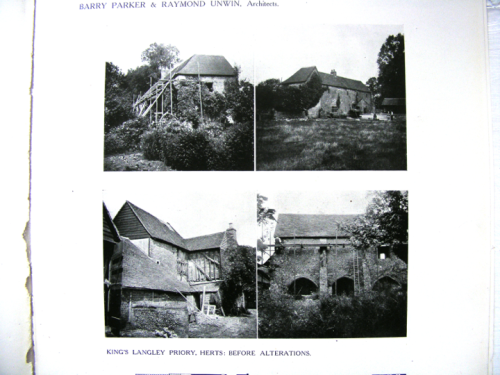
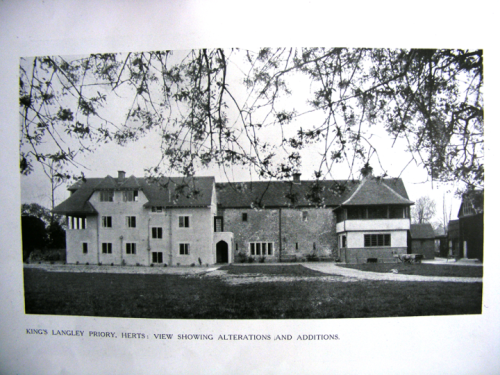
It was of course the disastrous failings at the now-closed Kings Langley school that provided the main impetus for this campaign against Steiner schools. As Tom Hart Shea, a former head teacher who commented on my “Death of a Steiner school” post observed, “I fear the knock-on effects of this saga for other Steiner Schools. By this I mean it would be irresponsible for the DfE not to look for similar failings in other College-run Steiner Schools”.

So it has proved, except that Ofsted is not just inspecting the independent Steiner schools to within an inch of their lives but is also coming down very heavily on the state-funded Steiner academy schools.

The Kings Langley failures led to a wide range of highly critical articles about Steiner education in the national media. On 24th June 2018, the Daily Telegraph published an article with the headline: “ ‘Rotten to the core’ flagship Steiner school to close, as it emerges concerned parents were sent gagging letters”. The article, by the newspaper’s education editor, Camilla Turner, went on to say:

“A flagship Steiner school is to close amid fears over child safety, after it emerged that parents who tried to raise the alarm about safeguarding lapses had been sent gagging letters.

The Rudolf Steiner School Kings Langley (RSSKL) has told parents that it will shut down at the end of this term, following a string of damning Ofsted reports.

Steiner schools, which are favoured by liberally-minded middle-class parents, base their curriculum – which emphasises creativity and imagination – on the spiritual philosophy of Rudolf Steiner.

Parents have accused the school of attempting to “cover up” the full extent of its failings by trying to intimidate those who sought to voice their unease about the goings-on at the school”.

Camilla Turner returned to the theme in another Telegraph article on 20th October 2018, this time with the Steiner Academy Exeter in her sights:

“Ministers have been urged to order fresh inspections of all the Steiner schools in the country, as a second school is threatened with closure amid ‘serious’ concerns about child safety.

The Steiner Academy Exeter was warned by the government this week that it could have its funding cut off, after Ofsted discovered severe safeguarding and governance lapses.

Following the inspection, the regional schools’ commissioner took the unusual step of instructing it to close immediately while the issues were addressed, so it can ensure a ‘safe environment’ for its pupils. It re-opened a week later”.

On 6thDecember 2018, Sally Weale, an education correspondent for The Guardian, also wrote about the Steiner Academy Exeter under the headline:

“ ‘Inadequate’ Steiner school to be taken over by academy chain”.  She went on to report:

“A state-funded Steiner school in Devon is to be transferred to a multi-academy trust after the schools watchdog said it was inadequate.

Ofsted inspectors raised serious concerns about safeguarding and lack of support for children with special educational needs and disabilities (Send) at the Steiner Academy Exeter, which opened in September 2013.

The academy is one of a small number of Steiner schools set up as a result of the government’s controversial free school policy and paid for by public funds. Other Steiner schools in the UK are privately funded”.

Sally Weale followed this up with another Guardian article on 17th January 2019:

“The future of state-funded Steiner education has been thrown into doubt after a series of snap Ofsted inspections found that three of the four such schools set up under the Conservatives’ free schools programme were inadequate.

The four have been inspected in recent weeks – alongside private Steiner schools, a number of which have also been found to be inadequate – following an intervention by the education secretary, Damian Hinds, over concerns about safeguarding.

Ofsted reports for the Frome and Bristol Steiner academies are due to be published later this week and have been shared with parents. Copies seen by The Guardian reveal inspectors’ concerns about a wide range of issues including safeguarding, bullying and lack of support for children with special educational needs and disabilities.

The Frome report accuses leaders and governors of failing to provide pupils with a safe and effective education, due to a lack of understanding about the current statutory requirements”.

Humanists UK, which has for some years been campaigning against Steiner schools, tried to claim the credit for Ofsted’s actions:

“Humanists UK is calling for the urgent closure of three Steiner schools which were rated inadequate by the education inspectorate Ofsted after the schools failed to prove they could keep pupils safe. The inspections are the culmination of a long-running campaign by Humanists UK to expose the dangers of the Steiner school sector. (…)

Humanists UK has long standing concerns about Steiner schools and has consistently campaigned against state funding for these institutions. In 2014 it won an Information Tribunal case against the government, forcing it to publicly release briefings about serious problems with Steiner schools including the bullying of students and teaching racism.

Other concerns raised by Humanists UK included the presence of pseudoscience on the curriculum (including scepticism of evolution and vaccinations and support for homeopathy), homeopathy being given to pupils by the schools’ ‘anthroposophical doctors’, and the fact that a number of private and at least one state Steiner school have opted out of providing vaccinations.

 The Guardian also reports that the School Inspection Service (SIS), which Humanists UK has long campaigned to see shut down on the basis of concerns about its efficacy, has now been closed. Ofsted has hitherto not inspected Steiner schools routinely as that has been the SIS’s responsibility. The SIS was set up by the Exclusive Brethren and also inspects Brethren schools, and Humanists UK had concerns about the quality and impartiality of its inspections. Humanists UK is seeking to clarify its reported closure with Ofsted”.

It is ironic, to say the least, that Humanists UK have been so keen to close down schools offering a thoroughly humanistic (though not atheistic) education. But their last point about the closure of the School Inspection Service (SIS) appears to be true, although I can find no mention of it on the SIS website.  I am sad about this closure, because as I wrote in my Death of a Steiner school post, the ex-HMIs (Her Majesty’s Inspectors) of SIS were the best inspectors I have come across. They were headed up by Jane Cooper, who was formerly a highly respected Principal Inspector for Ofsted. SIS also inspected the Cognita Schools group, which was set up by the late Chris Woodhead, himself a former Chief Inspector of Ofsted. So I think we can be quite certain that SIS really knew their business. As I suspected, it seems likely that they have become the victims of a turf war with Ofsted.

The Guardian returned to the attack on 18th January with an article by their columnist Zoe Williams, headed: “These Steiner ‘failures’ are really a failure of the free school agenda”.  Ms Williams had spotted an opportunity to have a go at the former Education Secretary, Michael Gove, who had been responsible for a huge expansion of the government’s free schools programme, under which four publicly-funded Steiner academies had been created:

“Ofsted inspectors have found three of the UK’s four Steiner state schools “inadequate”, in reports that will be published this week. Their core concerns are believed to be safeguarding, bullying and a lack of support for children with special educational needs. A number of private Steiner schools have also been deemed inadequate.

In a brilliant primer written in 2014, when free schools were still a jewel in the crown of the coalition government, the BBC journalist Chris Cook described the core controversies that might be thrown up by Steiner schools. At that point, and to this day, these are mainly private schools. In a way, the handful that opened on the state’s dollar were the apotheosis of Michael Gove’s promise to parents: if you want to replicate a private education, even at its very wackiest, and you have the energy, you have our blessing.

The headline contention was the very pronounced racism of Rudolf Steiner, who thought black people lived an “instinctual life”, and white people an “intellectual life”. Somehow, though, this was passed over rather mildly as an unfortunate tang of times past, nothing to do with his educational writing, according to the Steiner Waldorf Schools Fellowship (SWSF) – just as a pro-choice campaigner today might shrug off the hardcore eugenicism of Marie Stopes.

Yet the two are not analogous, since Steiner’s white supremacism is a thread running through the rest of the creed, a mulch of reincarnation and homeopathy. One piquant detail of the BBC’s investigation was that four white teachers at a private school, on a diversity training day, when asked their ethnicity, “ticked every box” on the basis that they had only ended up white having passed through every inferior race in their reincarnation journey”.

Ah yes, racism and white supremacism. It is impossible to have any kind of public discussion about Steiner Waldorf education without these accusations being thrown at the schools, however much the schools may emphasise that they do not agree with Steiner’s racial theories. Here, for example, is a statement from the website of the Steiner Academy Hereford:

“Steiner Education is opposed to all forms of discrimination against any person or group of people on the grounds of race, gender, faith, disability, age and sexual orientation and is committed to promoting equality of opportunity and reflecting the diversity of the children, staff and parents served by Steiner schools.  The following is taken from Steiner’s book, “The Universal Human”.

‘ … the anthroposophical movement [ . . .], must cast aside the division into races. It must seek to unite people of all races and nations, and to bridge the divisions and differences between various groups of people. The old point of view of race has a physical character, but what will prevail in the future will have a more spiritual character.’

Nevertheless, even though Steiner’s ideas are based on a profound respect for the equality, individuality and shared humanity of all people, regardless of race or ethnic origin, his works do contain a number of statements on race that are inappropriate in a modern context.

Steiner education thrives on every continent, in every culture and within a wide range of ethnic contexts. For example, during the period of the apartheid regime in South Africa, the only school catering for mixed races was a Steiner Waldorf school and today there are schools following Steiner’s indications on education in diverse cultures and communities, including: Israel, Egypt, Kenya, Sierra Leone, Taiwan, Japan, Brazil or Hawaii, over 60 countries in all”.

Schools can say this sort of thing until they are blue in the face but it will make no difference to the critics, who have found the accusations of racism provide an excellent stick with which to beat the schools out of existence.

Zoe Williams’ article produced a backlash from parents and supporters of Steiner schools in The Guardian’s Schools’ section letters page, including this rather clumsy defence from a governor of the Steiner Academy Bristol:

“I am dismayed by Zoe Williams’ caricature of Steiner education and her willingness to cite state-funded Steiner schools as an argument against free schools. Her description is based entirely on a piece written by Chris Cook in 2014, who conceded he had not looked at state-funded Steiner academies. He concentrated on the esoteric spiritual science of anthroposophy. But this has no place in the Steiner Academy Bristol. We teach all major world religions (certainly not anthroposophy!).

As for Steiner’s ugly racism, we completely dissociate ourselves from such attitudes. Ours is a multi-ethnic, multi-religion school with a sharply focused curriculum that seeks to develop the head, the heart and the soul in a rounded way. Where we do think Steiner was right was in recognising the need for age-appropriate learning that develops the whole child”.

One conclusion I drew in my Death of a Steiner school post appears to have been wrong. When I said that “my main hope for the future of Steiner Waldorf education in the UK now resides with the publicly-funded Steiner academy schools at Hereford, Exeter, Frome and Bristol”, I was reckoning without the zeal of Ofsted’s witchfinders. I said that “because the Steiner academy schools receive public funding, they are held much more accountable by government – but because they are now part of the maintained sector, they are seen as a valid part of the pluralistic education system in England in a way that the independent schools never managed to achieve. Not the least of RSSKL’s disasters is that it makes it far less likely that any government will wish to allow any more publicly-funded Steiner academy schools to be created”.

Well, that last sentence is certainly correct. But I had not expected that three out of the four publicly-funded Steiner academy schools would have received such bad Ofsted reports. The Steiner Academy Exeter was forced to close for a week and has now been taken over by a multi-academy trust (MAT) and the principal, the highly respected Alan Swindell, has left the school and twelve trustees have resigned. This is very likely to mean that Steiner Waldorf education in Exeter will now be in name only. The Steiner Academy Frome, after previous ‘Good’ verdicts from Ofsted, has now been rated ‘Inadequate’ in every single area of inspection and the principal, the excellent Trevor Mepham, has left the school. The Steiner Academy Bristol has also received a damning Ofsted report, which has provoked the school into planning to take Ofsted to court after it was, like Frome, rated as ‘Inadequate’ under each area of inspection and consequently was put into ‘special measures’.

A similar reign of terror is being visited on the independent Steiner schools, with several which had previously been rated as ‘Good’ or even ‘Outstanding’, hurriedly being inspected and told that they are ‘Inadequate’.

What is going on?  I suspect that something like the following has happened: a celebrity parent at Kings Langley wrote to the DfE, along with about 30 other parents, to complain about the school’s inadequate handling of their complaints about safeguarding. The celebrity parent’s letter will have been put onto the desk of the Education Minister, Damian Hinds, together with a dossier of hostile press cuttings about Steiner Waldorf education. Hinds will have said to his permanent secretary: “Get Spielman on the line (Amanda Spielman, Ofsted’s chief inspector) and tell her to put some stick about with these weird Steiner bastards. Make sure she closes down a few of their schools pour encourager les autres. And make sure I don’t get any more letters like this on my desk.”

Now some people may say: What is the problem here? All the schools need to do is to adhere to Ofsted guidelines, particularly on safeguarding, and they will be passed as ‘Good’ or even ‘Outstanding’. Schools need to be more professional in their approach and they need to get this right.

What this ignores, however, is the probability that the schools are now being faced with a highly politicised war of attrition in which the government is determined to close down some Steiner schools so as to avoid embarrassing headlines in the future. In the past, when schools were under the control of local education authorities, Secretaries of State for Education could blame the town halls and civic centres for any lapses in school standards. As Zoe Williams has noticed, the free schools programme means that the responsibility for school failures now ends up on the desk of the Minister.

And now there’s a truly chilling development from Ofsted: Steiner Waldorf education is now to be accused of thought crimes. Amanda Spielman was reported in Schools Week as having written to Damian Hinds, the education secretary, on Thursday after snap inspections of nine Steiner schools – state and private – found six were “inadequate” and three “requires improvement”. Spielman wrote that senior leaders at one school “blamed pupils with SEND for all the problems”, while others witnessed “inappropriate physical handling” of pupils. Some parents who complained were “intimidated”. Spielman has now demanded an investigation into whether the Steiner philosophy is contributing to the failures.

Apart from the aftermath of the Kings Langley closure, why are Steiner schools in such a pickle at the moment? These days I’m pretty much removed from the whole business, since I left Kings Langley in 2014, but my feeling is that the Steiner schools’ movement in the UK, because of its historical allegiance to schools self-administering through a College of Teachers, has not been able to develop a cadre of school leaders able to cope with the latter-day demands of Ofsted and particularly the Safeguarding aspect of school regulation. How many of them will come through this period unscathed I can’t say – but I’m glad my own daughter was able to have a Steiner education, at a time when History of Art was still available as an A-level (Gove removed this as a subject). It has stood her very well in her subsequent university and career path and I hope that, despite the current Ofsted reign of terror, other children will also be able to benefit from Steiner Waldorf education for many years to come.

Critics who laud Ofsted for moving against Steiner schools should be careful of what they wish for. The main beneficiaries of this confected angst about Steiner schools and safeguarding are the manufacturers and sellers of 6’ high perimeter fencing materials, in which schools are forced by Ofsted to turn their schools into fortresses against the world. What children learn from this is that the world is a dangerous place and adults are scary people, not to be trusted. It also leads to the absurd and offensive situation in which kindergarten parents wanting to collect their child from school have to sign in at the school office, wear a lanyard, be escorted across the grounds by a member of staff to the kindergarten and then be escorted back to the school office where they have to sign out and return their lanyard. If that’s the kind of school that Humanists UK are agitating for, then all I can say is that it’s not my idea of a humane or humanist education.

As I’m an unashamed and unabashed anthroposophist, and despite any embarrassment this might cause to school governors wishing to repudiate everything about Steiner except his educational teachings, I will finish with a quotation from Rudolf Steiner which I commend to all Steiner school teachers who are seeing their best efforts crumbling to dust at the moment:

“However good the right may be that you want to bring to realisation – it will turn into a wrong in the course of time. Benevolence will after a time become prejudicial behaviour. And however good the right may be that you want to bring to realisation — it will turn into a wrong in the course of time. The reality is that there are no absolutes in this world. You work towards something that is good, and the way of the world will turn it into something bad. We therefore must seek ever new ways, look for new forms over and over again. This is what really matters.

The swing of the pendulum governs all such human efforts. Nothing is more harmful than belief in absolute ideals, for they are at odds with the true course of world evolution.  (…)

It is (Ahriman) who will and must be the bearer of our future civilisation. This is a harsh truth, but it is important. It is intimately bound up with the fact that destructive powers will have to enter into the future progress of civilisation. Above all — (…) — destructive powers will have to enter into the whole field of education, and especially the education of children, unless the matter is taken in hand with wisdom. Because of the general trend of civilisation, and the customary practices and emotions of people, destructive powers will also enter more and more into the whole social sphere. They will above all bring more and more destruction into the actual relationships between people”.


86 Comments

Filed under Ahriman, Free Schools, Humanism, Kings Langley, Ofsted, Steiner Waldorf schools, Waldorf critics

The world needs our free deeds of love

Does the following describe our situation?

“The greatest ecological crisis in the Earth’s history began with the emission of climate-changing gases by an organism that had spread widely across the planet, colonising many of its ecological niches. These gases – the waste products of its lifestyle – gradually accumulated in the atmosphere. For a long time nothing noticeably changed, but at some stage a tipping point was reached and the planet’s climate flipped rapidly from one state to another. The composition of the atmosphere changed, becoming poisonous to most life on Earth, and the planet’s mean temperature plunged, precipitating a global ice age. The resulting mass extinction killed perhaps 90% of all living things on Earth.”

It could be a description of our present and near-future but in fact this was the situation 2.3 billion years ago, as described in an essay by Paul Kingsnorth:

“The climate-changing organisms were bacteria, and the poisonous gas they emitted was oxygen. Without the planetary catastrophe they precipitated, you, and almost everything you know about the Earth you are part of, would never have come about at all. All told, there have so far been at least five, and perhaps as many as twenty, ‘mass extinction events’ in the history of Earth. This first – known as the ‘great oxygen catastrophe’ – was the most far-reaching. The last, 66 million years ago, is the one we know best, because it is the most appealing to the human imagination: it wiped out the dinosaurs. Overall, it is estimated that around 98% of all organisms that have ever existed are now gone forever.”

So in taking a long view, it seems as though here on Earth an evolutionary process is continuing that involves extinctions and the disappearance of whole species. Today we appear to be approaching a similar crisis, sometimes called the Sixth Mass Extinction, the difference being that this time it is humans who have brought themselves and all life on Earth to a tipping point.

Climate instability is the major threat facing us today, but there are others. In 2018, the World Economic Forum listed the 5 risks that it believes will have the biggest impact in the next 10 years as:

  • Weapons of mass destruction
  • Extreme weather events
  • Natural disasters
  • Failure of climate change mitigation and adaptation
  • Water crises

Millennials (ie 18 to 35-year olds, those people who became young adults during the 21stcentury) and who participated in the World Economic Forum’s Global Shapers Survey 2017 also said that they thought human-made climate change is the most serious issue affecting the world today, despite their worries about their own economic prospects.

Anders Sandberg from the Future of Humanity Institute at the University of Oxford has listed five existential risks apart from climate change, ie those risks that threaten to wipe out humanity and most of life on Earth:

  • Nuclear war
  • Bioengineered pandemics
  • Superintelligence (Nicanor Perlas’s book, Humanity’s Last Stand, is well worth reading on this)
  • Nanotechnology
  • Unknown unknowns

I’m sure you will have your own list of risks, whether existential or what one might call ‘global but survivable’ risks. Mine includes the following:

  1. Climate instability (as Rachel Carson put it: “Man is a part of nature and his war against nature is inevitably a war against himself.”)
  2. Over-population. The world human population reached one billion by 1804 and has increased seven-fold in the 200 years since. It is projected to reach 11 billion by 2050.
  3. The triumph of materialism; and human inability to recognise that we are both physical and spiritual beings. Steiner offers us the possibility of making ourselves truly “free spirits”. Materialism does just the opposite. It seeks to reduce us to creatures completely determined by heredity and our genes, hence totally unfree.
  4. The breakdown of social trust and the sense of hopelessness that so many people feel about the possibility of positive change. To counteract this, requires each of us to find within our own individual consciousness the direction in which our thinking, willing and feeling are to follow.

But because it leads to so many other associated problems, climate instability is at the top of my list of risks. For anyone of my daughter’s age, that is to say people under the age of 30 – more than half the world’s population – the experience of a stable climate is entirely unknown. Not a single month in their lifetime has fallen within the limited range of temperature, precipitation or storm activity that governed the planet for the previous 10,000 years. We are living through the change from the Holocene geological epoch, which has been with us since the last glacial period, to the human-made Anthropocene. A single species, Homo sapiens, has through its activities moved the planet from one geological epoch to another, an occurrence without precedent in the paleoclimatic record.

Despite President Trump’s denial of the reality of climate change, the experience of many of his fellow Americans indicates that something extraordinary is actually happening. Here is an example from Texas, which might give even Trump pause for thought: the quantity of rain deposited on Houston during Hurricane Harvey was consistent with at least a 500-year storm – a flooding event so rare as to be expected to occur only once between the discovery of America by Columbus and today. Yet Houston has experienced a ‘500-year’ flood in each of the last three years. For the last 10,000 years, the probability of a 500-year storm occurring in three successive years would have been 1 in 125,000,000. In the current age of climate instability, the probability of such an occurrence is unknown but appears to be rising.

A teacher of 14-year olds recently told me that her pupils are extremely worried about their futures because of climate instability and they cannot understand why the world appears to be doing so little about it. I responded by saying that I shared their anxieties and had felt comparable fears when I was 11 years old, back in 1962 at the time of the Cuban missile crisis. (This was the 13-day confrontation in October 1962 between the United States and the Soviet Union initiated by American ballistic missile deployment in Italy and Turkey with consequent Soviet ballistic missile deployment in Cuba.) At the height of the crisis I remember riding my bike through Town Park in Enfield, north London, and looking at the beautiful tall plane trees there, and thinking that those trees and all life, including myself and my family, could be vapourised within the next three days as a result of nuclear war.

Today I reflect that my parents’ generation must have felt equally fearful about their futures during the Second World War, which led to an estimated death toll of between 50 to 80 million people; and my grandparents were surely almost as worried during the First World War, which resulted in 17 million deaths and 20 million wounded. As I have written elsewhere, the last 100 years have been the most terrible in human history. Anthroposophists will tend to think that these have all been part of what might be expected as precursor events to the incarnation of Ahriman.

Steiner was not trying to scare us out of our wits but rather to emphasise the importance of this inescapable event which humanity must go through; and above all, if we are wise and stay awake to what is going on, it can be used to advance human development through developing a clear and conscious relationship to all that will enter into human culture through the powerful influence of this being.

What all of this indicates to me is that the evolutionary process is continuing and humanity is now confronted with the challenge either to evolve or to face the consequences. From Rudolf Steiner’s perspective of human evolution, since the 15th century we have been developing what he calls the consciousness soul (you can read more about Steiner’s view of human evolution in his book Occult Science) and this is a process that will continue for a very long time yet. Steiner gave two possibilities for the course of human evolution:

“Now, however, we have come to the time — in this epoch of human evolution that began in the middle of the fifteenth century — when we face the necessity of ascending once more to the spirit. (…)

Then you will be capable of perceiving that in the course of spiritual evolution human life runs its course in repeated earth lives. For the whole span of man’s life consists of an alteration between the kind of lives he spends in a physical body and another form of existence between death and a new birth, spent in the super-sensible worlds which are connected with our world through the spirit that is also at work in historical evolution. (…)

If we continue with the kind of thing the materialistic age has brought into human evolution in recent times, we shall get further and further removed from the spirit and more and more attached to matter. But if we turn our minds to our super-sensible nature and develop this in ourselves, we shall add the results of spirit vision to the dazzling achievements of the materialistic natural scientific outlook. This spirit vision will then be like the soul of the world conception of outer nature. These two ways are open to human evolution today: either to keep to a perception of the material world and drag mankind further into chaos and distress, or to give birth to our higher inner being from out of our super-sensible nature and the super-sensible world. One of these directions, the materialistic way, can already be seen in the ripples it sends to the surface. (…)

If we carry on in the first direction, the effect on European spiritual life will be that man’s spirit will become mechanisedman’s soul vegetative and man’s body animalised. This is the fate that actually threatens us today. If men become addicted to this western mechanisation of the spirit, this state of being will combine with eastern animalisation, which means that social demands will be on a level of animal instinct and blind impulse. Western mechanisation and eastern animalisation are connected one with another. In between these is the vegetative or drowsy nature of soul that does not want to be woken up by a treading of the path to the spirit. This is the one perspective. Mankind will have to choose between becoming mechanised in spirit, vegetative in soul and animalised in body or going the other way. Hardship and distress will no doubt eventually drive us into going the other way. And although it will be the other people who have the power (ie the materialists), they will not be able to bar us from going this other way, the way leading to the spirit. We shall have to want to go this way. We shall have to want to keep our spirit free, even if our bodies are in bondage.”

As far as I’m aware, Steiner said nothing about the possibility that we might be moving from one geological epoch to an entirely human-induced new one, or that we might also be moving from the extinction of Homo sapiens to a new form of human being, what Yuval Noah Harari has called Homo deus. This goes together in the coming merger of the human being with infinitely intelligent machines, as predicted by Ray Kurzweil, Google’s senior futurist. On this last point, Steiner said this about human beings and machines:

“One of these great problems will be concerned with finding out how to place the spiritual etheric forces at the service of practical life. I have told you that in this epoch we have to solve the problem of how the radiations from human states of mind are carried over into machines; of how human beings are to be brought into relation with an environment which must become increasingly mechanised. The welding together of human beings with machines will be a great and important problem for the rest of the earth-evolution”.

How can we cope with such developments and how can we find meaning in them and even a basis for hope and optimism?

Looking at nos. 3 and 4 on my list of risks above, ie materialism and the associated human inability to recognise the spiritual side of life; and the breakdown of social trust and the sense of hopelessness that people feel about the possibility of positive change, it seems to me that overcoming both of these are crucial to our survival as a species – and if we can make some progress with those, then we will also be in a position to make progress with climate instability and over-population.

I find some ideas from Rudolf Steiner’s lecture Supersensible Man, Freewill, Immortality of the Soul given in Munich on 1st May 1918 (not available online) to be helpful in this respect. Here is part of what he says:

“Twenty-five years ago, it seemed to me particularly important to enter a protest in a philosophical work (The Philosophy of Freedom)against a widespread misconception, a misconception that can be summed up in the phrase, “Love makes us blind.” I showed that, on the contrary, love makes us seeing. It guides us into an area that we cannot enter if we remain egotistically isolated in our own selfhood, and it does this the moment we are able to sacrifice ourselves sufficiently to live with our feelings in another’s being, to live within it for the very reason that we hold its independence sacred and have no desire to impinge upon it with our love. We cannot call a love perfect that wants to meddle with the nature of the loved person and make changes in it. We love truly when we love a person for his own sake, to the point where the one who loves forgets himself. When we feel love for someone wholly independent of ourselves, someone whom we love especially well just because we are conscious of his separateness, and have not the slightest desire to influence him in any way tinged with our egotism, when we love him purely for his own sake rather than for ours, then this feeling to which we can rise is truly the ideal of the love that, I am convinced, makes us seeing, not blind. This love can be developed for an action, for what we find needs doing when we give ourselves up to pure contemplation of some action. Among the many and varied actions born of our desires and instincts there can be others that at least move in the direction of the kind of impulse that carries out an action purely out of love for it. (…) The only question is whether it is possible for actions of this kind to be included in human life, whether actions born of love can become a reality in human living. Even if we recognise that such a thing as action born of love is possible to human life, we can probably still not call man free in the entirety of his being but must rather say that he comes closer and closer to freedom the more he transforms his behaviour in the direction of making his deeds acts performed out of love”.

In the same lecture, Steiner describes how in ordinary life we are unaware of our immortal part but even though it remains at an unconscious or sub-conscious level, it is nevertheless present:

“It is present in unconscious inspirations, as also in moral ideas, regardless of whether they are right or wrong; it is present on occasions when we are not taken up with ourselves, but develop – in warmth of love for an action such as I described (ie an action performed out of love) – an energy that carries us beyond the confines of self-interest.

Here something remarkable reveals itself in human nature. When something that is present only at an unconscious level, namely, this unconscious imagination that is a personal possession and that, as I described, can only be made effective by love, works in concert with intuitive or inspired thinking as this shines in from its own sphere to illumine ideas … when this thinking, that is born not of man’s mortal part but of what is immortal in him, works in concert with the imagination that ordinarily remains unconscious but takes on an instinctual character in us when we conceive love for an action … when as I say this instinctive love, which is an instinctual expression of the imagination described, acts on a person in such a way as to move him to make use through inspiration of what shines into him from the time before his birth, then an immortal element works on the immortal element in man. An idea, born of the immortal world that we experience before our birth, works in concert with the immortal element that manifests itself on an unconscious level in imagination and returns again to the spiritual world through the gates of death.

Thus man is capable of actions in which his immortal part, otherwise revealed only after death, becomes an effective force during his earthly life and works in concert with free ideas issuing, through inspiration, from the immortal realm in the form of impulses that enter our human personalities before birth. This is then free deed”.

According to Steiner, what we perceive with our senses is only one half of reality, not the whole thing. As we entered our physical body, we suppressed our access to the invisible spiritual world, which is the other half of reality. But we can restore to the world by our own efforts the true reality of which our physical perceptions have deprived it! Steiner’s books The Philosophy of Freedom and Knowledge of Higher Worlds are the most important texts here for study and self-development but I suspect it is only a limited number of people who will have the sheer determination and the patient and persistent doggedness to study and work successfully with these over the long periods of time likely to be required. So is there anything else we can do that might put us in touch with the angel who guides us from the spiritual world?

It is worth bearing in mind that from an anthroposophical perspective each one of us has chosen to be here on Earth in physical incarnation during this time. We came here now because we have particular tasks to do, tasks that we agreed to take on before we left the spiritual world. But how can we get in touch with remembering our intentions for this life if we are not clairvoyant?

My own recent practice is very simple and straightforward but I find it a great way to start the day. I get up quite early each morning and boil the kettle for a cup of hot water with a slice of lemon. Then I sit in an armchair and in between sips of hot water, say my prayers. I usually start with the Lord’s Prayer and, if a complex situation is on my mind, may say another prayer to ask for the best and highest outcome for all concerned. Then I give thanks for all the blessings in my life (it’s very important to express gratitude on a regular basis) and for the help received from my guardian angel. And finally I ask: What do I need today that will nurture me, relieve any stresses and enable solutions to problems to emerge?

This only takes five to ten minutes each morning but it sets me up for the day. And I’ve noticed that it does something else as well – through the contact with and acknowledgement of one’s angel (each of us has one, who stays with us from birth to the moment of our death), it somehow opens up the possibility of helpful interventions during the day that I had not expected. For example, you will suddenly get a call from someone who has just what you need to solve a knotty problem; or those people whom you had expected to be so difficult, turn out to be charming and helpful; or that deadline you were going to miss somehow gets put back to a much more manageable date. Try it for a few days and see what happens… It is this kind of thing that enables one to become aware through intuition of free deeds of love that are needed – and it gives a purpose to one’s life and a sense that, whatever the problems of the larger world, you yourself are doing exactly what you need to do as your contribution to the bigger picture.

I have written before about what Steiner called the ‘School of Unselfishness’ but I am convinced that it is a key to us getting through our present crises in reasonable shape, even if it is only a small proportion of human beings who can practise it, like a kind of homeopathic medicine, for the benefit of all life. Each of the examples quoted in that post are what I think we can call free deeds of love – and it is free deeds of love that will enable us to survive as a species during the next stages of our evolutionary journey.

87 Comments

Filed under Climate change, Existential Threats, Free Deeds of Love, Philosophy of Freedom, Unselfishness

Life Unworthy Of Life

On Saturday 9thJanuary 1915, the 32-year old Virginia Woolf and her husband Leonard took a walk from their home in Richmond along the River Thames towards Kingston. Virginia recorded in her diary:

“On the towpath we met and had to pass a long line of imbeciles. The first was a very tall young man, just queer enough to look twice at, but no more; the second shuffled, and looked aside; and then one realised that every one in that long line was a miserable ineffective shuffling idiotic creature, with no forehead, or no chin, and an imbecile grin, or a wild suspicious stare. It was perfectly horrible. They should certainly be killed.”

This is quite shocking from someone who was herself no stranger to mental illness; but Virginia Woolf’s attitude to people with learning disabilities was typical of the intellectuals of her time. Today, we associate such sentiments with the Nazis, who came up with the phrase Life Unworthy of Life as justification for the murder of at least 250,000 disabled people (this figure from the German government, which in 2005 issued an apology to their relatives). Many consider this figure to be a gross underestimate, with the true total being nearer to one million disabled people, if one takes into account all the murdered children and disabled people who were not in “Greater Germany” or the occupied territories.

Drawing on the ‘science’ of eugenics, in 1933 Adolf Hitler and the Nazis instituted measures for the compulsory sterilisation of men and women suffering from hereditary diseases. This in turn led to seven propaganda films and many advertisements preparing the German population to give up their mentally disabled family members for ‘mercy killing’. Adverts showed a German worker weighed down by the burden of having to pay 50,000 Reichsmarks to maintain a mentally disabled person until the age of 60. Such was the effect of this propaganda that Hitler was even petitioned by some parents to kill their disabled children.

In October 1939 after war had been declared, Hitler issued a secret decree to expand the authority of physicians to examine patients who were considered incurable and after critical evaluation of their condition grant them mercy killing. Six so-called Euthanasia Centres were set up throughout Germany and also in many hospitals; here the killing of the disabled by gas and lethal injection was developed and these techniques were then refined and applied within the concentration camps, continuing until the end of the war in 1945.

But from where did Hitler and the Nazis draw these ideas about the people they called “useless eaters”? I’m afraid they came from Britain and in particular from ideas deriving from Charles Darwin.In 1859 Charles Darwin published his groundbreaking book Origin of Species which expounded his theory of evolution by natural selection. It wasn’t long before scientists and political theorists began to apply Darwin’s theory to human beings. With the spread of ideas about “the survival of the fittest”, social Darwinists started to question the wisdom of providing care to the ‘weak’ on the grounds this would enable people to live and reproduce who were not meant to survive. They feared that offering medical treatment and social services to disabled people would undermine the natural struggle for existence and lead to the degeneration of the human race.

Such views took hold not only in Germany but also particularly strongly in America and Britain. The existence of disabled people was increasingly seen in the UK and USA as a threat to social progress. Darwin himself wrote in his 1871 treatise, The Descent of Man, “We civilised men…. do our utmost to check the process of elimination; we build asylums for the imbecile, the maimed and the sick… Thus the weak members of society propagate their kind.”

It was Francis Galton, a cousin of Charles Darwin, who in 1883 first came up with the term ‘eugenics’. Galton became obsessed with Origin of Species, especially its chapter on the breeding of domestic animals. This inspired him to spend much of his life studying the variations in human ability. He wrote: “The question was then forced upon me. Could not the race of men be similarly improved? Could not the undesirables be got rid of and the desirables multiplied?”

Galton wrote in his 1869 book Hereditary Genius: “Let us do what we can to encourage the multiplication of the races best fitted to invent, and conform to, a high and generous civilisation, and not, out of mistaken instinct of giving support to the weak, prevent the incoming of strong and hearty individuals.” He argued that early marriage between healthy, mentally strong families should be encouraged by financial incentives, and reproduction by the ‘feeble-minded’ should be curtailed. In his mind, superior mental and physical capabilities were advantageous not only to an individual but essential for the wellbeing of society as a whole.

Galton’s views were not regarded as eccentric or offensive at the time and in fact he received many awards during his career. He was made a fellow of the Royal Society in 1860 and was knighted shortly before he died in 1911. His writings played a key role in launching the eugenics movement in the UK and America. Supporters of eugenics called for government policies to improve the biological quality of the human race through selective parenthood. They linked physical and learning disabilities to a range of social problems including crime, vagrancy, alcoholism, prostitution and unemployment.

Eugenics quickly gained many backers on both sides of the Atlantic, including leading politicians and opinion formers – and not just figures on the far right of politics. Some of the British Left’s most celebrated names were among the champions of eugenics: Sidney and Beatrice Webb (the founders of the Fabian Society), Harold Laski, John Maynard Keynes, even the New Statesman and the Manchester Guardian. George Bernard Shaw wrote: “The only fundamental and possible socialism is the socialisation of the selective breeding of man.” Bertrand Russell proposed that the state should issue colour-coded ‘procreation tickets’ to prevent the gene pool of the elite being diluted by inferior human beings. Those who decided to have children with holders of a different-coloured ticket would be punished with a heavy fine. HG Wells praised eugenics as the first step towards the elimination of “detrimental types and characteristics” and the “fostering of desirable types” instead.

This brings us back to that distinguished socialist and convinced atheist, Leonard Woolf.  Fifty years after that walk along the Thames with his wife Virginia, Leonard wrote in the fifth volume of his autobiography, The Journey Not the Arrival Matters:

“The passionate devotion of mothers to imbecile children…always seems to me a strange and even disturbing phenomenon. I can see and sympathise with the appeal of helplessness and vulnerability in a very young living creature – I have felt it myself in the case of an infant puppy, kitten, leopard, and even the much less attractive and more savage human baby. (…) But there is something horrible and repulsive in the slobbering imbecility of a human being. Is the exaggerated devotion of the mother to this child, which nearly always seems to be far greater than her devotion to her normal, attractive children, partly determined by an unconscious sense of guilt and desire to vindicate herself and her child?”

So it seems that even in the 1960s, after all the experience of the Nazis and the murder of countless numbers of disabled people, an intellectual such as Leonard Woolf still could not find a way to understand and empathise with people with learning difficulties or the fact that they are loved by their families. This to me illustrates the great danger of allowing such bleak and bony atheists and intellectuals anywhere near public policy and law-making on social and health issues; their failure to understand what is really going on and their characteristic attitudes such as lack of empathy and thinly-veiled disdain for the “devotion of mothers to imbecile children” makes them unfit to pronounce on other people’s lives.

Their disdainful attitude would of course be extended also to Rudolf Steiner; this is a pity, because if instead they were to take a little time and trouble to study anthroposophy they might actually find some insights into phenomena such as learning disabilities and how these can only be understood properly in terms of multiple lifetimes and karma. Through his spiritual research, Steiner was able to reveal some vital information about the invisible structure of health and illness. In the course of lectures titled Pastoral Medicine given in September 1924 to a mixed audience of priests and physicians, Steiner showed the interweaving of medical and spiritual issues and how these need to be understood if one is to care for suffering human beings.

In Lecture 5, describing what he calls psychopathological impairment, Steiner says that:

“In most cases a person brings it along as his or her karma … Already at birth, the person is in an abnormal condition because of some unusual stress in putting together the etheric body before entering the physical body. An etheric body was formed that does not want to penetrate the physical body completely, does not want to enter heart and stomach in the proper way but wants to flood them: in other words, an etheric body that carries the astral body and ego organisation too strongly into the various organs. Already at birth or very soon after, we see facial or bodily deformities that can give us deep concern. This is called congenital mental retardation – but there is no such thing! There is only karmic mental retardation, related to the child’s entire destiny. We will also speak about this more fully, so that you will see how an incarnation spent in such mental dullness can, under certain conditions, even have a beneficial place in a human being’s karma, although it may mean misery in that one incarnation. There is need, after all, to regard things not merely from the point of view of finite life, but sub specie aeternifrom the point of view of the immortal life of a human being. Then we would have a compassionate charity (caritas)and a wise one as well”.

There is much more that could be said to describe the wholly humane and wise approach of anthroposophy to these issues and the impact that Steiner’s observations subsequently had on people such as Karl König and Thomas Weihs and the birth of curative education, the Camphill movement etc. But the reason why I am writing about this issue now is because eugenics is starting to raise its ugly head again.

In China, a scientist, He Jiankui, has just claimed to have altered the DNA of twin girls before birth. He, an associate professor at the Southern University of Science and Technology in Shenzhen, described how he used gene-editing technology known as Crispr-Cas9 to modify a gene called CCR5 in a number of embryos created through IVF for couples with HIV-positive fathers. The modification was intended to mirror a natural mutation found in a small percentage of people which makes them resistant to the virus. Two girls, named Nana and Lulu, were born with the genetic changes, he said.

So the eugenics genie is now once again out of the bottle. In academia, the word ‘eugenics’ may be controversial but the idea is not. To Professor Julian Savulescu, former editor and current board member of the Journal of Medical Ethics, the ability to apply ‘rational design’ to humanity, through gene editing, offers a chance to improve the human stock — one baby at a time. “When it comes to screening out personality flaws such as potential alcoholism, psychopathy and disposition to violence,” he said, “you could argue that people have a moral obligation to select ethically better children”. Francis Galton could not have put it better himself.

Meanwhile, the scientific pursuit of “ethically better children” is advancing rapidly. Since Louise Brown was conceived in a laboratory 40 years ago — the world’s first IVF baby — the treatment has become mainstream, and between 1991 and 2016, there were more than 1,100,000 treatment cycles in UK licensed clinics. Developments in IVF mean that, today, several embryos can be fertilised and screened for diseases, with the winner implanted in the uterus.

It is, however, the genetic modification of human embryos that causes most concern. But here, and at each point in the new eugenics, advocates will argue: where is the moral problem? There are no deaths, no sterilisations, no abortions: just a scientifically guided conception. This is all about the potential avoidance of disease and the benefit of humanity. So who could possibly complain?

Well, I can, for one. If you are using science to choose the most favourable genes to hand down to your children, that is the application of eugenics. This is just the latest example of humans acquiring God-like powers without the God-like wisdom to know how to use them properly. And the idea of consumer eugenics is already with us: sperm banks claim that they screen for everything from autism to red hair and in India, women desperate for a boy will pay for ante-natal screening to identify – and abort – girls.  One can imagine a future situation in which parents who do not go in for genetic modification of their offspring will be labelled anti-social, rather like those parents who choose not to vaccinate their children today.

We have opened the door to an era of high-tech consumer eugenics, with affluent parents choosing the best qualities for their offspring and creating a new form of genetically modified human being. Once again the idea of perfecting humanity through eugenics is back, and once again it is coming with the assumption that the processes involved are limited to chemical, physical and biological ones and with no awareness or recognition of the spiritual dimension. This is not going to end well.

105 Comments

Filed under Eugenics, Learning Disabilities

Is biodynamics coming closer to mainstream acceptance?

I’ve said it before but I think it bears repeating: if biodynamic agriculture and horticulture are ever to become mainstream, then the first signs of this are going to be in the world of fine wines.  We are already seeing evidence of this: Monty Waldin, a wine writer and biodynamic specialist, estimates that in 2017 about 5 per cent of the world’s vineyards were certified organic or biodynamic. In 1999 it was less than 1 per cent.

Something is clearly going on, because biodynamic viticulture has just been the subject of an entire column by the eminent wine writer and Master of Wine, Jancis Robinson, in the Financial Times Weekend Magazine of September 29/30th 2018. If the FT is sitting up and taking notice of biodynamic wines, then this is an indication of a significant shift in culture among the monied classes; and where they go, mainstream culture will surely follow.

True, Robinson shows no real understanding of biodynamics in her column and a sarcastic sub-editor gave it the headline “Hogwarts school of viticulture.” But she does appreciate some of the reasons why people might be wary of conventional viticulture: “Anyone who has visited a wine region and seen vineyard workers spraying chemicals so potent that they are clad as if they were investigating a Novichok incident is likely to find organically grown grapes an attractive proposition”. She goes on to say:

“The principles of biodynamics were outlined by the philosopher Rudolf Steiner in the 1920s. Many of them seem barmy. The emphasis on soil health, as in organics, is surely sensible. The postwar period of technological revolution coupled with the imperative of quantity over quality left a legacy of heavily compacted soils deprived of nutrients, organic matter and microbes. Healthy soil encourages healthy plants and I have often found extra vitality in wines that turned out to be biodynamic.

Steiner’s insistence that a farm should be a holistic ecosystem rather than a commercially efficient monoculture is a much further step away from conventional science, but has resulted in a dramatic increase in fauna to be found on the land of biodynamic practitioners.

But it is the third tenet of biodynamics that is most controversial and the reason why many rationalists dismiss it as ‘pseudoscience’. Full embrace of biodynamism involves the application of homeopathic doses of preparations based on the likes of quartz powder, camomile and nettles. Some are supposed to be buried in cow horns or other animal parts. All are supposed to be applied, and vineyard operations conducted, according to the celestial calendar.

This is the part only the most devoted biodynamic practitioners adhere to, but they assure non-believers that these can transmit energy and health to the soil, vines and grapes. Sceptical scientists point to the weakness of lunar forces. But even non-biodynamic wine producers have long been careful to time their bottling with the phases of the moon to ensure their wines are star-bright”.

Well, you can tell from all of this that Jancis Robinson is some way from any real appreciation of or insights into biodynamics – but it’s a start and it should be applauded. She goes on to list some of the starry vineyards that have adopted  biodynamic viticulture – too many to list here, I’m glad to say – but they include the very best of French producers, including chateaux in Bordeaux, Burgundy, Rhone, Champagne and Alsace, as well as wine growers in Italy, Spain, Germany, Austria, California, Washington, Chile, Argentina, Australia and New Zealand. (There are also at least three biodynamic vineyards in the UK.)

But her column got me thinking: if the world is starting to wake up to biodynamics, is the biodynamic movement in a position to respond to meet increasing demand for knowledge, techniques and the supply of BD preparations?

This question has recently taken on a personal dimension for me. When we moved into our house in Forest Row in 2015, one of the things that attracted me to it was the garden and the possibility it gave of planting a small orchard, which is something I have wanted all my life. When I say a small orchard, I mean it: there are just fourteen fruit trees. But although it’s small, each variety was chosen very carefully, for flavour rather than yield and with pollination compatibility in mind where appropriate. There are four apple trees, three of them varieties from Sussex; three pears; one plum, one gage and one damson; one quince; one mulberry, a morello cherry and a fig. We’ve also got a soft fruit bed, with blackcurrants, redcurrants, gooseberries and blueberries (the last in large pots, so I can give them the acidic soil conditions they need).

It’s a sad fact but once you have planted your trees, you cannot just let them get on with growing. They are subject to attack from birds, animals and insects, plus all sorts of diseases and ailments – they still need your care and regular attention. Given all these problems and predations, I’m impressed that farmers and growers manage to provide us with anything to eat at all; and it’s no wonder that conventional horticulture has come up with many kinds of chemical cocktails to be sprayed at regular intervals to save some of our food and fruit from wildlife and diseases. But I’m one of those who likes to think that there is a better way of dealing with these issues and for me, organic and biodynamic are my preferred methods.

So when the gage tree, a 19thcentury variety called Early Transparent Gage and planted with loving care as a one-year old tree in our garden in December 2016, developed signs of bacterial canker on the trunk, I was devastated. There is no chemical remedy for this disease and all you can do is to cut out the signs of canker and put wound paint on the area – and since the canker is on a large area of the trunk of what is a young tree, the prognosis isn’t good.  Following advice from the excellent Briony Young, who makes the biodynamic preparations at Tablehurst Farm, I decided to cut out what I could of the canker and apply biodynamic tree paste to the wounds.

It was at this point where my question occurred about the availability of biodynamic remedies. There is no possibility of going to a garden centre to buy a tin of tree paste. Anyone seeking to use this remedy needs to assemble some ingredients, not all of which are easy to source, and then go through a fairly elaborate and lengthy preparation process.

To describe it as briefly as possible, here’s what you do. First of all, source the ingredients:

  • 1 part clay, mixed with a little rainwater and chopped up to achieve a smooth texture with no lumps
  • 1 part fine sand (or diatomaceous earth)
  • 1 part fresh cow manure
  • 1 unit of horn manure 500
  • Equisetum tea 508 made with rainwater
  • A generous handful of cow pat pit preparation (CPP)

I was fortunate in being able to get all of these ingredients from Tablehurst Farm.  Then you:

Make the equisetum tea with rainwater:

IMG_0067

Use the tea to dissolve the horn manure and dynamise the liquid by stirring for 1 hour, creating and breaking vortices in the water:

IMG_0077

Add the CPP for the last 20 minutes of stirring:

IMG_0079

Pour the dynamised liquid into the bucket with the clay and then gradually stir in the fresh cow manure:

IMG_0089

Gradually stir in the sand:

IMG_0091

The finished tree paste should have the consistency of pancake mixture, sloppy enough to apply to tree trunks with a paintbrush. (Here it is being applied to an olive tree in a pot):

IMG_0094

Well, quite apart from the difficulty of finding the ingredients, you can tell that all of this is a great deal of trouble and work, unlikely to be done by the average gardener. So why did my wife and I do it? It’s because as far as I know only biodynamic tree paste has the capacity to work on the bacterial canker and to heal the disease so that the tree can survive. The commercial tree wound paints are effective only if you can remove all of the canker and cut back to clean wood, which in the case of a young tree like our gage was not possible because of the extent and location of the canker.

I’ll let you know in a year or two whether the tree paste has done what we hoped for; and if it does, then I think there is a commercial opportunity for someone to make pre-prepared biodynamic tree paste widely available in garden centres for the general gardening public.  If biodynamics is to become mainstream, then ways need to be found in which these wonderful preparations and the philosophy behind them can be made less “barmy” and more widely available to amateur gardeners and professional growers alike.

10 Comments

Filed under Agriculture, Biodynamics

The Surprising Origins of Moral Coldness and Hatred

statue of liberty

Photo via R.Ian Lloyd/Masterfile/Corbis


“Give me your tired, your poor,
Your huddled masses yearning to breathe free,
The wretched refuse of your teeming shore.
Send these, the homeless, tempest-tost to me,
I lift my lamp beside the golden door!”

These famous lines are from ‘The New Colossus’,  a sonnet that American poet Emma Lazarus (1849–1887) wrote in 1883 to raise money for the construction of a pedestal for the Statue of Liberty. In 1903, the poem was cast onto a bronze plaque and mounted inside the pedestal’s lower level. The poem has inspired generations of Americans with a sense of their moral and ethical virtues and their land as a beacon of freedom in the world.

In 2018, it’s clear that President Donald Trump, another new colossus of a very different type, has given up on any idea of America as a place that welcomes the huddled masses of immigrants yearning to breathe free. Many of us know Americans to be a generous, welcoming and hospitable people but Trump decided that the best strategy for winning the mid-term elections was to appeal to the lowest instincts of US voters by attacking would-be migrants from Honduras.

According to President Trump, the “caravan” of migrants trudging north towards the United States represented “an assault on our country”. He added that among the thousands of Central American pedestrians were criminals, gangsters and Middle Eastern terrorists. He hinted that the entire spectacle was funded by Democrats or George Soros. When he sent 15,000 troops to the border to keep the migrants out, his supporters cheered.

The migrants in the caravan are mostly ordinary Hondurans who, unsurprisingly, would rather live somewhere peaceful and rich than poor and violent. There is no evidence of Middle Easterners among them, or an unusual number of criminals. It’s just that life is much better in the United States than in Honduras. And the journey, overland through Guatemala and Mexico, is dangerous. Migrants have often been robbed or beaten up along the way. Travelling in a large group makes that less likely. Small wonder that so many Hondurans, on hearing that the caravan was passing, decided to join it.

020517-trump

Needless to say, there is not a shred of evidence that Democrats had anything to do with organising the exodus, or that George Soros has been funding it. Trump is a prodigious liar, of course, and he lies routinely, without shame. According to the Fact Checker in the Washington Post, by the 601st day of his presidency, Trump had told more than 5000 bare-faced lies – an average of over eight lies per day.

How have things come to such a pass that the President of the United States tells lies as a matter of routine and with these lies deliberately seeks to stir up the lowest impulses of the American people for his electoral advantage? Rudolf Steiner has some fascinating things to say about the only way in which human motivations can be truly moral:

“There exists only one true source of the moral-spiritual in mankind, and this is what we may call human understanding, mutual human understanding, and, based upon this human understanding, human love. Wheresoever we may look for the arising of moral-spiritual impulses in mankind, in so far as these play a role in social life, it will invariably prove to be the case that, whenever such impulses spring forth with elemental power, they arise from human understanding based upon human love.”

Steiner then asks a very interesting question:

“If human understanding and human love are the real impulses upon which communal life depends, how does it come about that the very reverse of human understanding and human love appears in our social order?”

Now this is where what Steiner has to say starts to become very surprising and unexpected:

“When one crosses the threshold into the spiritual world, the first thing one becomes aware of is something terrible, something which at first it is by no means easy to sustain. Most people wish to be pleasantly affected by what seems to them worthy of attainment. But the fact remains that only by passing through the experience of horror can one learn to know spiritual reality, that is to say true reality. For in regard to the human form, as this is placed before us by anatomy and physiology, one can only perceive that it is built up out of two elements from the spiritual world: moral coldness and hatred.

In our souls we actually possess the predisposition to human love, and to that warmth which understands the other man. In the solid components of our organism, however, we bear moral cold. This is the force which, from the spiritual worlds, welds, as it were, our physical organism together. Thus we bear in ourselves the impulse of hatred. This it is which, from the spiritual world, brings about the circulation of the blood. And whereas we may perhaps go through the world with a very loving soul, with a soul which thirsts for human understanding, we must nevertheless be aware that below in the unconsciousness, there where the soul streams down, sends its impulses down into the bodily nature, for the very purpose that we may be clothed in a body — coldness has its seat. Though I shall always speak just of coldness, what I mean is moral coldness, though this can certainly pass over into physical coldness, traversing the warmth-ether on its way. There below, in the unconsciousness within us, moral coldness and hatred are entrenched, and it is easy for man to bring into his soul what is present in his body, so that his soul can, as it were, be infected with the lack of human understanding. This is, however, the result of moral coldness and human hatred. Because this is so, man must gradually cultivate in himself moral warmth, that is to say human understanding and love, for these must vanquish what comes from the bodily nature.

(…) In the way things are put forward today — I mean in the whole manner and form of people’s speech — there lies very little understanding of the other man. People bellow out their ideas about what man should be like, but this usually means: Everyone should be like me. If someone different comes along, then, even if this is not consciously realised, he is immediately regarded as an enemy, an object for antipathy. This is lack of human moral understanding, lack of love. And to the degree in which these qualities are lacking, moral coldness and human hatred go with man through the gate of death, obstructing his path.”

According to Steiner, in the first period after we die, the angels, archangels and archai take from us and reserve for later use the coldness that comes from lack of human understanding.  The remains of human hatred have to stay with us until we reach the region of the Exusiai, Kyriotetes and Dynamis, where they remove all that we bring with us of human hatred. Then we arrive about midway in the region between death and a new birth, which Steiner calls the midnight hour of existence, where we meet the Seraphim, Cherubim and Thrones:

“Man would be quite unable to pass through this region of the Seraphim, Cherubim, and Thrones without being inwardly annihilated, utterly destroyed, had not the beings of the second and third hierarchies already taken from him in their mercy human misunderstanding, that is to say moral coldness, and human hatred. And so we see how man, in order that he may find access to those impulses which can contribute to his further development, must at first burden the beings of the higher hierarchies with what he carries up into the spiritual world from his physical and etheric bodies, where it really belongs.”

It is at this midnight hour of existence where we take the first steps towards returning to the earth for our next incarnation. Steiner tells us:

“Thus, when one follows man between death and a new birth, one at first still sees him hovering, as it were, while he gradually loses his form from above downwards. But while the last vestige of him is vanishing away below, something else has taken shape, a wonderful spirit-form, which is in itself an image of the whole world-sphere and at the same time a model of the future head which man will bear on his shoulders. Here the human being is woven into an activity wherein not only the beings of the lower hierarchies participate, but also the beings of the highest hierarchy, the Seraphim, Cherubim and Thrones.

What actually takes place? It is the most wonderful thing which, as man, one can possibly conceive. For all that was lower man here in life now passes over into the formation of the future head. As we go about here on earth we only make use of our poverty-stricken head as the organ of our mental images and our thoughts. But thoughts also accompany our breast, thoughts also accompany our limb-system. And in the moment that we cease to think only with the head, but begin to think with our limb-system, in that moment the whole reality of Karma is opened up to us…” (…)

Steiner then tells us how the angelic forces prepare the form of our next physical body through creating a new spirit-form or etheric body:

“This spirit-form first connects itself with physical life when it meets the given embryo. But in the spiritual world feet and legs are transformed into the jaw bones, while arms and hands are transformed into the cheek-bones. There the whole lower man is transformed into the spiritual prototype of what will later become the head. The way in which this metamorphosis is accomplished is, I do assure you, of everything that the world offers to conscious experience the most wonderful. We see at first how an image of the whole cosmos is created, and how this is then differentiated into the structure which is the seat of the whole moral element — but only after all that I have mentioned has been taken from it. We see how what was, transforms itself into what will be. Now one sees the human being as spirit-form journeying back once more to the region of the second hierarchy and then to that of the third hierarchy. Here this reversed spirit-form — it is in fact only the basis for the future head — must, as it were, be welded to what will become the future breast-organism, to what will become the future limb-organization and the metabolic system. These must be added. Whence come the spiritual impulses to add them?

It is by grace of the beings of the second and third hierarchies, who gathered these impulses together when the man was on the first half of his journey. These beings took them from his moral nature; now they bring them back again and form from them the basis of the rhythmic system and metabolic-limb-system. In this later period between death and a new birth man receives the ingredients, the spiritual ingredients, for his physical organism. This spiritual form finds its way into the embryonic life and bears within it what will now become physical forces and etheric forces. These are, however, only the physical image of what we bear in us from our previous life as lack of human understanding and human hatred, from which our limb-organization is spiritually formed.”  (…)

The whole process seems to be a wonderful transformation of some of the lowest elements we take over with us at death into the spiritual world, into something with new potential:

“When man’s life between death and a new birth — his life in the spiritual world — is beheld in this way, one can describe his experiences in that world in just as much detail as his biography here on earth. So we may live in the hope that when we pass through the gate of death, everything of misunderstanding and hatred between man and man will be carried up into the spiritual world, so that it may be given anew to us, and that from its ennobled state human forms may be created.”

It’s an extraordinary thought that the moral coldness and human hatred we take with us after death are transformed by the angelic hierarchies into what becomes our physical form in our next lifetime. The whole of this lecture is very well worth reading. It is the last lecture in a series that Steiner gave in Dornach in November 1923 and subsequently published in the book known as ‘Man as Symphony of the Creative Word’.

The result of the 2018 mid-term elections in the US – the House of Representatives now with a Democrat majority, the Senate with a strengthened Republican majority – has done nothing to heal the widening divisions in American society. Moral coldness and human hatred still hold sway in the USA and across much of the rest of the world and will await their transformation by the angelic hierarchies after our deaths.

weeping liberty

Image via EAWorldview

53 Comments

Filed under Donald Trump, Hatred, Moral Coldness

Guest Post: The Bodhisattva Question, part 2 – some conclusions and further thoughts


by Hans van Willenswaard

Before I had to travel, here in South East Asia, I thought the exchanges on the Bodhisattva Question had come to an end and I intended to contribute a concluding post. On my return I found a new wave of contributions and it is not easy to catch up.

We are dealing with evaluations of the past; what the mission of the Bodhisattva of the 20thcentury might mean today in terms of evolution of humanity and our active role in it; how personal experience plays its part; how we make judgments on the viability of our own and others’ statements; and lately what our dynamic position is in the concrete socio-political constellation of today. I’ll try to react to these issues in this concluding post and then look forwards to a new Anthropopper thread to be opened by Jeremy.

One of the questions – triggered by our exchanges – that started haunting me is: Based on which experience did Rudolf Steiner initiate this vision that the Christ would re-appear in the etheric realm? How and from where did this insight arise? I found this quote:

What Paul experienced (near Damascus) as the presence of Christ in the atmosphere of the earth is what modern man may train himself to experience clairvoyantly through an esoteric schooling; this is also what single persons here and there will be able to experience through a natural clairvoyance, as I have already characterized it, beginning with the years 1930 to 1940. Then it will continue through long periods of time as something that has become entirely natural to humanity.

The Reappearance of Christ in the Etheric; Lecture I – The Event of Appearance of Christ in the Etheric World, 25 January 1910, Karlsruhe (GA 118 ).

However, is this 1910 reference to the “Damascus experience” the whole story? I started searching and found new information about the past. Recent revelations by Richard Cloud in consultation with the last remaining so called Pansophists – and confirmed by Claude Philalethes in French language – point at the possibility that Steiner learned seeing the vision of the reappearance of the Christ in the 20th century from his esoteric teacher “Master M”. Steiner identified “M” in his famous Barr Document but never revealed his identity, probably as he was bound to secrecy. Is this a secret Ottmar was curious about? The intriguing Barr document written by Steiner played a role in an earlier Anthropopper post where Jeremy Smith recalled his life-changing meeting with Sir George Trevelyan at Findhorn.

In addition to professor Karl Julius Schroer, brought to our attention by Steve Hale, and the herbalist Felix Kogutzki, who, in my understanding, guided Steiner respectively to Goethe and to the perception of life forces in Nature, it may have been, according to the, for me, unknown Richard Cloud, “Master M” who guided Steiner to the phenomenon of the reappearance of the Christ, not in a physical body but in the etheric world. Who was “Master M”?

Remarkably, first Cloud – with consent conveyed to him because 100 years have passed and thus the secret can safely be revealed – identifies “Master M” as an occult teacher with the name Alois Mailander (1844 – 1905). Mailander, according to the research of Cloud, was known in esoteric circles as “M” or brother Johannes/John. He was an illiterate mystic who lived in southern Germany and had gathered around him students. Rudolf Steiner may have been one of these students.

Later Richard Cloud even postulates, to my astonishment – in an article 24 August 2018 – that Alois Mailander may have been the incarnated Christian Rosenkreutz …

http://pansophers.com/dem-m-revealed/

http://pansophers.com/alois-mailander/

Leaving this revelation without passing on a judgment for the time being (maybe Jeremy can open a post on this) the question still arises what is “Pansophy”? Where does it originate from?

Here is what Rudolf Steiner says:

Very few people today know that Amos Comenius was the actual founder of the modern pedagogy (…). A book by Friedrich Eckstein entitled Comenius and the Bohemian Brothers was recently published. Friedrich Eckstein is one of those people who was united with me in a small theosophical group in Vienna at the end of the 1880’s. [Eckstein was a known student of Mailander – addition Hans]. Then he went his own way and I had not heard of him until this book about Amos Comenius appeared. These 150 wood cuts from the original edition are given with German and Latin texts. Here you have wood cuts beginning with God, the world, heaven, the elementals, the elements, plants, fruits, animals, the human body and its members, etc., all of which was put in such a way as to appeal to the heart. This sort of presentation still appeals very much to people. Herder and Goethe loved all this in their childhood. The whole way of writing children’s books rests upon Amos Comenius. He was connected with many secret brotherhoods all over Europe and he wanted to establish what he called his “Pan Sophia”. In the beginning of our period, in the 16th, 17th century, we have in Amos Comenius a human being who knew that now is the time for a sudden change, that one must transmute all the knowledge from earlier times into the form of external intellect. You do not simply continue it in the form of the ancient tradition. This tradition rests upon that which was the Temple architecture. Amos Comenius had as his task translating (this) in his “Pan Sophia” (…). (…). And so we want to establish a school of wisdom, a universal wisdom, a “Pan Sophia” wisdom so that one can say that that which is in Goethe’s Wilhelm Meister, which was represented in the Wander Years, is a continuation of what Amos Comenius wanted.

Things in Past and Present in the Spirit of Man, Lecture V: Comenius and the Temple of PanSofia, Dornach, 11 April 1916, GA 167

This quote not only is most intriguing in terms of giving possible credibility to the above mentioned revelations – to be checked – from the source of the remaining Pansophists; the reference to Comenius provides, in my opinion, a welcome opportunity for positioning the Waldorf school impulse of Rudolf Steiner in both an inspiring historic as well as a universalist (albeit within the Christian tradition) perspective, beyond the often repeated framework of “German idealism”.

It’s also remarkable that Comenius (1592 – 1670), a wandering Czech free-thinker and bishop of the Bohemian brotherhood, lived for many years in the Amsterdam canal house, Keizersgracht, where more recently one of the probably most important libraries of Rosicrucian and other esoteric literature is based, the Bibliotheca Philosophica Hermetica,now under the name of “Embassy of the Free Mind”. This library was built up piece by piece by businessman Joost Ritman and his family. One of the sons is chairman of the umbrella organization of Dutch Buddhist organisations, and active in the European Buddhist Union (EBU).

Also interesting from my personal perspective is that, as a coordinator I worked at the youth centre cum jazz club in the 70s exactly opposite, across the canal from the present building. In that time the library was not yet accessible by the public but I had been told about it by my meditation teacher and in a dream visited the attics of the library when it was still based at a much smaller house nearby.

Recently I bought in Amsterdam a copy of the Dutch translation of Via Lucis, the way of the Light, which Comenius wrote in London.

More information about Johann Amos Comenius and his “College of Light” can be found in an article of Rachel Ritman through this link:

https://www.ritmanlibrary.com/the-ritman-library-team/the-college-of-light/

From this point about resonances with the past, I would like to come back to Gauren’s very helpful critical observation, where I made the realization of the reappearance of the Christ in the etheric world conditional to humanity’s awareness of it. Here are some interesting quotes from Steiner to clarify the issue:

Christ will exist in the earthly sphere as an etheric being. It depends upon the human being how he establishes a relationship to Him. On the appearance of Christ Himself, therefore, no one, no initiate however mighty, has any influence. It will come. I beg that you hold firmly to this. Arrangements can be made, however, for receiving this Christ event in this way or that, for making it effective.

When we speak in this way, we feel what anthroposophy should and can mean to us, how it should prepare us to fulfill our task by seeing to it that a sublime event such as this not pass humanity by, leaving no trace behind. If it were to pass without leaving a trace, humanity would forfeit its most important possibility for evolution and would sink into darkness and gradual death. This event can bring light to human beings only if they awaken to this new perception and thereby open themselves also to the new Christ event.

Humanity will be granted a period of about 2,500 years in which to develop these faculties; 2,500 years will be at his disposal to attain etheric vision as a natural, universal human faculty, until human beings advance again to another faculty in another time of transition. During these 2,500 years, more and more human souls will be able to develop these faculties in themselves. (At other instances he speaks about 3000 years counted from 600 before Christ).

Humanity is called upon to develop ever-higher faculties, however, so that the course of evolution may be able, again and again, to make new leaps.

Christ will be there in order that He can be experienced also on these higher stages of knowledge. Christianity is in this connection not at the end but at the beginning of its influence. Humanity will continue to advance from stage to stage, and Christianity will also be there at every stage in order that it may satisfy the deepest requirements of the human soul throughout all future ages of the earth.

These and later quotes, if not mentioned otherwise, are from the first three lectures of GA 118: The Reappearance of Christ in the Etheric

Lecture I – The Event of Appearance of Christ in the Etheric World, 25 January 1910, Karlsruhe

Lecture II – Spiritual Science as Preparation for a New Etheric Vision, 27 January 1910, Karlsruhe

Lecture III – Buddhism and Pauline Christianity, 27 February, Cologne

Whereas Steiner himself taught about it for less than two decades, he said this vision would be further announced later in the 20thcentury. Now, how culturally specific is the prediction that the Maitreya Buddha would incarnate as a ‘Bodhisattva of the 20thcentury’ announcing ‘the re-appearance of the Christ in the etheric’?

This question may lead us to exploring the possibility of an evolution in the understanding of what bodhisattvas are, in particular how the bodhisattva principle increasingly is being socialized. Can we speak of a nucleus of bodhisattvas and can it include every ones’ efforts, small and big. It would release us from the obsession to find THE Bodhisattva, without becoming uncritical. What unites us is more important than what divides us. We may, in the search to find an answer, also explore acceptance of pluriformity in our assumptions of how reincarnation actually works. Does it happen with intervals of 300 years? In a 100 years rhythm – does each century has its Maitreya Bodhisattva – ? Or can re-birth be realized a few years after death, as is the case with Tibetan lamas?

For reflections on these issues it may be helpful to identify some milestones in human evolution in the 20thcentury and relevant for our dialogue.

Ultimately we will have to settle a meaningful consensus on how to share the universality of the Christ impulse – and impulses coming from other spiritual manifestations like the Buddha – in the context of a global multi-cultural, inter-religious civil society, based on free inquiry. Is the striving for “sustainability” our common goal?

Rudolf Steiner speaks of an initial consciousness leap to take place around 1930 – 1940 with a period of 2500 years to bring it to fruition. Steiner mentioned these years were not to be taken exactly. He may not have foreseen the enormous disaster of World War II which delayed the course of events. While searching for anchor points in time I come to a possible timeframe for further research. Of course the evolution of consciousness plays out at various fronts. One of the possible areas for finding such demarcation points, in a threefold worldview (which I will address later in this concluding post), is that of governance and law.

From this governance perspective, a milestone in the evolution of humanity’s consciousness certainly is the post-War formulation and adoption of the Universal Declaration of Human Rights, in the year 1948. And one can say that this human achievement to end and prevent disaster was preceded half a century earlier by the First Hague Peace conference of 1899 (the approximate year that, according to Steiner, the ‘Dark Age’ of Kali Yuga ended): a first step towards building global governance and law materialized in the construction of the Peace Palace.

A decade after 1948 – in 1957 – another milestone occurred. The Buddhist world celebrated the “2500 commemoration of the Enlightenment of the Buddha”. It was not only the year that my wife was born in Thailand (where we live now in the year 2561), it was the first time that the Dalai Lama travelled to India to join, as a 22 year old lama, the festive commemorations in New Delhi. Two years later he had to take refuge in India. Tibet had been occupied and the revolt against China failed. The Dalai Lama remained in exile in India for the rest of his life. The year 1957 marked the unique turning point from the influence of the Gautema Buddha to that of the Maitreya Buddha to be incarnated 2500 years later. The realization of (genuine) sustainability – the reappearance of the Christ in the etheric world – may need this 2500 years’ time span to come to full fruition, if I understand Steiner well.

From the 1957 celebrations in the huge Buddha Jayanti Park that was especially laid out in New Delhi for this occasion and where the still largely unknown Dalai Lama met, as a refugee, with the enormous diversity of Buddhist dignitaries he may have silently started preparing for a role as spiritual world leader. Only in 1967, at the age of 32 years, he began travelling all over the world to spread the message of Universal Responsibility – including responsibility for Nature – complementing the freshly adopted Universal Declaration of Human Rights in two ways: emphasizing responsibilities over rights and transcending anthropocentrism.

[In October 1993 the Dalai Lama inaugurated a huge Buddha statue in the park, where I was present.]

The search for universal values inevitably evokes a sharp paradox: the realisation of universality, unity, requires free, independent, individuals. Universalization does not mean (forced) surrender to one central truth. Dynamic agreement-building based on diversity and free personal consciousness goes hand in hand with simultaneous appreciation of the (spiritual) fact of absolute inter-dependence.

Can Christ be appreciated as one (for those closely connected to him: central) spiritual entity among a diversity of entities with a common mission to constitute universal responsibility? It may require collective effort of individual human beings who cultivate freedom, in order to co-create a responsible political order and a community-driven economy.  The evolution of humanity towards due care for the Earth – the foundation for the community of life – is “a sacred trust”. That is how it is stipulated in the Earth Charter launched in The Hague – another milestone – 100 years after the First Hague Peace conference, and 50 years after the adoption of the Universal Declaration of Human Rights.

http://earthcharter.org/discover/the-earth-charter/

The period of these 2500 years in the evolution of consciousness starts from the initial experiencing of “the etheric”:

A conception will arise that will see the earth not in terms of purely mineral forces but in terms of plant, or what could be called etheric, forces. The plant directs its root toward the earth’s center, and its upper part stands in relation to the sun. These are the forces that make the earth what it is; gravity is only secondary. The plants preceded minerals just as coal was once plant life; this will soon be discovered. Plants give the planet its form, and they then give off the substance from which its mineral foundation originates. The beginnings of this idea were given through Goethe in his plant morphology, but he was not understood. One will gradually begin to see the etheric, because it is that which is characteristic of the plant realm.

They will behold the etheric earth from which the plant world springs up. (…). He who possesses this science in the highest degree is the Maitreya Buddha, who will come in approximately 3,000 years (if counted from what is now identified as the beginning of the anthropocene; addition Hans). (…) This will all lead human beings to know in which direction they must go. You must undertake to transform abstract ideas into concrete ideals in order to contribute to an evolution that moves forward.

Lecture III – Buddhism and Pauline Christianity, 27 February, Cologne

Experience is essential for this conception. I am grateful to Steve and Kathy that they hinted at personal accounts of how in their life they experienced the highest etheric presence, a “bodhisattva momentum” or a Damascus event. These experiences, by the way, could be less rare than we may think. Sir Alister Hardy (1896 – 1985) made a public appeal to volunteer participation in research on spontaneous “religious” experiences and was overwhelmed by the response.

So, I owe Steve and Kathy that I try to tell something of my own experiences. I have two experiences I can try to share and they come together in what I try to advocate: “engaged Buddhism”; and “engaged spirituality” where anthroposophy leads the way. One experience is about meditation. I admitted earlier to Tom Hart Shea that I am not comfortable with the First Class mantrams or other anthroposophical exercises. They are so “Rudolf Steiner”. I love the uniqueness and personality of Steiner and feel deeply inspired to act upon the second part of The philosophy of freedom. But although I find confirmation of meditative insight in the first part of the book, for the actual meditation I resort to the more “de-personalized” approach of Vipassana Bhavana.

Around my 33rd year I did my first ten-days Vipassana retreat at a small attic of what later would become the Thai temple in a bigger building. It is hard to communicate the core meditative experiences that resulted, and it is also recommended not to do so. But I found a beautiful reference in a, to my eyes, very important article to which Steve Hale linked us in his post, 22 June 2018, for which I am very grateful. I reproduce the reference here with the comment that my insights in no way did match this level of sophistication.

In “The scientific credibility of anthroposophy” Jost Schieren summarizes parts of the work of Herbert Witzenmann (1905 – 1988), an early (often criticized) leader of the Social Sciences Section.

(…) the ontological sphere of the world has to nullify itself in the human organisation. Witzenmann describes the human neuro-sensory system as an organ for the nullification of the spirit brought about by ontological evolution. It places the human being before the nothingness of sensory perception, so that in the free act of knowing he can undertake a re-constitution of reality. It is a kind of null-pointand as such a point from which human cognition can proceed unconditionally. There are – as Rudolf Steiner points out in The philosophy of freedom – two different ways of doing this: on the one hand, through the perceptsdelivered by the sensory organization; and on the other, through autonomously generated thinking. By using meditation to practice inner observation and thus developing his ability to work with these two poles of human cognition – perceptionand thinking– the human being takes hold of a new freedom-based mode of constituting both self and world.

The scientific credibility of anthroposophy, Jost Schieren, RoSE – Research on Steiner Education, Vol. 2, 2011.

Inner observation as described here, is a required exercise to lay the foundation for scientific research that in the same time can do justice to anthroposophy as well as satisfy mainstream science, according to Schieren. Sunyata, nothingness,is also a concrete, intimate – and at my age then, life defining – meditation experience in a person’s biography.

I feel that it is scientific rigour, maybe derived from the point Witzenmann describes, which distinguishes the mathematician Elisabeth Vreede from Adolf Arenson, a merchant and composer, and makes them arrive at different conclusions on the possible shared identity of the earmarked Bodhisattva and Rudolf Steiner. Later Sergei Prokofieff fortifies Arenson’s vision in a context of modern conservative anthroposophy.

My second personal experience related to the subject came at the age of 39. Location: CREAR at Rio Limpio, Dominican Republic where I did my Emerson College rural development internship. I learned more than ever in my life in that period. I did not have a good relationship with founder and leader of CREAR Mark Feedman and working in the garden (with passionate “double digging”) in the tropical climate was hardship. One day I observed from a distance how Mark, he liked to do things on his own, sprayed the land by hand with the 503 cow manure preparation. Suddenly a strong golden glance arose from the soil and I “heard”: “this is my body” … I experienced something happening which earlier had fascinated me and had explored as transubstantiation

Given the reference Rudolf Steiner makes to the etheric, revealing itself in the “Damascus experience” of Paul in the first quote of this contribution, it is interesting to learn that modern researchers question whether the Last Supper ritual was initiated as such by Christ or later inserted by Paul.

https://en.wikipedia.org/wiki/Origin_of_the_Eucharist

Christianity evokes the narrative of God the Father becoming a human being, his Son the Christ. While in our era the Christ is reappearing as body of the Earth. This is an evolutionary need to counter extreme materialism, industrialization/digitalisation and commercialisation. In its realization the transformation loses earlier gender implications, unifies with the nearly forgotten but especially in Latin American very strong “buen vivir” movement around the vivid reality of Mother Earth. Evolving into what the Earth Charter determines as “community of life” and how it can be co-created.

Rudolf Steiner gave a series of 10 lectures, March 1913, in The Hague. Later in the same year the Peace Palace would be opened. Steiner must have walked around the nearly finished building. In May he traveled to Dornach and suddenly decided to start the construction of the First Goetheanum.

In conclusion some comments on Buddhism and Anthroposophy.

A study group was initiated on this theme by Dharmacharya (authorized teacher in the tradition of Thich Nhat Hanh) Ha Vinh Tho who studied eurythmy in Dornach for many years. The first meeting was attended by 11 persons, among whom my wife Wallapa and I, in the old emperor’s city of Hué, Vietnam, March 2001. Later we introduced Tho to our friends in Bhutan where he became a well-known teacher and programme director of the Gross National Happiness center.

The Bodhisattva is a Being who passes through all civilisations, who can manifest Himself to mankind in various ways. Such is the Spirit of the Bodhisattvas.

Now the mysteries always make appropriate preparation for the corresponding duty of mankind. Every age has its special task; and every age has to receive the truth in the particular form needed by that epoch.

The East in the Light of the West, 31st August 1909, Munich

Anthroposophy derived, with its assimilations, the concepts of Karma and Reincarnation from Buddhism. Contemporary understandings of Karma and Reincarnation guide “engaged Buddhism” in similar ways as in anthroposophy.

A man who has assimilated these ideas knows: According to what I was in life, I shall have an effect upon everything that takes place in the future, upon the whole civilisation of the future! Something that up to now has been present in a limited degree only — the feeling of responsibility — is extended beyond the bounds of birth and death by knowledge of reincarnation and karma. The feeling of responsibility is intensified, imbued with the deep moral consequences of these ideas.

Reincarnation and Karma, GA135, 5thMarch 1912, Berlin

In addition to Karma and Reincarnation, anthroposophists, like the former chair of the Anthroposophical Society in the Netherlands, Joop van Dam, have studied, practiced and published on the Eightfold Path. What has been less researched is the perceived resonance between the Tri Ratna or Three Jewels in Buddhism and the principle of threefolding as developed by Rudolf Steiner. (See my book The Wellbeing Society. A Radical Middle Path to Global Transformation.) The Tri Ratna is the most central, essential, spiritual entity in all streams of Buddhism. Buddhists take (everyday) refuge to the Buddha, the Dhamma and the Sangha.

Since my first visit to the Goetheanum in 1976 I have been intrigued by possible similarities between threefolding and the Buddhist Tri Ratna. Only by exchanges in the context of the International Network of Engaged Buddhists (INEB) with leaders of the Ambedkar movement in India, I got some external confirmation of possible resonance. Who was Dr. B. R. Ambedkar (1891 – 1956)? Born a dalit, an untouchable, low-cast, in a family with 14 children, he was given opportunities to study in India and abroad, and became a prominent law expert and political rival of M. K. Gandhi.

Ambedkar was of the opinion that Gandhi did not go far enough in the emancipation of the untouchables. After independence Ambedkar was given the task to draft the constitution of democratic India. Ultimately he found that becoming a Buddhist was the only way to positively liberate himself from the caste system. In 1956, just before he died, he took refuge in the Buddha, Dhamma and Sangha and triggered a mass conversion movement among untouchables.

Upon the question how it could be that in his draft for the preamble of the constitution the three values of the French Revolution were so clearly recognizable, he replied that these were not the values of the French Revolution but it was purely Buddhism that had guided him.

I think here is a key to fresh collaboration between Anthroposophy and Buddhism. The Buddha symbolizes personal liberation and responsible freedom; the Dhamma stands for the laws of Nature and Karma to whom we all are equal; and the Sangha, in its narrow sense, the monastic order of monks and nuns, harbours in a broader sense the value of true brother- and sisterhood, the spirit of community.

A concrete affirmative response to the growing recognition of life-forces and the etheric in Nature, as an urgently needed expression of resilience vis-à-vis materialistic destruction, can be jointly shaped – in a universal context – with the help of modern insights on threefolding.

More concretely threefolding addresses: the challenges of freedom as well as responsibility of citizens; sovereignty of nation-states; and property rights in the economic sphere. All three have to be reframed.

Christopher Weeramantry, Sri Lanka (1926 – 2017), Vice President of the International Court of Justice, The Hague, himself a Christian, said about property:

(…) concepts such as ownership are often taught and conceived in Western jurisprudence as being of absolutist nature, which is the very antithesis of the Buddhist approach to these concepts. Their stress on rights overshadows the accompanying concept of duties, and the latter is what Buddhist teaching tends to emphasize. This elevated concept of duties lies at the heart of the notion of trusteeship.

C.G. WeeramantryTread Lightly on the Earth. Religion, the Environment and the Human Nature, Stanford Lake, 2014 (second print)

And the Constitution of Bhutan (2008), the last Buddhist kingdom in the Himalayas, stipulates:

Every Bhutanese is a trustee of the Kingdom’s natural resources and environment for the benefit of the present and future generations.

Earth Trusteeship implies that all global citizens are equal trustees of the Earth. A new threefold world order will be based on Earth Trusteeship.

Regressive trends of our time, like Brexit (sorry Steve), are based on the old paradigm of sovereignty of the nation-state and accompanying nationalism.

We need to turn to the new paradigm of Earth Trusteeship.

Martin Large formulates, more concretely:

Social threefolding can also help answer the question of the conditions for organisational success. For example, community land trusts (CLT) are well grounded on threefolding principles. They secure the land as a commons or right into the trusteeship of a civil society, non-profit body, whilst leasing the right to use the land to a homeowner, who owns the actual ‘house structure’ standing on the land. The homeowner is able to sell or buy the house, but not the land, to qualified buyers. CLT thinking sees the house as a commodity and the land as a commons held in trust, so that land ‘value’ is captured for community, rather than for private benefit.

Rudolf Steiner’s Vision for our Social Future: Openings for Social Threefolding by Martin Large, New View magazine, issue 81, Autumn 2016.

Jeremy may have news about the Emerson College gathering in 2020.*

* Not yet – but I hope to have some preliminary information by Spring 2019. J.


50 Comments

Filed under Alois Mailander, Anthroposophy, Bodhisattva, Buddhism, Rudolf Steiner

Guest Post: The Bodhisattva Question

by Hans van Willenswaard

Regular readers of this blog may recall me announcing my intention to organise a conference at Emerson College in 2019 on some kind of post-capitalism theme. Since then, the conference theme has been through several changes and it is still being worked on with colleagues.  The most likely outcome will be an event in 2020 rather than 2019 and, rather than choosing subject matter likely to draw us into despair and angst, which is all too easy given the state of the world, the theme will be focused on asking the Earth what it needs now from human beings. In the course of navigating these changes, I made contact with a wonderful group of people who organised the International Earth Trusteeship Gathering in The Hague from 22nd-23rd June this year. Hans van Willenswaard is a member of this group, and I am pleased to publish the following article by him.

Dear Jeremy,

I follow your blog with keen interest and joy. Anthropopper blog is a great platform where challenging subjects can be discussed with openness, sincerity, humour and depth.

An issue that has been intriguing me – it indirectly appears through a number of your blog conversations – is the so-called “Bodhisattva question”. It is difficult to pin my contribution down to one existing thread. So, let me formulate a few points for discussion in this separate message. The two reasons why I send these now are: the recent rehabilitation of Ita Wegman and Elisabeth Vreede by the General Assembly of the General Anthroposophical Society in Dornach. The two Dutch ladies were both expelled from the board of directors of the society in 1935. And, as a remarkable gesture of synchronicity, the opening of “Elisabeth Vreede house” in The Hague as the new centre of the Anthroposophical Society in the Netherlands. Elisabeth Vreede is of course known in the first place for her extraordinary knowledge and research in the fields of mathematics and astronomy. But also for a series of lectures she held on the “Bodhisattva question”.

Two months ago the new Elisabeth Vreede house offered an intriguing location for my musings on this “Bodhisattva question”. I had the pleasure to be a co-organiser of an event in the restyled “Vreedehuis”, called the International Earth Trusteeship Gathering, 22-23 June 2018. Unexpectedly, as much improvisation was needed, the gathering turned out to be a significantly meaningful and dynamic international gathering with, at its peak, around 90 participants from all over the world including – to mention a few – professor in environmental law from New Zealand Klaus Bosselmann; Right Livelihood Award laureate (“the Alternative Nobel Prize”) and former chair Friends of the Earth International, Nnimmo Bassey, Nigeria; and Dutch expert in sustainable finance Roland Mees. Focal points were the Earth Charter, launched in 2000 at the Peace Palace in The Hague, and the Universal Declaration of the Rights of Mother Earth adopted in Bolivia in 2010. I will explain later why this is relevant for a discussion on the “Bodhisattva question”. A highlight of the gathering certainly was the spirited speech on transforming ownership held by Gerald Häfner, leader of the Social Sciences Section at the Goetheanum. Gerald presented his views in front of the bust of Elisabeth Vreede. Elisabeth was born and grew up not far from the centre which now carries her name. The forward-looking Earth Trusteeship gathering perfectly matched the scale and warmth of Vreedehuis, the former Eurythmy Academy. The house is located at walking distance from the Peace Palace, seat of the UN International Court of Justice and other global judicial institutes.

My entanglement with the “Bodhisattva question” on which Elisabeth Vreede had lectured in The Hague, April 1930, and the same year in Stuttgart, stems from my inter-cultural background. I was born in the Netherlands and live in Thailand where I married Wallapa, my Thai wife. Midway in my career I joined the (then) Rural Development Programme (RDP) at Emerson College, 1982-’84. During my education at Emerson I became a member of the Dutch anthroposophical society. While I had taken earlier in the Netherlands, 1979, “refuge in the Buddha, Dhamma and Sangha” – after years of training in Vipassana meditation – in other words: I was going to try to be a Buddhist. It has been and still is my intention to explore opportunities for synergy between these two commitments, both in my personal life and search for inner insight, as well as in the context of social development and inter-cultural co-creation of a better future. But are Buddhism and anthroposophy compatible?

I visited Forest Row and London occasionally to touch base. When I went to England in 1993 I discovered in a famous Steiner bookshop, not far from the British Museum, the freshly published English version of The Bodhisattva Question: Krishnamurti, Rudolf Steiner, Valentin Tomberg, and the Mystery of the Twentieth-Century Master written by Thomas Meyer. The book includes the two complete Stuttgart lectures of Elisabeth Vreede on the subject. It was originally published in German as Die Bodhisattvafrage by Pegasus, 1989. The publisher’s introductory text reads:

“According to Rudolf Steiner, the future Maitreya Buddha (…) incarnated (as a Bodhisattva: (my addition) in a human body in the twentieth century. Presuming this to be so, then who was this person? The Theosophists believed they had discovered the Bodhisattva in an Indian boy, Krishnamurti, who grew up to be a teacher of some magnitude. Adolf Arenson and Elisabeth Vreede, both students of Rudolf Steiner, made independent examinations of this question in relation to Steiner’s personal mission, and were led to contrasting conclusions. More recently a claim has been made that Valentin Tomberg – a student of anthroposophy but later an influential Roman Catholic – was the Bodhisattva. These conflicting theories are analysed by Thomas Meyer, who demonstrates how the question can be useful as an exercise in developing sound judgement in spiritual matters.”

“Developing sound judgement in spiritual matters” is what I have been trying to do, in particular at the crossroads of Buddhism and anthroposophy, since I got acquainted with both streams. The urge to make judgements in matters of “public spirituality” was a particular challenge to me, initially, as a founding team-member and later volunteer of De Kosmos meditation centre in Amsterdam from 1968 onwards. Later I combined my “taking refuge” with a vow to live my commitment to walking the path of the Buddha in a context of interreligious dialogue. For I did not want to renounce my Christian roots. For more than a decade I volunteered as secretary of the Dutch national chapter of what is now Religions for Peace, one of the global organisations for interreligious dialogue and cooperation.

It was thus with great anticipation that I started reading the book of Thomas Meyer. I expected positive clues towards synthesis, the dawn of common ground, efforts towards reconciliation and cross-cultural collaboration. At Emerson College – where my engagement with Buddhism fitted in a genuinely multi-cultural “RDP community” – I befriended pioneers of Steiner education in India and I felt the sadness of the historical divisions between the students of Krishnamurti, Mahatma Gandhi and Rudolf Steiner. Annie Besant had ushered Gandhi into his role as leader of the independence movement. And Krishnamurti, after his break with the Order of the Star in the East in 1929 (four years after Steiner’s passing), became a wisdom leader in his own right.

So I was deeply puzzled on the one hand by the lucidity of Meyer’s characterization of anthroposophy and his critique of the early Theosophists, of Krishnamurti and in particular Valentin Tomberg. However, at the same time I was struck by his apparent failure, maybe even disinterest, in making an equally intelligent effort to positively answer the question “who was the Bodhisattva of the 21st century?”. How can you intellectually cut down your antagonists in great style yet not be able to follow the stated predictions of Rudolf Steiner to discover this person so vital for the future of the Earth and humanity?

In 2010 a new German edition of Thomas Meyer’s book was released (which I did not read but in essence is announced to be the same) under the title Scheidung der Geister: Die Bodhisattwafrage als Prüfstein des Unterscheidungsvermögens. In English: The Bodhisattva question as test case for the power of discrimination. The introductory text now says:

“Elisabeth Vreedes Vorträge sind nach wie vor mustergültig in ihrer Klarsicht: Sie betonen den Ich- und Intuitionscharakter von Steiners Geisteswissenschaft, die sich von jeder Bodhisattwa-Inspiration unterscheidet.”

(Google Translate version: Elisabeth Vreede’s lectures are still exemplary in their clarity: They emphasise the ego and intuition character of Steiner’s spiritual science, which differs from any bodhisattwa inspiration.)

Isn’t this – rather by Thomas Meyer than by Elisabeth Vreede  – a disturbing appropriation of what Bodhisattva inspiration might be, and whether that excludes intuition as known in Steiner’s spiritual science? How can one do research into a “Bodhisattva question” in the context of the 20th century without a dialogue with leading contemporary Buddhist scholars – especially those who cherish Buddhist philosophy as a spiritual science rather than a religion – and with practitioners? Fortunately, I found consolation in the gentle but firm wisdom demonstrated by Elisabeth Vreede, of whom I had not heard before. I recognized in her approach the best of Dutch “normality” and tolerance in spiritual matters, be it combined with due earnestness and assertiveness.

In Vreede’s first lecture – included in Meyer’s book – she quotes Rudolf Steiner speaking on the Buddha:

“Earlier on he had allowed himself, so to speak, to be led from above; he had received impulses from the spiritual world and then passed them on. In this incarnation, however, 600 years before our era, he was raised to the rank of Buddha in his twenty-ninth year, i.e. in this incarnation he experiences the entry of his whole individuality into the physical body. (…)’

‘This was the enlightenment of the Buddha in the twenty-ninth year of his life under the Bodhi tree. There it was that the teaching of compassion and love flowered in him, independent of connections with the spirit world, as something belonging to the human soul; so that he could think through to the teaching of compassion and love, of which he spoke in the Eightfold Path. And the sermon following this is the great teaching of compassion and love, issuing for the first time from a human breast!”[1]

The rehabilitation of Elisabeth Vreede does not of course imply that there are no different opinions left regarding the Bodhisattva question today. Different opinions on the subject are, though not of primary importance, maybe as much related, albeit indirectly, to the present governance crisis in the General Anthroposophical Society as the “question” was during the, certainly much deeper, crisis in the 1930s. The popularity of Meyer’s book shows that the issue is still alive. From this perspective it is vital, in my view, to approach the different opinions as learning points – including learning how to govern diversity – rather than taking them as a “separation of spirits” and the proclamation of a doctrine.

Sergei O. Prokofieff wrote, in Rudolf Steiner and the Founding of the New Mysteries (German version 1982; first English version 1986), in line with the 1930 argumentation of Adolf Arenson:

“As an initiate Rudolf Steiner sacrificed his earthly astral body by placing it at the service of the lofty spiritual being of the Bodhisattva, and – in a wider sense – of the whole circle of the Master individualities, who are connected with the high sphere of the Holy Spirit who form now onwards, spoke through him.”

“(…) this event brings his autobiography The Course of My Life to its logical conclusion for Rudolf Steiner can no longer apply the word ‘my’ only to himself as an individual on Earth, but henceforth must apply it also to the cosmic beings working through him.”[2]

Elisabeth Vreede suggests – cautiously contradicting Arenson – that Rudolf Steiner himself had stated that he was not the Bodhisattva of the 20th century; and that he spoke out of his own soul. Would she have agreed with the description of Sergej Prokofieff in which Steiner largely gives up his “I” to make place for a “we”? Isn’t there a contradiction full of enigma between this description by Prokofieff and what Steiner had said about the Buddha: “There it was that the teaching of compassion and love flowered in him, independent of connections with the spirit world, as something belonging to the human soul.” Has there been a debate between Sergej Prokofieff and Thomas Meyer on how to understand the “Bodhisattva inspiration” in Rudolf Steiner’s development as a teacher of spiritual science, and how that inspiration relates to the path of “I – intuition”?

Steiner made, reluctantly, under pressure of the misleading Theosophical claim of clairvoyantly determining Krishnamurti as the Maitreya / reborn Christ, the prediction following below. [Lorenzo Ravagli added recently that, according to an account of Friedrich Rittelmeyer, Rudolf Steiner had stated orally that the revelation of the spiritual world leader would start in the 1930s[3].

Steiner’s prediction on the Bodhissattva of the 20th century contains three points. The Bodhisattva is:

  • Incarnated during the lifetime of Rudolf Steiner
  • Shows transition to exceptional leadership around the age of 30 years
  • Announces the appearance of the Christ in the etheric body of the Earth

It may not be good story-telling to give away the major observation I try to make in this conversation at this point but I would like to compare an early personal experience in my search for insight, with a quintessential reference to Rudolf Steiner by Thomas Meyer:

“Rudolf Steiner took such a serious view of this lack of discrimination, to which members of spiritual movements seem particularly prone, that he occasionally felt obliged to make very pointed remarks to rouse his pupils to an awareness of the grave consequences the lack of this faculty would have.”[4]

Let’s compare this with another source. It was in the year 1973 that (His Holiness) the Dalai Lama visited the Netherlands, and Europe, for the first time. I attended his public lecture in the main auditorium of the Royal Tropical Museum in Amsterdam. I do not remember much more than the extraordinary light in the lecture hall. Only one question and answer struck – as a beginning student of Buddhist meditation – me as exceptional. A person in the audience asked: “are there possible negative impacts of meditation?” The Dalai Lama was visibly amused being challenged by a difficult question, and he took time to think before he replied. “Yes, you risk to lose your capacity for discrimination”.

So, we all agree that Unterscheidungsvermögen (Discernment) is essential. But should that lead to a “separation of spirits,” to a Scheidung der Geister?

Now before I consider further the point of who could be considered to be the Bodhisattva of the 20th century, let me first raise the question of who invented this “Bodhisattva of the 20th century” concept in the first place. In Buddhism there are myriads of teachings on what a Bodhisattva is, but no teacher spoke about it in these terms, as far as I know. In early Theravada traditions bodhisattvas are personifications of the Buddha in incarnations before the one in which he attained Enlightenment. In Mahayana tradition and growing contemporary practice everyone can and is encouraged to make a Bodhisattva vow to “renounce individual enlightenment and work for the liberation of all beings and to attain buddhahood for their sake”.(5) We can all become Bodhisattvas within our limitations.

So the “throne that Krishnamurti left vacant” as Thomas Meyer says sarcastically, is a particular construction of the Theosophy and Anthroposophy movements only, it seems. This may clarify why Thomas Meyer considers candidates for the “Bodhisattva of the 20thcentury” exclusively from his own small circle.

In the theosophical context with its inclination to the East this is still understandable, but why does the exotic term “bodhisattva” remain common in the anthroposophical movement? With good reasons it can be argued that the phenomenon “bodhisattva” has been universalised and no longer belongs exclusively to the Buddhist tradition. This point of view rightly grants anthroposophical science equal – but not more than others – legitimacy to research, define and debate Bodhisattva inspiration. Universalisation is a fair legitimation, but needs to be exercised with due respect to cultural origin. Most importantly it remains to be seen whether the universalisation principle stands being reciprocal when applied to other phenomena.

Does it make sense, at all, to prove that Rudolf Steiner was right or wrong with his prediction? At least as an exercise for our own critical awareness, as Prüfstein des Unterscheidungsvermögens. And if we can solve the riddle, try to construct an answer, it may lead us to insights that enable us to unlock more mysteries that were left to the generations after Rudolf Steiner’s passing in 1925. It may, among others, help us to clarify what we mean with “clairvoyant evidence”.

Are Buddhists, like me, taken seriously when they try to contribute to solving the riddle of the Bodhisattva of the 20thcentury’s presumed manifestation?

Ton Majoor in his reaction, anthropopper February 5, 2017, links us, in one breath with a reference to Rudolf Steiner’s works – as if they are written in the same spirit – to the book The Shadow of the Dalai Lama by Victor and Victoria Trimondi. I was shocked to discover that this book, which I did not know but could read online following the link, is at least as malicious in its assessments of the Dalai Lama as many Steiner critics are towards Rudolf Steiner. Read it yourself. However, and that is one of the good things of the anthropopper blog, our efforts to appropriately discriminate – or discern –does not prevent us from admitting that, yes, critique is to be taken into consideration without prejudice.

So, far from being blind to the shadows of historic and contemporary Buddhism[6], let me make the following observations:

  • The Dalai Lama was incarnated in the person of the XIII Dalai Lama 1876 – 1933, so during Rudolf Steiner’s lifetime. The XIII Dalai Lama still was a fully feudal lama. Anyhow, according to the information transmitted by Friedrich Rittelmeyer the Bodhisattva of the 20thcentury would start to be revealed in the 1930ies. The XIV Dalai Lama was born in 1935.
  • The XIV Dalai Lama was formally recognized by means of traditional Tibetan procedures as the “Bodhisattva of Compassion” in 1939. In the initial years of his exile in India from 1959 onwards he still was confined to the traditional constrictions of his position. However, in 1967, at the age of 32, he started traveling abroad. His first destinations were Japan and Thailand. At the age of 38 he made his first journey to Europe. In an interview in the Netherlands, 1973, he stated that he himself never had said that he was the Dalai Lama, demonstrating a remarkable detachment from the traditional powers bestowed on him. He renounced his position as political leader and ushered in democratic elections of the Tibetan Government in exile. He initiated an open dialogue between traditional Buddhist scholars and leaders in contemporary science. The scholars that jointly shaped these Mind and Life dialogues included from an early stage anthroposophist Arthur Zajonc[7]. Arthur published various volumes based on the dialogues and ultimately led the Mind and Life Institute 2012 – 2015.
  • From his first journeys outside India onwards, the XIV Dalai Lama taught Universal Responsibility, in line with the Universal Declaration of Human Rights but adding two essential dimensions toit: his teachings emphasise responsibility over rights, and a telosinclusive Nature, or “the environment”, rather than being predominantly human-centred.

My second encounter with the Dalai Lama (others were to follow) came in 1979, by coincidence just after I had “taken refuge”. As a volunteer I accompanied a delegation of – South East Asia based – Theravada teachers residing in Europe under the guidance of my Thai meditation teacher. The delegation made this journey to pay their respect to the Dalai Lama in his Tibetan monastery in Rikon, Switzerland. This gesture of respect, unusual among the Theravada and Mahayana streams in Buddhism, was instigated by Mahasi Sayadaw, a renowned senior Burmese meditation teacher, when he visited Europe. The Dalai Lama gave a teaching on the text of Shantideva (685 – 763) the Bodhisattva’s Way of Life.The Dalai Lama demonstrated a deeply engaging attitude of shared learning rather than authoritative teaching.

Leaving aside the particular predicate “the Bodhisattva of the 20thcentury” I would say without doubt, that the Dalai Lama, who liberated himself from feudal tradition and doctrine, while respecting and practicing meaningful tradition, is indeed a Bodhisattva of Compassion. But did he announce the appearance of the Christ in the etheric body of the Earth?

In my eyes the appearance of the Christ is a “possibility” that can only be realised through human awareness. If it cannot be perceived by the whole of humanity in universal terms, it will not happen. Nothing less than active universal awareness, shared by humanity as a whole, so “universal responsibility”, will be needed to make this possibility come to realisation. The test of clairvoyant evidence is realisation. Universalisation of the Bodhisattva phenomenon, as earlier agreed, is legitimate. I argue that universalisation, with due respect to the original context and taking into account related culturally specific wisdom, that legitimate universalisation also applies to the concept of the “(re-)appearance of the Christ in the etheric body of the Earth.”

In times of urgency, for those who can see it, this transformation of the Earth into “personhood” is happening. This was also the common “feeling” of fiery enthusiasm during the Earth Trusteeship gathering at Elisabeth Vreede house, 22 – 23 June 2018. Without solidifying it in coercive expectation, it was providing gentle direction to intuitive action. Of course this is only one small event among many developments gradually countering reigning human behavior that results in climate change, inadequate governance and massive economic over-exploitation. But for me it was especially significant “to see it happen”, on a human-to-human scale, in the house of Elisabeth Vreede. And hear her say, as if she spoke to me: [for (…) a person who treasures Bodhisattva Inspiration]

“‘active waiting’ which consists in learning the language of spiritual science should continue to be the guiding principle.”[8]

A great Bodhisattva of the 20thcentury is still in our midst. His message, along with anthroposophy and a diversity of streams, enables us to use our I- and intuition capabilities to make the re-appearance of the Christ in the Etheric body of the Earth happen – making Earth Trusteeship work for the benefit of future generations.

References:

1 Lecture by Rudolf Steiner: Deeper Secrets of Human History in the Light of the Gospel of St Matthew, Stuttgart, 14 November 1909 (GA 117), English version, quoted by Elizabeth Vreede according to the book of Thomas Meyer.

2 Prokofieff page 75.

3 Lorenzo Ravagli 1930 ǀSukzession und falsche Bodhisattvas, Anthroblog, 26 Match 2014

4 Thomas Meyer The Bodhisattva Question, pages 11 – 12.

5 The Way of the Bodhisattva (Bodhicharyavatara) by Shantideva (Author), Padmakara Translation Group (Translator), Shambala publishers, 2006.

6 I am an active member of the International Network of Engaged Buddhists (INEB) which brings together a diversity of streams in Buddhism characterized by social engagement and system critique. INEB was founded in 1989 in Thailand by social activist and scholar Sulak Sivaraksa.

7 We published various of his books in Thai language.

8 Second Stuttgart lecture, in The Bodhisattva Question


70 Comments

Filed under Bodhisattva, Buddhism, Dalai Lama

Death of a Steiner school

school_southside1024

Rudolf Steiner School Kings Langley from the south – the older building in the middle is Priory House, one of the two original buildings acquired when the teachers broke away from Miss Cross in 1949. On the left are the classrooms for Classes 1 and 2, while behind them is the theatre fly-tower. To the right, is one end of the main classroom block. Much of this was built by the teachers themselves in the 1950s.


As mentioned in my last post, the Rudolf Steiner School Kings Langley (RSSKL) closed its doors for the last time on Friday 13thJuly 2018, after almost seventy years of existence. The school had repeatedly failed its Ofsted inspections and its insurers were no longer willing to provide cover, so closure was inevitable. In its death throes, the school has caused tremendous damage, not least to the public reputation of Steiner Waldorf education. In my time at the school, which ended in 2014, I was already beginning to experience some of the forces that have led to this sad outcome and in this post I would like to reflect on what has happened.

My association with the school began in 1998, when my wife and I enrolled our daughter as a pupil, but it wasn’t until two or three years later when I joined a study group for parents that I began to get more involved. I was trying to understand more about what lay behind the education and this was the start of a quest that continues to this day.

In 2004 I applied for and was appointed to a part-time role as communications officer for the school. I soon realised that, if I was to do the job properly, I would need to be able to sit in on the meetings of the College of Teachers and listen to their discussions. (For those unfamiliar with Steiner Waldorf education, it should be explained that in many Steiner schools there is no head teacher and the responsibility for running the school resides with those faculty members who wish to take on this additional task.)

RSSKL’s College of Teachers kindly agreed to let me join their meetings so I began to get an insider’s view of how the school was run. College meetings were held on Thursday evenings, just after the weekly meeting open to all staff, which I also attended. At first I listened and observed at the College meetings and, as I was not a teacher, did not say very much; but after a while I began to speak whenever a topic came up about which I knew something. After a year or two the College felt sufficiently comfortable with me that they asked me to chair the meeting – and so I became, as far as I know, the only non-teacher ever to be College Chair in a Steiner school. This I did for around three years, before later taking up a full-time post at the school.

As my role then was part-time, and because my wife and I were paying full fees for our daughter at the school, I needed to take on another job. In 2008 I found part-time work for the other half of the week as communications officer with the executive group of the Steiner Waldorf Schools’ Fellowship (SWSF) and so was able to widen my acquaintance with other Steiner schools in the UK. It was an exciting time to be at SWSF: Christopher Clouder was busy making links with schools around the world and putting the case for Steiner Waldorf education within the European Union; Sylvie Sklan was putting in the spadework that led to the creation of the first publicly-funded Steiner academy schools in England; Janni Nicol was doing wonderful work in Early Years’ education and helping to create understanding in government of the Waldorf approach; Kevin Avison was travelling within the UK and Ireland advising schools on a whole range of issues, while also finding time to develop a quality scheme and arranging for Steiner schools to receive their Ofsted inspections via School Inspection Services Ltd, a new company set up by former HMIs (Her Majesty’s Inspectors of Education); while Jane Avison looked after administrative matters with great efficiency via the SWSF office in Stourbridge. Trevor Mepham and Alan Swindell, both soon to become principals in two of the new Steiner academy schools, were also active in the executive group at various times.

As part of my communications work with SWSF, I started to collect links to news items from around the world about, or of relevance to, Steiner schools . Each Friday during term time I would circulate these links to schools in the UK and Ireland, as well as to quite a long list of individuals who had asked to receive them. Thus it was that I became increasingly aware of the criticisms of Rudolf Steiner and Steiner Waldorf schools that were at that time starting to be widely disseminated online. I was upset by many of these criticisms, which did not accord with my understanding of Steiner or my experience of Waldorf schools. The sheer viciousness of the many misrepresentations I saw online led me to engage with some of these critics, in what with hindsight I now regard as naïve and well-meaning attempts to increase understanding and put the record straight. Today I would claim to have a more nuanced view of these criticisms, some of which were undoubtedly justified.

Back in 2004 a new chair of trustees at RSSKL, the excellent John Doherty (himself a parent at the school), was using his business expertise to steer the ship away from the rocks of financial disaster, caused largely by an over-lenient attitude from the school towards the collection of fees from parents. The trustees appointed a very good new bursar and John Doherty himself started to phone parents who were in arrears. Many of the outstanding fees started to come in, while some parents whose financial position was such that they would never be able to catch up with what was owed, left the school. These actions were not popular in some quarters, including with some members of the College of Teachers, but they saved the school from going bankrupt.

John and his fellow trustees felt with some justification that the College was not sufficiently responsible or knowledgeable about the school finances to continue to decide on such matters; and so the trustees (who are in law responsible for everything that happens in the school) decided to reserve to themselves all decisions about finances, fee levels, bursaries, health and safety, property maintenance etc, while devolving responsibility for pedagogy and curriculum to the College. Their view was that the College did not have time or sufficient expertise to deal with many of the matters related to running the school, such as preparation for Ofsted inspections, employment issues, dealing with complaints and so on. I think it was at about this time that some of the teachers began to resent the work of the trustees, though I should also record that a previous body of trustees had felt it necessary to resign en masse some years earlier, following what they perceived to be persistent and prolonged non-cooperation from the College.

In 2009 John Doherty invited me to take up a new post at the school, that of education facilitator, with responsibility for many of those issues that the trustees felt that College could not look after adequately. I accepted this on a half-time basis so that I could continue with my SWSF work; but it soon became clear that each job in reality required full-time attention so after a while I had to choose between them. I decided to relinquish my SWSF role and concentrate on the job at RSSKL, which had the advantage of allowing me to be at home more often and also, as a full-time member of staff, entitled me to a discount on our daughter’s school fees – which was very helpful for our family finances.

Very soon after taking up the education facilitator post at RSSKL, I was thrown right in at the deep end – a phone call was received from the lead inspector announcing that Ofsted would be sending in an inspection team the following week. This, in the days when Ofsted gave 48 hours’ notice of inspection, meant a frantic, up-all-hours period of work for me to try to get ready. Needless to say, apart from the work of one retired class teacher, the school had made hardly any preparations for this inspection, and I had to fall back on paperwork that had been done for the previous inspection in 2006. Nor did many people on College show the slightest interest in helping me, although I was grateful to the retired class teacher and a couple of other teachers who did take the matter seriously and helped to write some updated material for the inspectors to read.

This Ofsted inspection was the last one to be carried out at the school by “official” Ofsted, all subsequent inspections over the next few years being done by the excellent and highly-experienced former HMIs from School Inspection Services Ltd. (SIS). As an aside, I was always bemused by those critics who suggested that Steiner schools had somehow secured for themselves a more lenient form of inspection by way of SIS taking on the Ofsted contract for the inspection of the independent Steiner schools; this is absolutely wrong. As someone who in later life briefly became a lay inspector with SIS, I can tell you that these ex-HMIs were absolutely the best inspectors I’ve come across – formidably experienced and highly knowledgeable, they knew exactly where any bodies were likely to be buried and they were assiduous in digging out all our weak points. They did this while also taking the trouble to inform themselves about Steiner Waldorf education, and they behaved with charm and courtesy throughout the inspection. They didn’t miss a thing, however, and in their feedback at the end they were not only forensic in their report of what they had seen but – and this is where they really scored –their intention was that the school should find the inspection as useful as possible in identifying areas for improvement. I honestly felt that it was a privilege to be inspected by these people.

This first Ofsted inspection in 2009, however, was not such a happy experience. The lead inspector did not seem to know much about Steiner education, although she had attended some kind of briefing about it, nor did she seem to be much impressed by what she had heard. She did, however, ask me to set up a meeting for all the teachers in the staff room on the day before the inspection proper began, so that she could explain more about the process and answer any questions that the teachers might have. I shall never forget the acute feeling of embarrassment I had when only a handful of teachers bothered to attend this meeting. It was a direct snub to Ofsted by most of the teachers and the lead inspector was keenly aware of it.

This first inspection led to the school being rated as “Satisfactory”, which in Ofsted terms actually means “not good enough.” It was a baptism of fire for me but it also gave some useful indications of those areas for improvement which needed attention. In most schools, this would be a relatively straightforward, although arduous, process. Between the end of one inspection and the onset of another, the school would be expected to work on those areas identified by the inspectors. At the next inspection, the inspectors would look to see what progress had been made on the areas previously highlighted.

At RSSKL, however, working on our weaknesses was not a straightforward or easy process. There was a mix of cultural and organisational factors which made it very much an uphill struggle. No teacher enjoys Ofsted inspections but at RSSKL there was a strong sense among some teachers that the state and its quangocrats in Ofsted should have nothing whatsoever to do with what the school was offering. This attitude was encouraged by one or two experienced teachers who should have known better, who would say absurd things in College meetings such as: “We should just refuse to let Ofsted through the doors – what could they do to us anyway?” Well, the teachers who thought like that now know only too well what Ofsted could do to them.

I used to try to get College to understand what was at stake by saying things like: “If you run a car, there is a legal framework you operate within – you need to have car insurance, a road tax disc and a MoT certificate of roadworthiness. If you run a school, there is also a legal framework within which you have to operate – you need to be aware of issues such as pupil safeguarding; you need to have Ofsted inspections, which means that they will want to see your lesson plans, pupil assessments and sit in on your lessons. You cannot avoid this. In schools as in life, you need to render unto Caesar that which is Caesar’s and render unto God that which is God’s.” But too many teachers were not prepared to render unto Caesar that which the state required of them. Some of them seemed to have a problem with any kind of authority; I remember one upper school teacher devising a show for pupils to perform, which he called: “Ofsted – the musical.” The climactic moment of the piece was an Ofsted inspector being done to death with the copper rods from eurythmy lessons. All very amusing, no doubt, but utterly irresponsible and childish in people who had taken on a serious commitment to run the school as a collegiate.

As education facilitator, I was under a triple disadvantage: I was not a teacher; I had been appointed by trustees rather than College; I had no authority other than moral persuasion to compel staff to co-operate. I tried to explain to teachers that if the school decided to follow wholeheartedly the best practice recommendations of the SWSF Code of Practice, then we would not only be a really good Steiner school but we would also sail through future Ofsted inspections. I don’t think many of them heard me, or if they did, they usually felt there were more important priorities for them to discuss in their weekly teacher meetings.

I also had to spend a certain amount of my time defending and explaining the College of Teachers system to trustees and bending over backwards trying to make it work, because I believed that it does have the potential to offer some real advantages to a school and that, despite the problems, this was how a Steiner school should be organised. What I didn’t recognise sufficiently was that this should have been a two-way process requiring goodwill from the teachers and a willingness to work towards improvement. A few teachers had this but not the majority, who seemed to think that the way they had always done things was just fine.

Despite the many difficulties, I did make some progress – our next Ofsted inspection under SIS in 2011 rated us as “Good”. In hindsight, I should nevertheless have acknowledged to myself that the task was insuperable and recommended to the trustees that they should impose the appointment of a principal with a teaching background to run the school. This would have caused a huge ruckus at the time but it might have saved the school from subsequent closure. Perhaps even this would not have been enough; in my worst moments I felt that the only thing that would save the school would be to close it down, make all the teachers redundant and then re-open with a new structure, a new culture and new teacher contracts.

I have written elsewhere about my thoughts on a school trying to run itself via a College of Teachers but I can’t resist re-telling this anecdote: some years ago I held a vision-building workshop at RSSKL as part of our Inset Days. To help me, I invited a very experienced businessman and friend, Mick Crews, not only because of his track record in similar workshops for big companies but also because he liked what he had already heard of Steiner Waldorf schools. As part of our preparations, I explained to Mick the ways in which the school sought to manage itself through the College.   He listened very carefully and then he said: “It strikes me that, for your system to work, it requires a degree of personal integrity in the staff that you don’t find in any other walk of life”.

He was right, of course, and I’m sorry to say that I didn’t find that degree of personal integrity in the RSSKL College either. Some of the difficulties I came across were to do with the College’s failures to monitor teachers’ behaviour, to discipline members of staff or to handle complaints properly. There were one or two members of staff who in my view should not have been allowed to continue teaching. Everyone knew who they were, but it proved impossible to ease them out of the school. This was partly due to an endemic weakness of will and misplaced kindness but it was also partly down to what I call the “chumocracy” that ran the school. Teachers primarily thought of their colleagues as friends, which is admirable in one way but is not helpful in a school where professional standards must come before friendship.

Teachers must be prepared to report on their colleagues if they suspect anything less than ethical is taking place, and in really serious situations the College must support the disciplining, sacking and reporting of these colleagues to the local authority and the police, regardless of any feelings of friendship – because the needs and safety of the children must come first. I remember saying to College on one occasion that I had never felt so lonely as I did in my job as education facilitator. This was received with surprise and some indignation but it was how I felt. In that job, one could be friendly but not true friends with colleagues because there might come a time when, as once fell to me, it was necessary to suspend a teacher from the school, report his gross misconduct to the local authority and the police and then end his employment. This obviously had a huge impact on the man and his family, and was not calculated to make me popular with his friends in the school, who at first didn’t believe that he had done that of which he was accused.

There were other unpleasant things going on. A group of teachers and parents briefed by these teachers had come together in their opposition to the school’s property strategy, which was intended to improve the school’s buildings and facilities, including the Priory, which after Miss Cross’ death had eventually come into RSSKL’s ownership. This was a Grade II listed building which had been sorely neglected for many years to the point where English Heritage was sending us warning letters about the need to maintain it properly. Most of the school buildings were also in need of proper maintenance and no new buildings had been put up since the construction of the Gym in the early 1970s.

For reasons which I still don’t wholly understand, some teachers took against the property strategy, which they seemed to think was being imposed on them by trustees. RSSKL had used the Priory for teacher accommodation rather than for classrooms and there were several teachers and their families living there. Under the property strategy, which envisaged bringing the Priory back into use for teaching purposes, two or three families would have been asked to move elsewhere, but would have continued to enjoy the benefit of subsidised accommodation. All sorts of stories about this were told to parents, and then some of the parents began to circulate various documents and emails, alleging that there was something wrong with the administration of the school’s finances and that there was power-seeking and corruption in the trustees and the school management. When I reported on some of this to the whole school staff meeting, someone present secretly recorded my remarks and passed the recording to the cabal of parents. I subsequently received a threatening letter from one of these parents, a high-powered lawyer, delivered by motorcycle courier for maximum dramatic effect. There was much, much more going on but even today it is probably not prudent for me to give further details. The person who had leaked the recording was never discovered. Clearly, any basis of trust for collegial management of the school had broken down irretrievably. Suffice it to say that in this atmosphere of sabotage and betrayal, it was impossible for the school to function properly or to deal effectively with these attacks.

I urged the College to tell these parents that they must desist in their undermining activities or else they would be asked to remove their children from the school. This the College did not do, being by this time so weak and divided that it was incapable of effective action. I came to realise that there are some teachers and many parents who, like children, need to understand where the boundaries of acceptable behaviour lie. When adults don’t find any boundaries and keep pushing, still with no response, then just like children, it becomes deeply worrying for them and they cause even more disturbance. Through the agitation and deep unpleasantness towards some members of staff and trustees from some teachers and parents, the property strategy fell by the wayside and a really good opportunity for the school to upgrade and improve its whole estate for the benefit of the children and teachers alike was lost. With the closure of the school, those teachers who currently live in the Priory or elsewhere on school premises will soon be facing the loss of their homes. It could and should have been very different.

After I left the school in 2014, I cut all ties and made no attempt to stay in touch, sickened by my experiences there. I have not kept up with all the twists and turns of more recent events and have no comment to make on them. I know, however, that the College did not replace me despite some desultory attempts to do so; and the school then managed to fail six Ofsted inspections within 18 months.  Eventually the trustees appointed a principal (at around three times the average teacher salary) who specialised in turning around failing schools. Sadly, it was all too little, too late.

I looked online at the final Ofsted inspection report of 10thMay 2018 that led to the school’s closure, which listed a catalogue of continuing failures. I noted the name of the second inspector on this occasion; it was the same person who had been lead inspector during my first traumatic experience of Ofsted, the woman who had been snubbed in the staff room by so many of the teachers.

What conclusions do I draw from this whole sorry story?

First of all and despite my own difficult experiences as a member of staff, I am very sad that a school which provided a good education to my own daughter and to so many other children over the last seventy years, has had to close because of the weakness, cowardice and malice of teachers and parents who were unable to see what the consequences of their own behaviour would be for the school. While I was experiencing these difficulties at the school, my daughter was gaining three A* grades at her A-level exams and going on to a successful university career. There were some really good teachers at the school, and the exam results were much better than the national average. The Waldorf curriculum taught alongside the exam curriculum at the school produced articulate, well-rounded and well-socialised young people who go on to do very well by society and in life. I want to celebrate what the school did well and remind myself that not all Steiner Waldorf schools should be damned because of RSSKL.

Second, in my view no Steiner school nowadays should attempt to run itself with a College of Teachers as its main management body. It is unrealistic to expect a school to be run satisfactorily by a body of teachers meeting once a week after a long day of teaching, even with a system of mandates running alongside it.  The College of Teachers is worse than useless as a school management body in today’s conditions, despite anything that Rudolf Steiner may have had to say in its favour nearly a century ago. I don’t think it even worked very well in Steiner’s own time, when despite recruiting leading talents from across Europe to become the first teachers in the Stuttgart Waldorf School, the school experienced all sorts of problems and never managed to come to a definitive form and role for its College – and throughout it all, Steiner still found it necessary to act as the de facto headmaster. Where the College is still worthwhile is in areas such as pedagogical discussions, child study and the sharing of research; and where the College includes administration staff as well, it can help to establish a sense that the school is the responsibility of everyone, and all staff whatever their job titles, are educators. This sense of common purpose was never achieved at RSSKL. To run a truly complex organisation like a school in today’s regulatory environment, I think it is necessary for a principal and senior management team to work alongside the College to achieve the best results.

What of the role of Ofsted in all this? I have no means of knowing for sure but I strongly suspect that there was some kind of turf war going on between “official” Ofsted and the former HMIs of SIS Ltd.  Long after I had left the school, when parents began writing to Ofsted to complain about the way the school had handled their safeguarding concerns in connection with a teacher (as they were fully entitled to do), it seems likely that Ofsted saw it as an opportunity to step in and over-ride the inspectors from SIS, who would have been perfectly capable of dealing with the matter. But given everything that was happening at the school, it was inevitable that Ofsted would at some point have to pull the plug. I recently met a parent and former trustee of RSSKL, who said: “Thank God for Ofsted – and I never thought I would find myself saying that.” This was of course before the school was forced to close.

A major weakness of the Steiner schools in the UK is the fact that the exceptional autonomy of each Steiner school makes coordinated responses to movement-wide problems very difficult. This lack of centralised authority also makes it almost impossible to fix problems that individual schools have been unable to solve for themselves. RSSKL has now tarnished the name of Steiner Waldorf education far and wide – the BBC and national and local newspapers have carried extensive reports of the problems, leading figures in education have been quoted as saying that this should be a wake-up call for government to intervene, and of course the whole fiasco has been a gift to online Waldorf critics.  One looks in vain to Dornach, the Anthroposophical Society in Great Britain, or the Steiner Waldorf Schools Fellowship (now somewhat reduced in staffing and resources) for a response.

Yet a response and positive corrective actions are surely needed. There are, for example, real deficiencies in some of the Steiner Waldorf teacher training courses. If I were recruiting teachers for a Steiner school now, I would do my best to employ only people who already had acquired QTS (qualified teacher status) and who had then decided to convert to the Steiner Waldorf system. That way a school would have some chance of getting gifted teachers who are also familiar with lesson planning, pupil assessment, record-keeping, classroom discipline etc., and all those issues on which RSSKL was judged to be failing.

I’m concerned that, because they have not sufficiently evolved and developed their administration, professional practice or the curriculum, the independent fee-paying Steiner schools are slowly declining. In recent years schools in Aberdeen, Canterbury, Glasgow and now Kings Langley have closed. It is possible that more will follow. There are of course also some excellent independent Steiner schools such as Edinburgh, Elmfield, Michael Hall, Wynstones and others; but my main hope for the future of Steiner Waldorf education in the UK now resides with the publicly-funded Steiner academy schools at Hereford, Exeter, Frome and Bristol. It is ironic that SWSF was criticised by many in the independent schools for supporting Steiner academies, on the grounds that public funding was likely to lead to government interference with the Waldorf curriculum, or that free Steiner schools would threaten the existence of the fee-paying schools. What these people forgot is that the government can and will intervene at any school, whatever its status, which is perceived as failing. Because the Steiner academy schools receive public funding, they are held much more accountable by government – but because they are now part of the maintained sector, they are seen as a valid part of the pluralistic education system in England in a way that the independent schools never managed to achieve. Not the least of RSSKL’s disasters is that it makes it far less likely that any government will wish to allow any more publicly-funded Steiner academy schools to be created.

My final conclusion is that to hold today to the letter of what Steiner did, rather than seek to express the essence of what he was really about, is to doom your school to irrelevance. I recently found a quotation from Karl König, founder of the Camphill Movement, which put this rather well: “Tradition is nurturing the flame, not worshipping the ashes.”


65 Comments

Filed under Kings Langley, Leadership in Steiner Waldorf Schools, Margaret Cross, Ofsted, RSSKL, Steiner Waldorf schools

Margaret Cross, Rudolf Steiner and the school at Kings Langley

Friday 13th has been regarded with superstitious dread for many years, so it is perhaps appropriate that Friday 13thJuly 2018 marked the end of the Rudolf Steiner School Kings Langley. Barring unforeseen developments, the school has now closed its doors for the last time after falling foul of Ofsted, and the future of its historic site and the present school buildings are currently uncertain. As a result of the closure, parents and pupils are having to search around for any new schools that still have room to take them, and the teaching and administrative staff will be scrambling to find new jobs after being made redundant.

I worked at the school for a number of years up until 2014 and my daughter received a good education there, so naturally I am sad that the school has come to such a sorry pass. I will have more to write about all of this in a future post but first I would like to give some idea of how the school came to be founded, together with an appreciation of the rich heritage that is now being so carelessly destroyed.

The school sits on the site of the 13thcentury royal palace of Kings Langley, built by Queen Eleanor, the wife of King Edward I, between 1279 and 1281.  The king and queen had a great interest in the work of the Dominicans, and they may even have met the Dominicans’ most prominent teacher, Thomas Aquinas, during their travels in the Mediterranean, where they had been four years on crusade.

edward-ii-image

Edward II receiving the crown of England. (Image from a contemporary manuscript, copyright of the British Library Board)

Their son, Edward (who became Edward II in 1307), inherited the lands and the palace in 1302, and he established a Dominican friary there in 1308. Edward had grown up at Kings Langley and it was one of his favourite places. He was often under the influence of his court favourite, Piers Gaveston, and they may have been lovers; whatever the reason, his reign was considered to be disastrous for England and he was eventually deposed in 1327 by his wife, Queen Isabella and her lover Roger Mortimer. Before this, in 1312, an assembly of barons had hunted down and killed Piers Gaveston, to the king’s great distress. Gaveston had been excommunicated and so a proper burial for his beheaded body could not be arranged until the king had arranged a papal absolution for his favourite. This happened in 1315 and Gaveston’s body and head were brought to be buried in an elaborate ceremony in the Friary at Kings Langley.

Other kings and queens of England also lived at the palace: Edward III, who used Kings Langley as his seat of government during the Black Death in 1349; his fourth son, Edmund of Langley, the first Duke of York and the founder of the White Rose faction in the Wars of the Roses, has his tomb in the parish church; King Richard II held court and issued proclamations from the palace, and his court spent Christmas at Langley. The palace at Kings Langley is mentioned in Shakespeare’s Richard II. Richard was assassinated in 1400 and his throne was seized by the man who became Henry IV. After Richard’s death, Kings Langley went out of favour as a royal palace, although Henry V spent some time there in 1414. In 1431 there was a disastrous fire that caused extensive damage, after which no kings or queens lived there. The Friary church, which was consecrated in 1312 and could hold up to one hundred friars, survived until the 1500s when Henry VIII dissolved the monasteries and seized their assets for himself. In 1631, Charles I sold off the palace and priory to pay off debts owed to the City of London. This ended three centuries of royal association with Kings Langley.

Today there are no visible traces of the palace and only one building that remains from the Friary, which is nowadays somewhat confusingly called the Priory. This royal and religious history was as much as I knew about the site, until one day I was visited in my office by the school’s excellent librarian, Daniel Bryan. Daniel told me that he had been walking in the churchyard of Kings Langley Parish Church and had come across an unusual and interesting grave, with a bench besides it that was obviously connected with the grave.  The grave was in a poor state and had been vandalised and was covered with litter and rubbish, but there was something about it that made Daniel want to clear it and investigate further.

grave overall

The remains of the grave of Hannah Clark in the cemetery of Kings Langley Parish Church.

This grave turned out to be the burial place of Hannah Clark (1845 -1935), one of the two founders of the first school on the site of the palace and friary. I decided to do some further research into more recent history and discovered that Hannah Clark was a pioneering teacher who had started a co-educational boarding school – this must have been a daring concept in Victorian times. Sometime in the 1890s, she was joined by another teacher, Margaret Cross (1866 – 1962), who had been educated at the University of Cambridge but, being a woman, was not allowed to graduate. (Although women entered Cambridge lecture halls slightly earlier than those at Oxford, Oxford was the first of the two to admit women to degrees and full status in 1921 and, astonishingly, it would be another 26 years before Cambridge followed suit in 1947.)

Kings_Langley_Palace_ruins

The ruins of the Priory at Kings Langley in an engraving from 1816. It can’t have looked much better in 1909 when Miss Cross and Miss Clark decided that this was where they would build their new school.

By 1899 Hannah Clark was running a school in Coombe Hill House, East Grinstead, Sussex. In 1909 Miss Clark and Miss Cross had found another site for their school, the ruins of the Priory at Kings Langley in Hertfordshire, which was being used as a farm outbuilding. They engaged the leading arts and crafts architects of the day, Parker & Unwin (also responsible for Letchworth Garden City) and got them to restore and extend the Priory and outbuildings so as to provide a home for the school, which was soon to be renamed The Priory School. The school opened in 1910 and the 1911 census records Miss Cross and Miss Clark as joint principals, living there with the 80-year old Norman Cross, Margaret’s father. At that time there were sixteen pupils, three servants and two assistant teachers.

hannah clark

A photo of unknown date, believed to be of Hannah Clark.

priory before alterations

The ruins of the Priory, before Parker & Unwin began their work.

priory after alterations

The Priory transformed by Parker & Unwin, with the addition of two wings to the older building – a most attractive and sympathetic piece of architecture in the arts and crafts style.

Miss Clark and Miss Cross were advanced educationalists and decided to run their new school on Montessori lines. In around 1920, the two women became interested in Rudolf Steiner’s new Waldorf school in Stuttgart, and in December 1921 Miss Cross was invited to join the New Ideals in Education committee on a visit to a course given by Rudolf Steiner at Dornach. The trip was organised by Millicent Mackenzie, who was a professor of education at University College of South Wales and Monmouthshire, the first female professor in Wales and the first appointed to a fully chartered university in the United Kingdom. She wrote on the philosophy of education, founded the Cardiff Suffragette branch, became the only woman Parliamentary Candidate in Wales for 1918, and was a key initiator of Steiner Waldorf education in the United Kingdom.

Millicent_Mackenzie_1915

Professor Millicent Mackenzie in 1915.

Millicent Mackenzie, who had first met Steiner in August 1921, arranged for him and some of the Waldorf teachers to give a lecture cycle and supporting programme for British teachers to take place at the Goetheanum at Christmas 1921. Around forty people responded to her invitation, travelling from England to Dornach, where Rudolf Steiner held the lecture cycle Soul Economy – Body, Soul and Spirit in Waldorf Education in the White Room of the newly-built Goetheanum, that same room in which the disastrous fire was to break out just a year later.

Miss Cross knew not only Latin and Greek but was also fluent in German, so my assumption is that this is why she, rather than Hannah Clark, went to Switzerland to take part in the course. According to Helen Fox, who also attended the lecture cycle, “it was on the occasion of this Dornach course that Miss Cross, headmistress of a boarding-school at Kings Langley, offered her school to Dr Steiner, to be remodelled on anthroposophical lines.”

According to another attendee, Alexander Strakosch: “From talking with English listeners it was especially interesting to hear how little state officials in England interfere in the essentials of education and teaching. They have there a whole lot of non-state schools, and anyone who just wants to put pedagogical ideas into practice or to live out of good ideas will not have numerous difficulties put before them. At first many of these English teachers therefore had little understanding for the concept of free spiritual life. They thought (…) that in their country they already had it, for they could do what they liked. To grasp the concept of free spiritual life was hard for them.” How very ironic such a statement will seem to Steiner school teachers today…

Rudolf Steiner around 1922

Rudolf Steiner circa 1922

On her return to Britain after the lecture cycle, Millicent Mackenzie then initiated a conference on the themes of Shakespeare, drama and education in Stratford-on-Avon in April 1922,to which she invited Rudolf Steiner. Miss Cross invited Steiner to visit the Priory School on his way to this conference and thus it was that on Sunday April 16th 1922 the school at Kings Langley became the only school in the UK ever to have been visited by Rudolf Steiner. Steiner himself gave an account of this visit when he got back to Dornach:

“I and other friends took up an invitation from Miss Cross, who showed us over her school at Kings Langley. (…) We could see how a number of children are brought up and educated in a boarding school of this kind. It is extremely interesting how children are (…) brought into proximity with life out of certain ideals of the present. The roughly forty to forty-five children in the boarding-school have to do everything; there are actually no servants there. The children have to get up early and care for the whole institution themselves, as well as cleaning their own shoes and clothes. They have to make sure there are enough eggs through breeding poultry, which they also do, and various other things you will be able to think of. They clean everything themselves, cook everything themselves and look after the garden. They have themselves first grown, harvested and cooked the vegetables which come onto the table, and then also eat them. A child is thus led into life in a many-sided way and learns a whole mass of things.

During the Christmas course Miss Cross formed an intention to organise this boarding-school in the manner of a Waldorf school. This is being considered as a quite serious plan. Mrs Mackenzie, who was also one of the chief moving forces for my being invited to the Shakespeare festival, is very much in favour of our school movement, supported by anthroposophy, winning a certain terrain in England. There is now an endeavour to form a committee for organising this school from an anthroposophical background, according to our education.

This will be a very significant and important step forward. If so energetic a will stands behind it as exists in the personalities of Miss Cross and Professor Mrs Mackenzie, it can be taken for granted that after various hindrances are overcome, something of the kind will be able to come about.”

The Priory School, Kings Langley in 1922, as Rudolf Steiner would have seen it when he visited in April of that year.

The Priory School, showing the additional wings by Parker & Unwin on each side of the remains of the old Priory building. This is how the school would have appeared to Rudolf Steiner during his visit on Sunday 16th April 1922.

Millicent Mackenzie and Arnold Freeman (warden of the Sheffield Educational Settlement) then joined together to bring awareness of Rudolf Steiner’s educational ideas into English teachers’ organisations and arranged a further conference in August 1922 at Manchester College, Oxford on “Spiritual Values in Education and Social Life”.  Millicent Mackenzie also organised a public lecture by Rudolf Steiner on education on 30 August 1924 in Essex Hall, London, under the auspices of the Educational Union for the Realisation of Spiritual Values and she gave the welcoming address. Through her efforts the founders of Steiner Waldorf education in the United Kingdom were introduced to these ideas and built up the first schools.

Oxford Conference group

Almost the only photo I have been able to find of Miss Cross is in the group picture taken at the Oxford conference in 1922. Apart from Rudolf and Marie Steiner, there are some distinguished anthroposophists in the photo, including Edith Maryon, Eugen Kolisko, Harry Collison, Margaret McMillan, Millicent Mackenzie, Caroline von Heydebrand, Ilona Schubert, George Adams, Baron Arild Rosenkrantz, Juliet and Vera Compton-Burnett and several others. Miss Cross is at the top right of the picture, on the end of the 6thor 7throw, the small lady without a hat standing just below George Adams.

So as to help Miss Cross with the new direction for her school, a committee was formed to provide practical training support in Waldorf methods. A teacher was sent from Kings Langley to the Waldorf school in Stuttgart, with Miss Cross herself soon to follow. Steiner also sent to Kings Langley from the Goetheanum two English women (Juliet and Vera Compton-Burnett, sisters of the novelist Ivy Compton-Burnett) who had trained at Dornach. George Adams, who was Steiner’s translator whenever he was in England, was also a member of this committee. A little later, Adams, Miss Cross and the Compton-Burnetts were present at the Goetheanum to attend the lecture cycle on The Spiritual Communion of Man at New Year’s Eve on 1922, and thus they were present when the Goetheanum was burnt to the ground. The same group was also present at the 1923 Christmas conference, when Steiner gave the Foundation Stone Meditation – so these people took part in some of the seminal moments in anthroposophical history.

In December 1922, Rudolf Steiner sent a Christmas present to Margaret Cross. It was a verse, now known as the Kings Langley Grace:

As quicken the roots in the night of the earth,

As the leaves unfold through the power of the air,

As ripens the fruit in the might of the sun,


So quickens the soul in the shrine of the heart,

So unfolds man’s spirit in the Light of the World,

So ripens man’s strength in the glory of God.


And root and leaf and the ripe fruit’s blessing

Support the life of men on earth

And soul and spirit and the strong deed’s action

May raise themselves in gratitude to God.


But by August 1923, Miss Cross had somehow managed to fall out with most of her committee of helpers. Steiner wrote to Edith Maryon from Ilkley in Yorkshire, (where he was giving another course of educational lectures, presided over by the excellent Margaret McMillan) in which he said: “The committee once created to reorganise the Kings Langley School now consists only of Mrs Drury-Lavin; all the others have resigned. The plan of doing something with Miss Cross they consider hopeless. She herself is most distressed about it.”

The problem, it seems, was that Miss Cross could never quite reconcile herself to the idea of the school being run by a College of Teachers; and so it was that Michael Hall, formed in 1925 as the result of a request to Steiner at that Ilkley gathering, had the honour of being acknowledged as the first proper Waldorf school in the UK.

Miss Cross nevertheless persisted with her school along Waldorf lines, even after the death of her partner Hannah Clark in 1935. It must have been at that time that Miss Cross designed the grave and the bench, as a memorial for both Hannah Clark and her late father, Norman Cross. Both the grave and the bench bear powerful testimony to the creative and intellectual distinction of Margaret Cross. There are two name plaques on the grave, one with wording in memory of Hannah Clark, the other one is blank – perhaps Miss Cross had envisaged that the second plaque would be for herself – but I do not think that she was buried there, and I’ve not yet been able to find out where her remains now lie.

inscriptionThe wording on Hannah Clark’s plaque is:
“In Sacred Memory of Hannah Clark

February 15th 1845 – June 17th 1935

Lebe Liebe getragen und

Licht beschenke nach Oben.”

Daniel Bryan tracked these German words down to a lecture by Steiner: Der Tod – Die Andere seite des Lebens (Death – the other side of life) and translated them as follows: “Live carried by love and Blessed by light ever upwards.”

grave

cornerstone

Both the grave, or what is left of its sculptural work, and the bench, which is still complete, are striking examples of the arts and crafts style. The beauty of the wings around the inscription seem to be the wings of love as described by the quotation from Steiner. The details of the cornerstones depict four crosses, a reference to the Christian symbol and the family name.

bench

The backrest panels of the bench are of great interest as they appear to depict anthroposophically significant motifs: celestial lemniscates right and left, and on the right centre panel the tree of life, with a cocoon, a caterpillar, a butterfly and seedlings encompassed by a heart, all executed with great craftsmanship.  My assumption is that all of this was designed by Margaret Cross.

tree of life

After Hannah Clark’s death, Miss Cross continued to run the Priory School. Then in 1949, in apparent deep frustration at her unwillingness to change, almost all of her teachers broke away from her with the intention of starting a new school. This they did, buying two buildings right next door to her school, and taking with them most of Miss Cross’ pupils.  This led to a court case against them, which was reported in great detail by the newspapers of the time. Miss Cross alleged that the teachers had formed themselves into an association in 1945 which had gradually sought to obtain the control of the school from her. She claimed a declaration of her right to the ownership of the school and certain furniture, and also sought an injunction to restrain the teachers from starting a similar school in the two houses adjoining her premises.

The judge trying the case was obviously intrigued and amused by everything he was hearing and said at one point: “Steiner seems to have told the teachers how to do everything except how to get on together without a row.” He gave judgment against the teachers, or “this very peculiar body” as he called it: “What conceivable right they had to sack the head mistress passes my comprehension. They took leave not only of their manners but also their senses. In this particular case the College of Teachers got its heads so far into the clouds that it forgot or omitted to keep its feet on solid earth.”

The Daily Express was also amused by the case, reporting that “Miss Margaret Frances Cross – ‘I am over 70, but I don’t see why I should make my age public’ – (she was actually about 83 years old at the time) arrived in Kings Langley last night and surveyed the school for which she had fought and won – the Rudolf Steiner School. One hundred yards away six teachers against whom she had gone to law were arriving back at Priory House, one of two hostels they own as an association.”

How very galling it must have been for Miss Cross that these teachers had set up their new school right next door to her school, had poached most of her pupils and left her with just two teachers. Likewise the teachers must have had their difficulties with Miss Cross, who was reluctant to have a College of Teachers, didn’t pay them well, probably kept them short of necessary resources and whose style of teaching they may have found impossibly old-fashioned.

So the New School, as they rather unimaginatively called it before the name was changed to Rudolf Steiner School Kings Langley, was founded as a result of disagreement and was located on a site which had seen a great deal of historical, spiritual and political turbulence. Have the energies of this place contributed to the present disastrous outcome, I wonder?

Miss Cross continued to run The Priory School with much diminished pupil numbers until 1955, and she died at the age of 96 in 1962.

priory interior 1

An interior at The Priory School, showing the simple, austere yet tasteful style adopted by Miss Cross and Miss Clark.

priory interior 2

One end of the room in the old part of the Priory which Miss Cross called the Locutorium, where her visitors would be received.

pupils in chapel

A classroom in the old part of the Priory.

pupils in barn

An art class in the Barn, one of the outbuildings at the Priory.

Although Miss Cross was an educationist of considerable standing, a highly educated and cultured woman, perhaps it could be said that in her school she wasn’t able to give expression to the full potential of Steiner Waldorf education. But she was also a pioneer of the Christian Community and one of the founders of anthroposophical agriculture in the UK, someone without whom the beginning of biodynamics in the UK could hardly have taken place. Carl Mier published some “Recollections of Margaret Cross” in the autumn 1962 issue of Star and Furrow:

“When I met Miss Cross first, she already gave the impression of an old person, old in the sense of ageless, and she hardly seemed to grow any older in the succeeding years. She was of small stature, bent, with a wrinkled face, but sparkling eyes. Her fingers were gnarled, her feet were encased in heavy shoes. One never met her but in heavy tweeds, carrying a large bag with papers and books. She lived in surroundings which seemed most befitting to her: a largish holding with many trees and bushes and shrubs, which gave at first sight the impression of neglect, until one discovered that more care was bestowed on it all than one thought. In the centre, the buildings of an old Dominican priory, modernised rather cleverly earlier this century, with farm buildings around. There was the same air of austerity in the house as one encountered in Miss Cross herself: an austerity in body-comforts, in meals, in light and warmth. And yet, it all had style. House and owner belonged together. When one opened the old-fashioned latch of her front door a spotlessly clean room greeted one, with that polish and almost loving austerity one meets in monasteries and convents. The bread she offered was home-made, the vegetables and fruit came from her own garden. All was simple, but all was the expression of Miss Cross.

She was one of the most learned and truly educated people I have ever had the privilege to meet. Her knowledge of English language and literature was profound, and alive. She was a classical scholar. And at my very last meeting with her – a few years before her death – I had a real surprise. She had broken her leg, and I asked whether I might see her to discuss a difficult matter over which in the past we had never quite come to an agreement. I was shown into her bedroom – furnished like a cell. There she was, undaunted by her age and her broken leg. She looked healthier than I had ever seen her before (it was probably the first time for years that she was warm and rested and properly nursed). She was in the most amiable mood, and our problem was settled within minutes. During a most animated conversation which made me forget her almost 90 years, I looked at the pile of books on her bed and bedside table. Next to a few books by Rudolf Steiner there was a whole collection of volumes on very advanced higher mathematics. ‘At last I have a chance of reading something about this. I have wanted to do so for a long time!’ Her eyes sparkled, and with her gnarled fingers which could hardly move she showed me some passages which had ‘thrilled’ her.

I think Miss Cross was a lonely person longing to do what this life had made difficult for her to accomplish. She was so strong a personality that co-operation with others did not come easily to her, and thus one missed in her school, for instance, that ‘College of Teachers’ which is an integral part of a Rudolf Steiner School. But she loved children so much that she taught almost to the end of her life.”


What Margaret Cross and the other teachers who worked so hard to establish Waldorf education at Kings Langley, and who are now in the spiritual world – I’m thinking of people like Nat, Philip and Moana Bowron, the Compton-Burnetts, John Wells, Heather Thomas – must be making of the present debacle, I can scarcely imagine. I shall be contributing my own thoughts on this death of a Steiner school in a future post.


56 Comments

Filed under Kings Langley, Margaret Cross, RSSKL, Rudolf Steiner

What’s in a name?

Back in 2014, at the summer conference of the Anthroposophical Society in Great Britain (ASGB) I was heartened to hear the then recently appointed general secretary, Marjatta van Boeschoten, announce that the ASGB Council was seriously considering a name change for the society. I was even more encouraged that the members present seemed to be overwhelmingly in favour of such a change and wanted the society to play a much more active, outward-facing role in the world.

Four years on, it’s apparent that other counsels have prevailed and that changing the society’s name was felt to be more than the members (or perhaps Dornach) would stand for. But it still seems to me that, if our intention is to help other people to find out more about what it really means to be a human being, then the word “anthroposophy”, at least in the English-speaking world, is a hindrance rather than a help.

To the ear of an English speaker, “anthroposophy” and “anthroposophical” are not only difficult to pronounce but they also sound vaguely cult-like, perhaps causing the listener to bracket us alongside Scientology or the Jehovah’s Witnesses. “What’s in a name?” asked Juliet in the balcony scene of Romeo and Juliet: “A rose by any other name would smell as sweet”.  This may be true, but if the rose were called Sticky Willy, Knobweed or Nipplewort, then I doubt whether today it would be the national flower of England.

So names do matter in terms of shaping perceptions, and we should ask ourselves whether “anthroposophy” is doing us any favours.  From where did Steiner get the name? According to Wikipedia:

The term began to appear with some frequency in philosophical works of the mid- and late-nineteenth century. In the early part of that century, Ignaz Troxler used the term anthroposophy to refer to philosophy deepened to self-knowledge, which he suggested allows deeper knowledge of nature as well. He spoke of human nature as a mystical unity of God and world. Immanuel Hermann Fichte used the term anthroposophy to refer to “rigorous human self-knowledge,” achievable through thorough comprehension of the human spirit and of the working of God in this spirit, in his 1856 work Anthropology: The Study of the Human Soul. In 1872, the philosopher of religion Gideon Spicker used the term anthroposophy to refer to self-knowledge that would unite God and world: “the true study of the human being is the human being, and philosophy’s highest aim is self-knowledge, or Anthroposophy.” In 1882, the philosopher Robert Zimmermann published the treatise, An Outline of Anthroposophy: Proposal for a System of Idealism on a Realistic Basis,proposing that idealistic philosophy should employ logical thinking to extend empirical experience.” Steiner attended lectures by Zimmermann at the University of Vienna in the early 1880s, and it is therefore possible that this is where he came across the term.

From this it is clear that Steiner didn’t invent the name, nor did he think it so special that it should be kept for all time. In a lecture given in Dornach on April 15th1923, Steiner made the following remark: “If I had my way, I would give anthroposophy a new name every day to prevent people from hanging on to its literal meaning, from translating it from the Greek, so they can form judgments accordingly. It is immaterial what name we attach to what is being done here. The only thing that matters is that everything we do here is focused on life’s realities and that we never lose sight of them. We must never be tempted to implement sectarian ideas.”

And yet the irony is that anthroposophy has often been accused by some misguided or malicious “skeptics” as promoting sectarian or even crackpot ideas. “Life’s realities”, according to these people, include their beliefs that we have just one lifetime; that our consciousness is extinguished with death; that there is no such thing as a spiritual world existing alongside the physical world and that the only real things are those which are material.

Yet surely it is these materialistic ways of regarding the world which have in large part brought humanity and our planet to its present parlous state. Materialistic civilisation has led to environmental degradation on such a scale that the entire biosphere of the earth is now under serious threat. Nationalism, religious and racial hatreds and political confrontation are making the world a much more dangerous place than at any time since the Second World War. The powerful, prosperous industrial nations keep the majority of the Earth’s inhabitants in the Third World in economic dependence and abject poverty. In many dictatorships, human rights are routinely violated. But, even in supposedly advanced democracies, the dignity of the free human being is assaulted in many ways by the media, by commerce, by schooling systems and materialistic science dominated by economic interests.

Insights gained from anthroposophy show us what each of us can and should do – politically, economically and spiritually – to work effectively against these challenges and all their associated problems. Yet since 1925, the year of Steiner’s death, what has the Anthroposophical Society done to help turn the tide? Why have there been no attempts by the Society to engage in the general development of society by way of contributing to public discourse?

I’m not suggesting that the Society should be putting its opinions into the world. One of the outstanding features of the Society is that members are not asked to sign up to any opinions or articles of faith, or pledge themselves to carry out any obligations. A member’s opinions are her or his own, and they cannot hold heterodox views as there is no anthroposophical orthodoxy. This of course means that neither the national societies nor the General Anthroposophical Society in Dornach can make any pronouncements in the name of the members. But I am suggesting that where anthroposophy has real knowledge and insights to contribute, then the Society should be bringing them forward into the public realm. Anthroposophy is here not only for its members but is also (and I would say, primarily) an approach to life created by Rudolf Steiner for the transformation of consciousness both of individuals and society, thus leading to the increasing wellbeing and development of the world and its inhabitants.

What then should be the role of anthroposophy in today’s society? Is anthroposophy just something that is for individuals to pursue in quest of their own spiritual development, or is it also meant to make a vital difference to the way in which society is organised and how human beings live their lives? If the latter aim is accepted as legitimate, does anyone experience the Anthroposophical Society as a community in which current world problems are discussed openly and freely, dealt with from a position of real knowledge and insight and then communicated to the interested public?  I’m being very unfair, of course, in order to make my point that since Steiner’s death, anthroposophy hasn’t had the impact in the world that he had envisaged. Part of the reason for this, of course, is that without the leadership of a charismatic initiate such as Steiner, the Society no longer generates the same kind of intensity of response as it did when he was alive.

The history of the Society since 1925 has, on the whole, not been a happy one. The growing disagreements between members of the Vorstand after Steiner’s death, the mass expulsion of members in 1935, and a few disgraceful accommodations with Nazism in Germany and Fascism in Italy in the period leading up to the Second World War, were indicators of a movement that had lost its way. Perhaps, after all this, the spiritual world concluded that the Anthroposophical Society was no longer a suitable vehicle within which serious work could be done. The fact that the GAS has just spent part of its 2018 AGM in rescinding the expulsion of Ita Wegman and Elisabeth Vreede 83 years after the event points to a certain frivolity in their approach to what is needed today, however justified it may be to make a belated acknowledgement of that disastrous misstep.

So to whom is the Anthroposophical Society now speaking? It seems unlikely that it can now be a significant change-maker in the world, except inasmuch as individual anthroposophists can find common cause with people and organisations of goodwill throughout the world. It is the work of Rudolf Steiner that can still connect us to other people, because so much of what he brought through speaks powerfully to the dilemmas of today. Even the most dedicated materialists and skeptics are feeling the hugely pervasive disquiet seething in the collective consciousness of humanity at this time, as the true scale of environmental vandalism, economic disparity and social injustice reaches breaking point.  At these times, the wounding power of ridicule from the skeptics towards the notion that humans are in reality spiritual beings currently in physical incarnation just loses its potency; to quote Susan Raven (author of the book Nature Spirits: the Remembrance): “If you hold another human being’s eye and speak your truth with the indefinable power that infuses a human voice when it sounds out from a point of profound and undeniable experience – there will be movement. And if the listener then goes on to hear the same, or similar, information from another two sources, the shell of denial might just begin to crack – be it ever so slightly!”

To people who are now open to treading a spiritual path, to come across the work of Rudolf Steiner, a very great initiate and master seer, can be life-changing. It is Rudolf Steiner whose extraordinary life and astonishing body of work can reach out to these people, not the society with its headquarters in Switzerland and a name that is difficult to pronounce. Is it not now time to acknowledge this reality? Is now the moment, in other words, to change the name of the Society, at least in English-speaking countries, to something like the “Rudolf Steiner Association”?

Such a move would not be without its dangers. The late Rudi Lissau said that: “If we look at every statement Steiner made as a message of the spiritual world, we endow Steiner with greater authority than that assumed by the Roman Pope. It is essential to bear in mind that certain ideas of his have their root in the general climate of the time and sometimes stem from definite people. Like any other human being Steiner was, to a certain degree, shaped by his environment and, like any other human being, had certain prejudices. He had not studied everything and, as he repeatedly stated, made many of his statements to particular groups of people in unique situations never to be repeated. If we fail to remember this, we turn a real man into an idol. One can, if one is so inclined, worship an idol. A real man with all his faults and weaknesses can be loved and there are few people more worthy of love than Steiner.”

So we should remember that Steiner was a real man who also had initiate consciousness, someone who was able to bring forward huge amounts of information for us to seek to understand, to work with, to reject or accept according to our inner being, or to take forward into further research, or to apply in practical situations. Let us put no obstacle, name or otherwise, between Rudolf Steiner and those people who need to meet him.

61 Comments

Filed under Anthroposophy, Rudolf Steiner