Author Archives: Jeremy Smith

Jeremy Smith's avatar

About Jeremy Smith

I’m currently organising a programme of talks and workshops on a part-time freelance basis for Emerson College in Forest Row, East Sussex in the UK. I’ve worked in various branches of education since 1986, in both employed and self-employed roles. Before that, I was the arts and entertainments officer for one of the London boroughs and before that I trained as an actor at the Mountview Theatre School. I’ve had an interest in the work of Rudolf Steiner for many years and have spent several years as the education facilitator in a Steiner school. I’ve also been the trustee of another Steiner school, have worked as a member of the executive group of the Steiner Waldorf Schools Fellowship and have been a lay inspector for Ofsted inspections of Steiner schools. Biodynamic agriculture, another of Steiner’s initiatives, is a huge interest of mine and I’m a shareholder of the Tablehurst & Plaw Hatch Farms Co-op in Forest Row, East Sussex. I’m also an executive director of Tablehurst Farm and have a part-time role as registered manager for the farm's care home.

Coronavirus and the indwelling divinity within each human being

During these challenging times, I have been reflecting on what an anthroposophical approach to this Covid-19 pandemic might be. There are so many theories, anthroposophical and otherwise, that we are being invited to take in and consider. Perhaps you, like me, receive links to more pandemic-related videos and websites than it is possible to view – that is, if you wish to have any time at all away from the screen and maintain some semblance of a normal life.

All I personally feel able to do is to watch and observe and try to reach some conclusions about what is going on. One of these conclusions is that nearly all of us, including most doctors, scientists, politicians, academics and pundits of all kinds, know next to nothing about Covid-19. All the information coming to us from official channels is confusing, constantly changing and often contradictory. This is a very disconcerting experience for those of us who would like something solid to hang onto. The writer Paul Kingsnorth has expressed this dilemma very well:

“I would like to say that I know what to do about all this, or what to learn. I would like to teach it to you so that you may learn too. I would like to be a prophet in a time when prophets are so sorely needed.

Unfortunately, I am not qualified for this role. I don’t know anything at all, and I am learning, painfully, that this was my lesson all along.

I don’t know anything at all.

My society does not know anything at all.

All the things I was brought up to label as learning: my A-levels, my Oxford University degrees, all the books I have read and written, all the arguments I learned how to formulate, all the ideas I learned how to frame, the concepts I learned how to enunciate. All this head-work, all these modern European ways of seeing, understanding, controlling, managing, directing the world:

Nope.

None of that was it.”

So what has this pandemic got to teach our globalised Western civilisation? What can we learn from all of this?  Nothing, because we are not equipped to learn the actual lesson that is being taught. 

We cannot learn the lesson, because our head-centred, materialist culture does not believe in the existence of the realm from where it is coming, which is the non-material world.

During a previous piece about coronavirus, I gave quite a bit of emphasis to the positive sides of lockdown – the improvement in air quality, the reduced road and air traffic noise, the benefits for nature and wildlife, the enhanced sense of a community caring for its weaker members and a hope that, as there were so many of us who did not want to return to ‘normal’,  that governments might take notice and stop talking about economic growth as if nothing else mattered. These hopes have not endured, of course.

I also raised the possibility that I was being naïve and that all of us were being played by forces very far from benign towards human beings, citing the speed with which our civil liberties have been removed, the many restrictions being placed on social and family life and the damage being done to our economic circumstances. With each month that passes, it becomes clearer that this more pessimistic view is increasingly valid and that humanity has entered a very dark period.  

One answer to Paul Kingsnorth’s call for real knowledge about the virus is to be found in The Coronavirus Pandemic – Anthroposophical Perspectives by Judith von Halle. Translated from the German original by Frank Thomas Smith and published by Temple Lodge, this is one of the few commentaries from an anthroposophical point of view that I have found to be really useful. Despite von Halle’s disclaimer of scientific knowledge or her modest description of her writings as “motivating fragments for free consideration”, what she writes has, for me at least, a flavour of genuine anthroposophical spiritual research. She wrote this for an anthroposophical audience, in response to questions earlier this year from members of the Lazarus-John Branch of the Free Association for Anthroposophy, so at times it uses language and ideas with which general readers may not be familiar. I have tried therefore to include hyperlinks to sources of further information wherever this could be helpful, or else have provided short explanations in italics.

In such a brief post I cannot do justice to the full range of her insights but will only mention here what are for me some of the most important points she makes. Apart from all the human anguish and inconvenience triggered by coronavirus, the spiritual causes behind it are extremely disturbing. If the present pandemic is not to be the first in a series of catastrophes, humanity is called upon to make some big changes to the way we conduct our lives. Von Halle suggests that because Covid-19 is a pandemic, it means that we are in the grip of a situation where the karma of humanity as a whole applies – and this has happened in such a way that planned individual karma is thwarted. In such cases, she says, after the death of an affected person whose individual karmic threads have been severed by the karma of humanity, it is not easy for the hierarchies of angels to weave these threads back together again. This is therefore a full-frontal attack on the I-hood of the individual (the Self, the bearer of the Christ principle or the indwelling divinity in the human being, which we take with us from incarnation to incarnation) and from this she concludes that the spiritual power active in the pandemic is Sorat, the Anti-Christ, “the mightiest spiritual enemy which humanity must face on its path to development” and that the “virus is only a rippling wave compared to what humanity must still undergo in the near future”.

In connection with this last point, von Halle says that:

“Today we experience the attack – caused by us as the organism of humanity (ie humanity as a whole) – on the air-element and the physical organ associated with it, the lungs, through our corrupted, not life-giving thinking (this is a reference to the concept of ‘living thinking’, which you can read more about in Chapter 8 of Steiner’s ‘Philosophy of Freedom’). But if in the future, in the age of the consciousness soul, humanity has sunk so low that it is just as degenerate in its feeling as in its thinking, an attack on the heart will follow. Then it will be a case of absence of compassion, which is connected, among other things, with the suffering of animals.”

Von Halle also says that “it is not only the individual due to his personal biography, but also humanity as such that has developed a disposition for illness by this virus in that it has promoted and cherished materialism in its thinking for the past 150 years”. 

This is where human beings are called upon to transform their thinking:

“The greatest difficulty facing human beings is that they do not want to acknowledge the I, that is, the reality of their spiritual origin and purpose – the reality of their selves as a community of entities of purely spiritual nature, who at the present time have taken on materially physical sheaths. Only when this insight exists will life on earth for humanity – an existence that can truly be called life – be able to continue”.

Unless we can come to a clear awareness and understanding that the invisible spheres of life are as important as the physical in making us fully human, then the result will be estrangement from spiritual life, both on Earth and after death. The consequence of this estrangement and isolation is that an element which should remain in the spiritual life degenerates, is driven out and begins to manifest in the physical world as pathogens and illnesses which appear in a living organism and multiply parasitically within it. Von Halle then says:

“A different world, which is not included in the divine development plan for humanity, arises through this parasitical isolation. If human beings recognise their I and its importance, its tasks and possibilities, moral individualisation begins – the self-desired maturity from a creature to a new god (Von Halle is here referring to Rudolf Steiner’s statement that human beings are destined through their evolution over aeons to become the next order of angels, the Tenth Hierarchy). If human beings do not recognise their I and its importance, its tasks and possibilities, an amoral special existence begins, a self-degeneration from divine creature to a new – never before existing and also not in a higher sense envisaged – sub-sensory creature. Then human beings consummate this splitting from the whole and suck out all that they can of the living world that had been bestowed upon them, thus furthering their degeneration”.

This is a truly alarming insight: that humankind, through its thoughtless denial of its true nature and its embrace of atheistic materialism, is in danger of being driven by malign spiritual forces into a sub-human state of existence.

Judith von Halle also has some very interesting things to say about viruses:

“As viruses are not made up of cells and have no metabolism of their own, but only a blueprint of their reproduction, which they can actualise within the cell of a so-called ‘host’, they are not living beings like bacteria (many of which, by the way, play an indispensable role in the human digestion process, which is not the case with viruses). Moreover, viruses maintain themselves by the principle of errors that occur during their copying process and which often result in optimal situations – for them. Thereby they stand in diametric opposition to the basic divine order, namely the principles of truth, beauty and goodness, which are fundamental to humanity’s creative power. The cause of cell death in the human body is what optimises viral existence (Programmed cell death is an integral part of host defence against invading intracellular pathogens). This alone directs our attention to the spiritual nature of a virus. 

(…) An infection with the virus steers the I-slumbering person’s attention back to the purely material-physical processes, and it reaffirms his or her already biased materialistic worldview. It impacts a spiritual (sub-sensory-spiritual) impulse on the physical in the human soul. (…) The spiritual intention of viruses, as spirit bearers (or non-spirit bearers) (…) is to cause maximum harm in that they come into contact with the spirit of the human being at the level of devachan – albeit at its amoral mirror-image plane – but with the spirit not used by that person. (Here the author is referring to parts of the human spirit which are taken over by the Asuras and are thus not available to the individual human being.) Thus they are a plague of the consciousness soul age. Virus epidemics affect the karma of humanity insofar as the individual spirit is not brought to bear within an individual human being, and as a result, in what is meant to be the age of spiritual awakening, the person relapses into group-soul attitudes, which increase the physical potency of viruses.”

Will the new Covid-19 vaccines help? 

“That vaccination cannot offer lasting protection is indicated by the impulse to mutate that was induced by vaccination. Spiritually considered, vaccination campaigns, however beneficial they may be at first, cannot remedy humanity’s karmic adjustment caused by a viral epidemic. At best, a postponement of humanity’s karmic adjustment takes place. If the spiritual causes of the plague are not remedied but instead comprehensive vaccinations are administered, a more drastic consequence or compensation must be reckoned with in future. This is not an appeal against vaccinations. It is only meant to indicate that vaccination campaigns alone are not a solution, but at most a stop-gap, because without the removal of the spiritual causes for the infectious illnesses, they contribute to the eruption of other more powerful epidemics.”

It’s now clear to me that Covid-19 is just one aspect of a multi-faceted attack on human beings and all life on Earth that we are living through. Climate change, war, the sixth great extinction of species, genocide, materialism, racism, human degradation, pollution, terrorism, the polarisation of society, the undermining of democracy, fake news and ‘post-truth’ – these are all facets of attacks from the same enemy. The aim of Sorat and his helpers, the Asuras, has always been to destroy the human I (the Self, the bearer of the Christ principle or the indwelling divinity in the human being) and to destroy the earth itself, which the I needs for the future development of the human soul. This is the true scale of the battle in which humanity is now engaged. 

Foreseeing all of this, Rudolf Steiner said: 

“Mankind will begin to recover when, through work in the life of the spirit, people come to know and to see in its true light the fact that the fifth post-Atlantean epoch (ie the age we are currently living in, which runs from 15th Century CE to 4th Millennium CE) is intended to create a materialistic state of being out of the general stream of human evolution. But all the more, then, must a spiritual state of being be set in opposition to this materialism. What people in our epoch must learn is the need to wage a fully conscious fight against the evil that is making its way into human evolution. Just as in the fourth epoch (ie the Graeco-Roman age) the struggle was to come to terms with birth and death, so now we have to come to terms with evil.” 

What help is available to us in this great struggle? Von Halle suggests several things:

  • “Reducing one’s exposure to news about the coronavirus pandemic to the minimum that is necessary to avoid ignorance of what is going on in the world. (Rudolf Steiner, alongside his spiritual research, always made sure that he was thoroughly informed about outer events and opinions.)”
  • “The consistent psychical-spiritual work of an individual, or of a few individuals, can have an enormous influence on the physical and spiritual conditions of the world! When someone asks: What can I as one person do to influence world events? – the answer is: everything! If people could only see with physical eyes the effect on the macrocosmic context that the decision and its implementation to consistently practise only one meditation by a single person, then probably no one would hesitate to undertake such an exercise themselves. For the possibilities are enormous! Allow me to give you this as the greatest consolation, as the strongest ray of hope in the present situation. The individual person holds the world’s fate in his hands. This is the gift of the Christ, who sees the individual I as a deity, who treats it as a deity. (…) Spiritual life must become a reality in our hearts and therefore in our higher consciousness. We must develop a feeling in our souls for the true, the beautiful and the good that resides in this spiritual life.”
  • Speaking the Foundation Stone verse in nature. “Speaking the truth, this truth of cosmic wisdom is today (one could say, unfortunately) a shattering relief – for oneself, for one’s fellow humans, the divine spiritual world and, above all, for the physical world.”

Von Halle also recommends the Michael verse ‘Victorious Spirit’, “which shows us the essence of the true spirit of our time and, through its character, not only makes us aware of our contemporary tasks in everyday practical life, but can also give us the necessary will to fulfil them.”

Victorious spirit

Flame away the impotence 

Of timid souls.

Burn up self-interest

Kindle compassion,

So that selflessness,

As the life-stream of humanity,

Reigns as source

Of spiritual rebirth.1

(1 From Rudolf Steiner, Mantric Sayings, Meditations 1903-25, GA 268)

After having read this book, I am left with several thoughts and questions. First, how can one not be totally overwhelmed and horrified by the scale of the assault on human beings, especially when most of us are completely unaware of what is going on and have not even the basic concepts to begin to understand what is happening? Does it matter that there are so many people who will greet with derision what is written here, or have no comprehension of and no interest in what has been described? I take comfort from what von Halle says above about the massive difference one or two people can make when they work with prayer or meditation. And I also take comfort from the fact that there are so many good people doing good things for one another at this time, all of which I believe will weigh in the balance on the side of humanity.

Second, what can one do against such apparently insuperable odds? All that I personally can do is to write my blog; to look after people with learning disabilities at the care home where I work; to care for those close to me; to cherish my garden as a meditative space; to be part of my local community – for as I’ve noted before, it is human solidarity and caring for one another that will bring us through this crisis. Sorat is beyond all comparison the greatest enemy that humanity has ever had; but it is also true that having an enemy helps one to define oneself (and indeed, one’s Self). And Sorat and the Asuras have no response, no possible counterattack, that can defeat the love of Christ as expressed through simple human caring and selflessness.

Third, why is this happening? Here, I believe, we touch upon a great mystery of human evolution, ie the role of evil in human development. I have written more about this elsewhere on this blog, in case anyone is interested to take a look.

140 Comments

Filed under Anthroposophy, Coronavirus, Covid-19 pandemic, Sorat

Re-imagining anthroposophical education for the 21st century

When Michael Hall, often regarded as Britain’s flagship Steiner school, reached its 90thanniversary in 2014, it published a splendid commemorative history written by Joy Mansfield and with additions and editing by Brien Masters and Stephen Sheen.

Called A Good School, the book’s title referred to an interview that four young women had had with Rudolf Steiner in 1923, while at the summer conference on education held in Ilkley that year, in which they asked for Steiner’s consent to their founding a school based on his educational methods.  Here is an account of that interview as related in the book:

“Steiner was seated at the end of a long table, Marie Steiner, his wife, was also present. George Adams (Steiner’s translator during his visits to England) put their case for them and he listened with close attention. They waited in trepidation. Then with great force and warmth he said one word: ‘Ja!’

After this confirmation of their decision, Steiner at once became extremely practical. They must realise, he said, how important it was that this first attempt should be a real success. They must think ahead to a modern, well-established school. It must not be a failure – and it was obvious that if it remained small and little known he would consider this a failure – or the whole possibility of spreading the educational work in England would be irredeemably weakened. It must not be amateurish in any way. They must see to it that it became a really ‘good’ school and acknowledged as such. It should be able to take its place in the educational life of the day.”

I referred to this story last February when introducing a talk by Aonghus Gordon at Emerson College, just before lockdown, on the theme of “Re-imagining anthroposophical education for the 21stcentury”. I then went on to say: 

“Thus was Michael Hall school born in 1925. Today, nearly one hundred years later, that really good school has been given a different verdict by Ofsted, the government quango which inspects schools in England. At the top of its inspection report dated 26thMarch 2019, Ofsted put the phrase: “This is an inadequate school.” And it’s not just Michael Hall: during recent rounds of Ofsted inspections of Steiner schools in England, nine schools were rated as “Inadequate” and a further seven were judged as “Requiring Improvement”.  We have also seen in the last few years the closure of a number of Steiner schools – Aberdeen, Canterbury, Michael House, Kings Langley – and recently Wynstones School was ordered by the Department for Education to close for an indefinite period due to safeguarding concerns.

So, however much we may disagree with Ofsted or question their methods, this is the situation of Steiner schools in England today; it is our present reality. In terms of what Steiner wanted – for our schools to be really good and acknowledged as such within the wider educational culture – as far as the public, media and government are concerned, we appear to have lost our way.”

It was against this background that Aonghus Gordon, founder of Ruskin Mill Trust, came to give his talk. Aonghus is an outstanding social entrepreneur whose educational work based on the insights of William Morris, John Ruskin and Rudolf Steiner is highly regarded both in governmental and anthroposophical circles. He founded Ruskin Mill Trust in 1981 as a centre for cultural development and it is now one of the UK’s leading educational charities working with learning disabilities, with twelve centres across England, Wales and Scotland. Thousands of young people have benefited from the integrative education method practised at these centres, which brings together the arts, crafts and work on the land. Aonghus has an ability to translate his educational method and the resulting successes for young people into terms that are measurable and visible to the eyes of the funding authorities and so has been able to secure public funding for his many projects. With apologies to Richard House who dislikes the phrase, Aonghus can not only render unto God that which is God’s but is also able to render unto Caesar that which the state requires of him – a skill which all Steiner schools need to acquire, if they are not only to survive but also to thrive in our current times.

Aonghus Gordon (photo via Ruskin Mill Trust)

It was therefore particularly interesting to hear Aonghus’s reflections on anthroposophical education in the 21stcentury and the kind of organising principle which may be needed to sustain us through these testing times. He began with a quotation from Rudolf Steiner:

“Anthroposophy herself is a human being. If she were not, she could not transform us. She makes another human being of us, is herself a human being. I say this very seriously: anthroposophy is not a teaching but has real being, is a human being. And only when our inner nature is wholly permeated by this, and when, like a person who thinks but also feels and has motions of will, she thinks, feels and wills in us, as, really, a whole human being – only then have we grasped her and possess her fully. She works as a being and enters modern culture and civilisation as a kind of being.” 1

This is a remarkable statement by Steiner and not at all easy to understand. Aonghus Gordon asked: Is he referring to the soul of the world and if so, how does this soul enter human consciousness and action? An example of this is the Statue of Khafre from Ancient Egypt, which depicts a Being, in the form of Horus, entering and embracing the pharaoh.

Rosicrucian thought from the 17thcentury can also offer a clue: the meta-soul in brotherhood draws itself down into individual practice. Rosicrucians feel connected to a meta-community but work as individuals. The Being they wish to express slowly enters and internalises.

Aonghus then observed the timeline of anthroposophy from 1913 to the present day, which he characterised as having four distinct phases:

1. 1913 to Rudolf Steiner’s death in 1925

This period is associated with the Sentient Soul connection and transformative relationships through Rudolf Steiner. There is a transfer of insight and knowledge and Steiner’s influence radiates through many individual biographies. This is a time when there is significant financial and personal giving for anthroposophical enterprises.

2. 1924 – 1990s

This period is associated with the Intellectual Soul and a certainty about how things are and what we need to do. During these years, anthroposophy consolidates and codifies itself. There is a rise in the number of anthroposophical institutions, which also receive individual, foundational and governmental support. Strong individuals hold a method and regard quality assurance as implicit.

3. 1990s – 2000+

During this period the Consciousness Soul starts to come to the fore, and there is an emphasis on the individual as researcher and the concept of collaborative action research begins to emerge. A ‘Gap’ begins to show up between the core and the periphery. Individual research generates new methods, and a sense develops that Rudolf Steiner does not belong only to anthroposophists. There is a rise in external criticism of anthroposophical organisations and a number of institutions, including the Goetheanum, begin to face financial challenges.

4. 2020 onwards

There is a worldwide expansion of the Consciousness Soul and collaborative action research supports the discovery of the Being. Aonghus suggested that, as anthroposophists, we need to avoid ‘doing things’ to the world, an attitude which he sees as more befitting to the Intellectual Soul. What do we want to do to the world?  is an often- heard statement in anthroposophic circles. Collaboration is limited. We may be left to undertake the project on our own.  Fundraising is exceptionally hard work in this context. However, if we were to reverse the question to How do we want our world to be? we elicit interest. It builds an outside-in perspective. The Consciousness Soul is activated. How do we want our world to be? draws in financial and human capital. The Being becomes present.

Anthroposophists in the era of Rudolf Steiner himself formed a fraternity of devotion, a Sentient Soul relationship. People poured in their resources at every level, both spiritual and financial towards supporting anthroposophy.  However, after his death, a crisis emerged which may be regarded as the awakening of the Intellectual Soul in the Being.  (There is a very good explanation of the terms Sentient Soul, Intellectual Soul and Consciousness Soul here.)

The Intellectual Soul awakened in great activity after the Second World War. The Being in Anthroposophy was accepted on the basis of the authority and insights of Steiner’s successors. External qualifications were not demanded and recognised individuals themselves generated the mandate and quality assurance. It became codified. There was an expansion in institutional development right across Europe and North America.  The Goetheanum Sections further mandated the individuals. Financial support grew both privately and governmentally. 

But during the 1990s, a new era emerged, as the Consciousness Soul became more evident. An increasing requirement for the ‘how’, the ‘why’ and the ‘what’ was demanded and significant new challenges and what Aonghus Gordon calls ‘The Gap’ emerged. Organisations who declined to subject their content to outside scrutiny and to receive external qualifications/ accreditation/ endorsements/ standards began to lose recognition and traction. Many places started to show the first signs of financial decline, particularly after the Millennium. It may be argued that a new tension emerged between the inside and the outside of the institution. To a significant extent, the Goetheanum has also found itself in this predicament.  The emergence of the Consciousness Soul within the Being and its impact on spiritual science, required a particular approach to maintain a connection between internal and external.  In the Anglo-Saxon arena, action research became a valid method in a number of UK/US universities and institutions.  Action research can be argued to be the Consciousness Soul method of choice for spiritual scientific practice.  From an internal perspective, we may perceive that the Being awakens as an inside out emerging necessity.

What does Aonghus mean by ‘action research’? He quotes Peter Reason: “Action research is an approach to the generation of knowing which aims to bring knowledge and action together, to produce practical knowing.” Following this line of thinking Aonghus and his colleague Simon Reakes have suggested that Goethean science research is an approach to the generation of knowing which aims to bring knower and known together, in empathic knowing. Action research, informed by Goethean science, can be seen as a form of participatory spiritual practice. It aims to realise the spiritual as hālig (Old English, “whole”). The whole here, however, is in the process of becoming. It becomes through participatory action research in a community of practice, and through Goethean science, encounters the being/s of the world. 

In other words, it is no longer good enough for anthroposophists simply to quote Rudolf Steiner; the world is demanding more of us than the assertion of what we believe to be true. Instead, in this age of the Consciousness Soul, it is necessary for us to own our truth, and to be able to back up our assertions with evidence. Research and enhanced practice must take place to challenge spiritual scientific assumptions and opinions and to ensure a new personal ownership within spiritual science. This is the challenge for Steiner schools and other anthroposophical educational organisations today. Unless we can rise to it, we will not be able to realise Steiner’s original intention for our schools to be really good, acknowledged as such and able “to take their place in the educational life of the day”.

Which brings us back to Michael Hall. The school has appointed a head teacher to help in dealing with the issues highlighted by Ofsted back in March 2019.  The school has also been working with the Steiner Waldorf Schools Fellowship and the Crossfields Institute to ensure that it can meet regulatory standards going forward. The teachers and staff were expecting to impress Ofsted with their newly embedded processes when the Covid-19 pandemic closed the school down and the inspection was postponed.

Michael Hall School, Forest Row, East Sussex.

Who would have thought that Steiner teachers could in these circumstances turn to remote learning and to make up lesson and activity packs for the younger year groups while also providing online lessons for the pre-teens and teenagers? And yet they have done all of this and much more, including a 3-5 year strategy for the school with a key focus on improving teaching practice and standards.  The postponed Ofsted inspection is now anticipated for early in 2021, when the school is hopeful of a return to a ‘Good’ rating. 

The School Council is in the process of updating the school’s purpose, aims, objectives and vision and at the same time focusing on student retention, marketing strategy, staff capability and capacity, and site development. To summarise, the school is embracing the age of the Consciousness Soul so as to deliver the best possible Steiner education with the child at the centre of the school, while demonstrating to Ofsted and the world at large just how it is going about this.

From an address to theologians in 1921 by Rudolf Steiner, found on p.310 in Volume 4 of Who was Ita Wegman (J.E. Zeylmans van Emmichoven) 

43 Comments

Filed under Aonghus Gordon, Michael Hall School, Ruskin Mill Trust, Steiner Waldorf schools

Rudolf Steiner and cinema

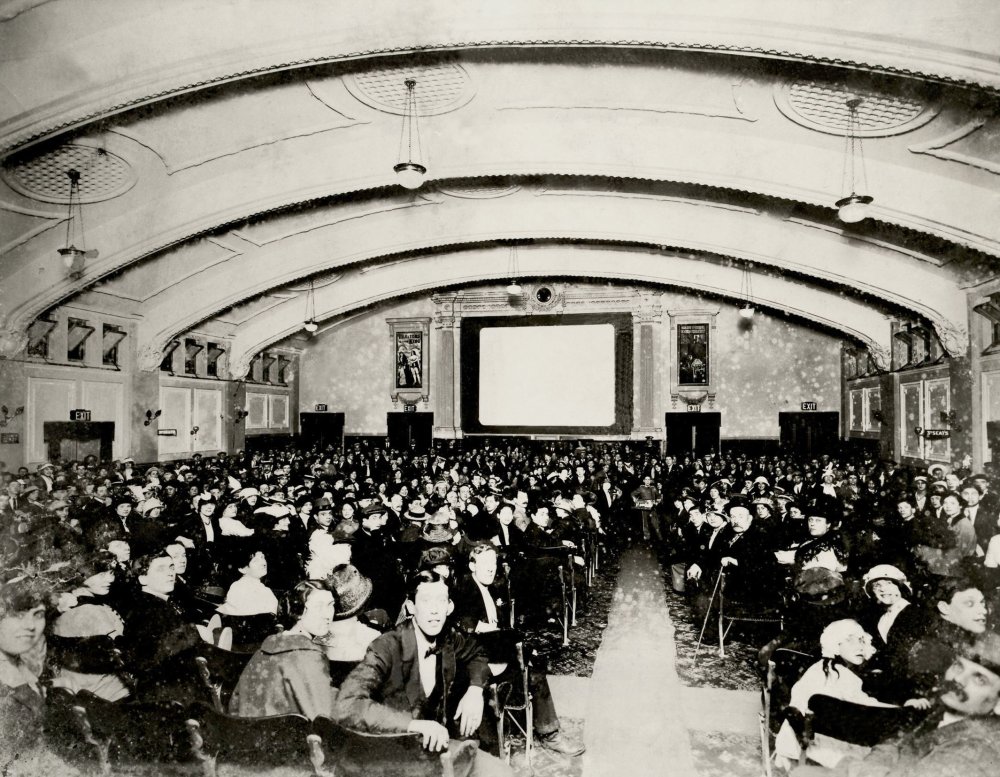
palladium-cinema-mile-end-1913 courtesy of cinema museum

A rare photo of a cinema interior in 1913.  (Image courtesy of the Cinema Museum)

When I was a member of the College of Teachers at a Steiner school a few years ago, we would occasionally be approached by a parent or group of parents who, fired up with goodwill and enthusiasm for the school, wanted to suggest a new development that they thought would benefit the pupils and the wider school community.

Most of the time these proposals would be welcomed; but in a few unfortunate cases it might happen that these parents, without knowing what was wrong, would find that their proposal had bumped up against a kind of invisible glass ceiling and no further progress could be made.

What had gone wrong in these cases? Those who know Steiner schools will realise that these parents had unwittingly come up against some kind of principle followed by the teachers, but which may not have been widely communicated or understood by parents.

One such case I remember well; a parent, who was in his professional life a film director, approached the College with a proposal to start a film club. The idea was that once a month or so he would set up a big screen in the school theatre, provide all necessary equipment and show films of real artistic worth to an audience of pupils and parents. He would provide an introductory lecture himself or invite his contacts from the industry to come and talk to the audience, either before the showing or in a Q&A session afterwards. The income from ticket sales would go towards school funds. A wonderful offer, one would have thought, and something that surely most schools would have welcomed with open arms.

What happened when the proposal came to a meeting of the College was that several teachers were clearly opposed to it, on the grounds that Rudolf Steiner had made disparaging comments about cinema and its effects on human beings; and that in a world overwhelmed by technology, together with the impact that electronic devices were having on the attention levels of the pupils in their classrooms, the school should do nothing further to encourage more technology in the school. The school’s policy at the time was that ideally pupils should not have access to computers or mobile phones until they were at least 14 years old, but a combination of social media, peer pressure and parental unwillingness to conform to this policy was making it extremely difficult to hold the line.

I was reminded of all this when I came across a book called The Future Art of Cinema – Rudolf Steiner’s Vision* by Reto Andrea Savoldelli, a Swiss filmmaker and scholar of anthroposophy.  What surprised me about this book was the author’s contention that Rudolf Steiner was not opposed to cinema per se and that, if he had lived longer, he would have been involved in seeking to develop a cinematic art of genuine benefit to humanity.

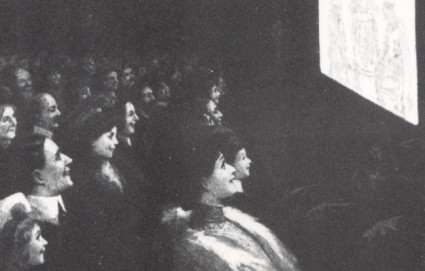
silent cinema via the bioscope

(Image via The Bioscope)

According to Herbert Hahn, when Steiner was living in Berlin, “he went to the cinema from time to time to see especially typical and characteristic new films”.  Probably most anthroposophists, myself included, would have formed their idea of Steiner’s attitude to these early films from a lecture he gave in Berlin on 27th February 1917:

“It is quite natural that the world today should be confronted with impulses leading entirely to materialism. That cannot be prevented, it is connected with the deep needs of the age. But a counterbalance must be established. One very prominent means of driving man into materialism is the cinematograph. It has not been observed from this standpoint; but there is no better school for materialism than the cinema. For what one sees there is not reality as men see it. Only an age which has so little idea of reality as this age of ours, which worships reality as an idol in a material sense, could believe that the cinema represents reality. Any other age would consider whether men really walk along the street as seen at the cinema; people would ask themselves whether what they saw at such a performance really corresponded to reality. Ask yourselves frankly and honourably, what is really most like what you see in the street: a picture painted by an artist, an immobile picture, or the dreadful sparkling pictures of the cinematograph. If you put the question to yourselves quite honourably, you will admit that what the artist reproduces in a state of rest is much more like what you see. Hence, while people are sitting at the cinema, what they see there does not make its way into the ordinary faculty of perception, it enters a deeper, more material stratum than we usually employ for our perception. A man becomes etherically goggle-eyed at the cinema; he develops eyes like those of a seal, only much larger, I mean larger etherically. This works in a materialising way, not only upon what he has in his consciousness, but upon his deepest sub-consciousness. Do not think I am abusing the cinematograph; I should like to say once more that it is quite natural it should exist, and it will attain far greater perfection as time goes on. That will be the road leading to materialism. But a counterbalance must be established, and that can only be created in the following way. With the search for reality which is being developed in the cinema, with this descent below sense-perception, man must at the same time develop an ascent above it, an ascent into Spiritual reality. Then the cinema will do him no harm, and he can see it as often as he likes. But unless the counterbalance is there, people will be led by such things as these, not to have their proper relation to the earth, but to become more and more closely related to it, until at last, they are entirely shut off from the Spiritual world”.

From this, it is clear that Steiner did not have a high opinion of cinema at that time. But Savoldelli has unearthed an interesting letter from J E Zeylmans van Emmichoven, published in the April 1983 issue of Info3 in response to an article by Michael Ende on the artistic potential of the cinema:

“Michael Ende says that Rudolf Steiner was opposed to cinema, and that he even has evidence of comments to that effect by Dr Steiner. I would therefore like to put it on record that, curiously, I can testify to the opposite. For five years I was secretary to the Dutch publisher Pieter de Haan, who joined the Society in 1912, and, until 1924, had many conversations with Rudolf Steiner. Thus he had a very close acquaintance with him.  Mr de Haan often told me that Dr Steiner wanted us to make films. Rudolf Steiner said that it was a suitable medium for presenting the laws of destiny in the course of recurring incarnations. It is my belief that Dr Steiner was a little different from how many nowadays imagine him to have been”.

A very intriguing thought – so what kind of films would Rudolf Steiner have wanted to be made? Here Savoldelli is constrained by the paucity of available evidence but, as an anthroposophist and filmmaker himself, he cites several examples that he believes indicate the kind of direction in which Steiner would have wanted the art of film to develop. These include forerunner experiments with technical stage developments for eurythmy performances that were devised by Jan Stuten and Hans Jenny (there is a very good account of their groundbreaking work with Steiner here), as well as the work of film directors such as Pasolini, Bresson, Tarkovsky, Godard, Kurosawa, Allen, Cassavetes, Wenders, Malick and many others. And of course, George Lucas in his Star Wars Saga, made much (unacknowledged) use of Rudolf Steiner’s spiritual science: the duality of evil, which Steiner presented as the battle waged for possession of the human being in the world of spirit between Ahriman and Lucifer, appears in Star Wars as the opposition between Jabba and Vader, whose characteristics strongly resemble those described by Steiner.

Jan Stuten: Sketch 13 from ‘The Metamorphoses of Fear”

We know that, for atheists, it is impossible to conceive of life outside of physical biology. Life, whether conscious or not, is supposed by many natural scientists to be an impossibility without the existence of a physical organism. This narrow thinking leads to atheism, while spiritual-scientific thinking leads to anthroposophy. It is this distinction which lies at the core of hostility by atheists towards anthroposophy and it is based upon Fear – a subconscious fear of the spirit. Fear is the opposite of Love and is one of the most primitive and dangerous of emotions. It is therefore very interesting that Steiner should have suggested to Jan Stuten the theme of ‘Fear’ as a suitable subject for his light-play project.

Stuten took up this theme and initially drafted a series of 15 colour sketches, conceived as staging guidelines, which show the metamorphosis of an intensifying fear through death and resurrection until it is overcome in a peacefully illumined world. He also started to draft musical compositions for each picture or scene. Savoldelli states that the film people around Walt Disney studied Stuten’s 15 sketches on ‘The Metamorphoses of Fear’ with great interest and these, together with the movement language of eurythmy, had an influence on Fantasia, which appeared in 1940.

Savoldelli says that, for Rudolf Steiner, the inartistic nature of cinema lay, among other things, in the fact that transitions facilitated by cuts remain empty, since they are created by purely technical means. And he quotes Steiner from lecture 6 of the Tone Eurythmy course (25thFebruary 1924):

“Now, why is there such a strong urge in our modern age to deviate from the purely musical realm? Something quite beautiful may sometimes result from this deviation from what is purely musical, but why is the urge to deviate from it so strong? It is because the contemporary person has gradually acquired an attitude of mind in which he is no longer able to dream, no longer able to meditate. He has nothing within to set him into movement, and wants to be set into movement from outside. But this being-set-into-movement from outside can never produce a musical mood. In order that modern civilisation could furnish proof of its unmusical nature, it has laid hold of a drastic means to do so. It is really as though, in its concealed depths of soul, modern civilisation wanted to provide the clearest proof that it is unmusical. And the proof is given in that it has produced the film. The film is the clearest proof that those who like it are unmusical. For the whole basis of films is that they only permit those things to be active in the soul which do not arise out of the inner life of the soul, but which are stimulated from outside”.

This is a far-reaching verdict if we consider that it is precisely in the intervals, thus the spaces and transitions in sensory data, that spiritual content can find entry into an artwork. It should be mentioned in this connection that, for Steiner:

“Fundamentally speaking, music is the human being, and indeed it is from music that we rightly learn how to free ourselves from matter. For if music were to become materialistic, it would actually be false: it is not ‘there’! Every other form of matter is present in the world and is insistent. But musical sounds are not to be found in the material world in their original form. We have to devise a means of producing them; they must first be made. The soul element that lives in the human being lies between the notes. But today, because the world has become so unmusical, people are scarcely aware of it”.

I can’t find an online source for the following quotation, which comes from a lecture given by Rudolf Steiner in Stuttgart on 11thJuly 1923. The translation is by Matthew Barton:

“…Please do not take the negative things I say negatively. I don’t want to take anything away from modern culture. The more things are developed, the more enthusiasm I have for them. I don’t want to get rid of either telegraphy or cinema – such a thing would never occur to me. But it is really necessary to consider that two things oppose each other everywhere. The world is entirely taken up with externalisation. And just as one has to dry oneself after taking a bath so the balance must be redressed by immersing oneself in the spirit if, by contrast, a culture of outward tangibility is continually increasing. It is precisely this that will prompt us to become all the more active: being externally caught up in things that no longer work through us but work upon us so that we ourselves are excluded as soul and spirit…”

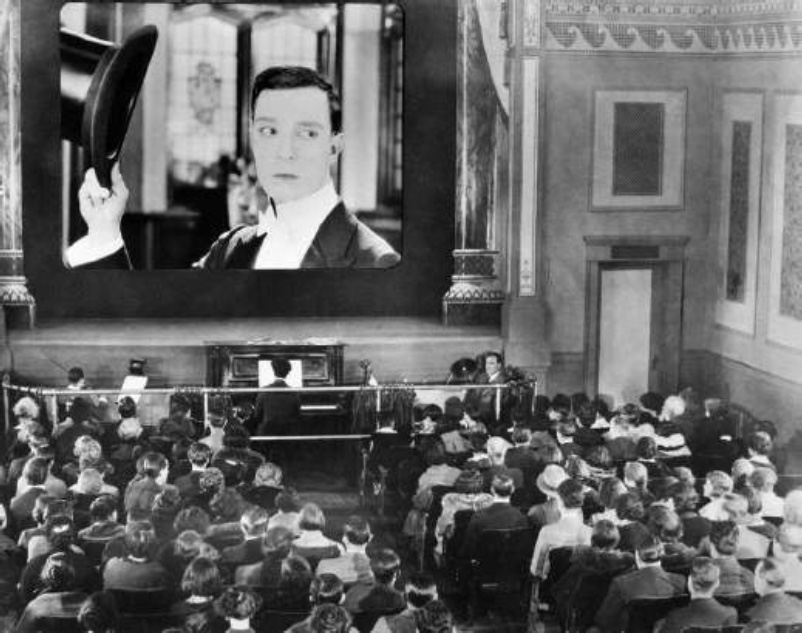
Buster keaton

So, as always with Rudolf Steiner, he reminds us that as human beings we are not just physical beings and that the other half of our existence is lived within the spiritual, unseen realm. It is this subtle realm with which we need to connect if we are not only to understand what it truly means to be a human being but also to give our body, soul and spirit the chance to develop in the way that evolution intended.

And what happened with the proposal to start a film club at our Steiner school? Well, after a great deal of discussion back and forth, it was eventually agreed that the club could start and that the College of Teachers would be given in advance a list of the films to be screened, with a right of veto over any works it considered to be unacceptable (the College never turned down any of the suggested titles). After a flurry of initial interest and several screenings, audience numbers dwindled to a point where the parent organising the programme decided that it was no longer worthwhile to continue – and that was that.

* Published by Temple Lodge Publishing Ltd, ISBN 978 1 912230 40 2

57 Comments

Filed under Cinema

A vision of Christ in Firle

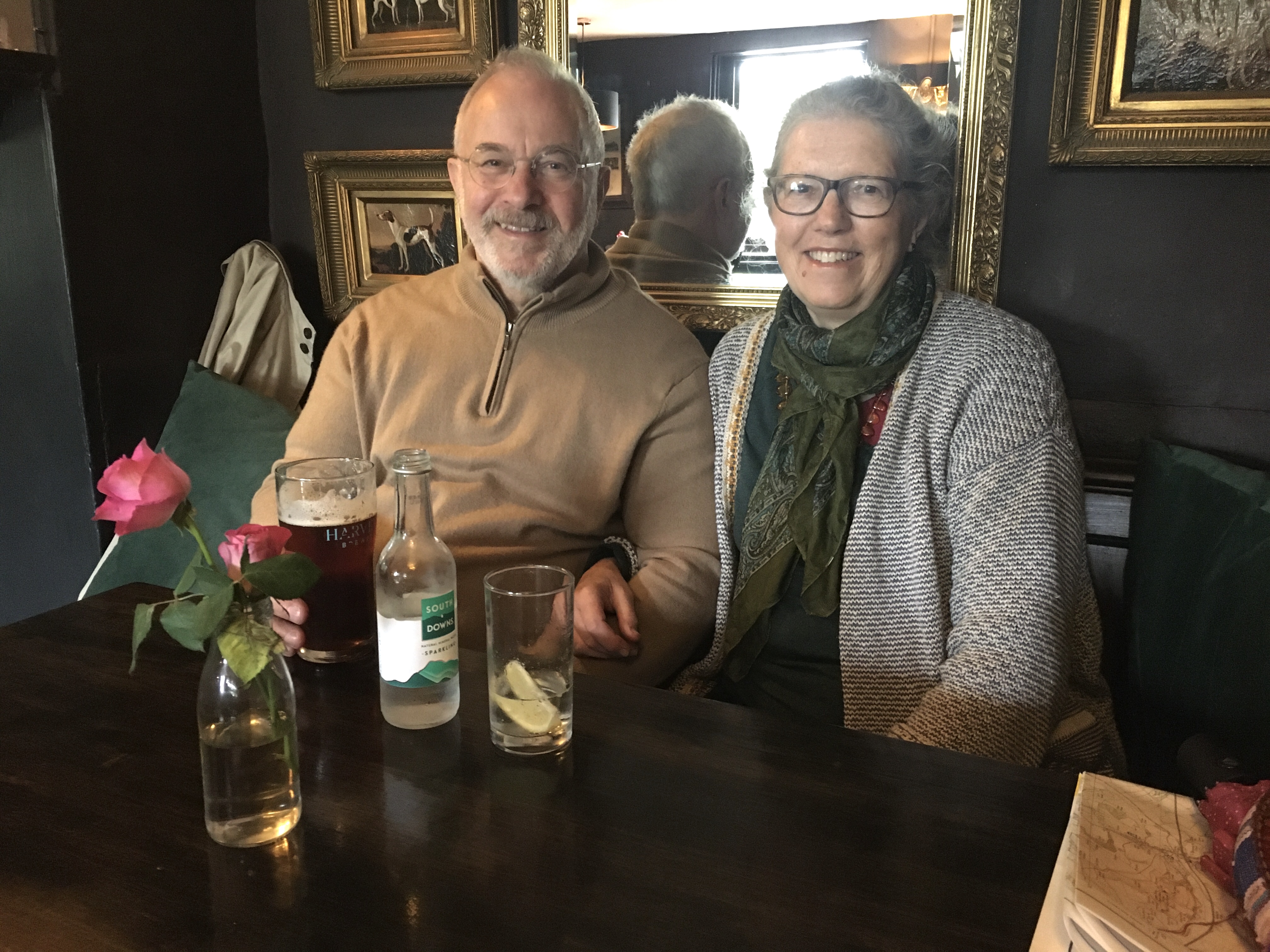
As lockdown restrictions begin to ease in England, we decide to go for our first pub lunch in four months to The Ram Inn, an historic 500-year old pub in Firle, East Sussex.

Ram Inn

Jeremy (with Covid crop and pint of Harvey’s) and Sophia at the Ram Inn. (Photo by Isabella Smith)


Firle is an attractive old village in the South Downs National Park, which manages to remain quite tranquil despite being just a few hundred yards off the ferociously busy main A27 road.  It sits below the high chalk escarpment of the South Downs, from which one can see the English Channel in the distance. The road to Firle from the A27 leads nowhere except to the village and up to Firle Beacon on the downs, so there is no through traffic to disturb the peace; and since there is no street lighting, no traffic signs or road markings, and no modern buildings, one can easily imagine that the village looks very much the same as it did in 1911, when Virginia Woolf took a house there for about a year.

Little Talland

Little Talland House, built in 1904, which Virginia Woolf rented in 1911, naming it after Talland House in St Ives, Cornwall, a place where she had spent many happy holidays in childhood.

After a pleasant lunch in The Ram Inn and a welcome pint of Harvey’s Best Bitter for me, we walked around Firle, passing Virginia Woolf’s house. In a letter describing it to her future husband Leonard, she said: “This is not a cottage, but a hideous suburban villa – I have to prepare people for the shock”. With due apologies to the present occupant, she was not wrong, it is the ugliest house in Firle; nevertheless, she invited members of the Bloomsbury Group and other friends from literature and the arts to visit her there, including Roger Fry, Adrian Stephen, Lytton Strachey, Desmond McCarthy, Leonard Woolf, Katherine Mansfield, Duncan Grant and Vanessa Bell.

We strolled on, pausing only to buy some quails’ eggs from a display outside a house, with an honesty box for payment, and then came to Firle Post Office and general stores, which according to a sign above the door was established in 1780.


Firle+(13)

Firle Post Office, established in 1780. (Photo via Angela Bunt Creative) 


A little further on, we came to a long path between beech hedges which brought us to the West Door of St Peter’s Church. The present church dates from the 12th century, though it is likely that there have been varying forms of religious settlement on the site since Druidic times.

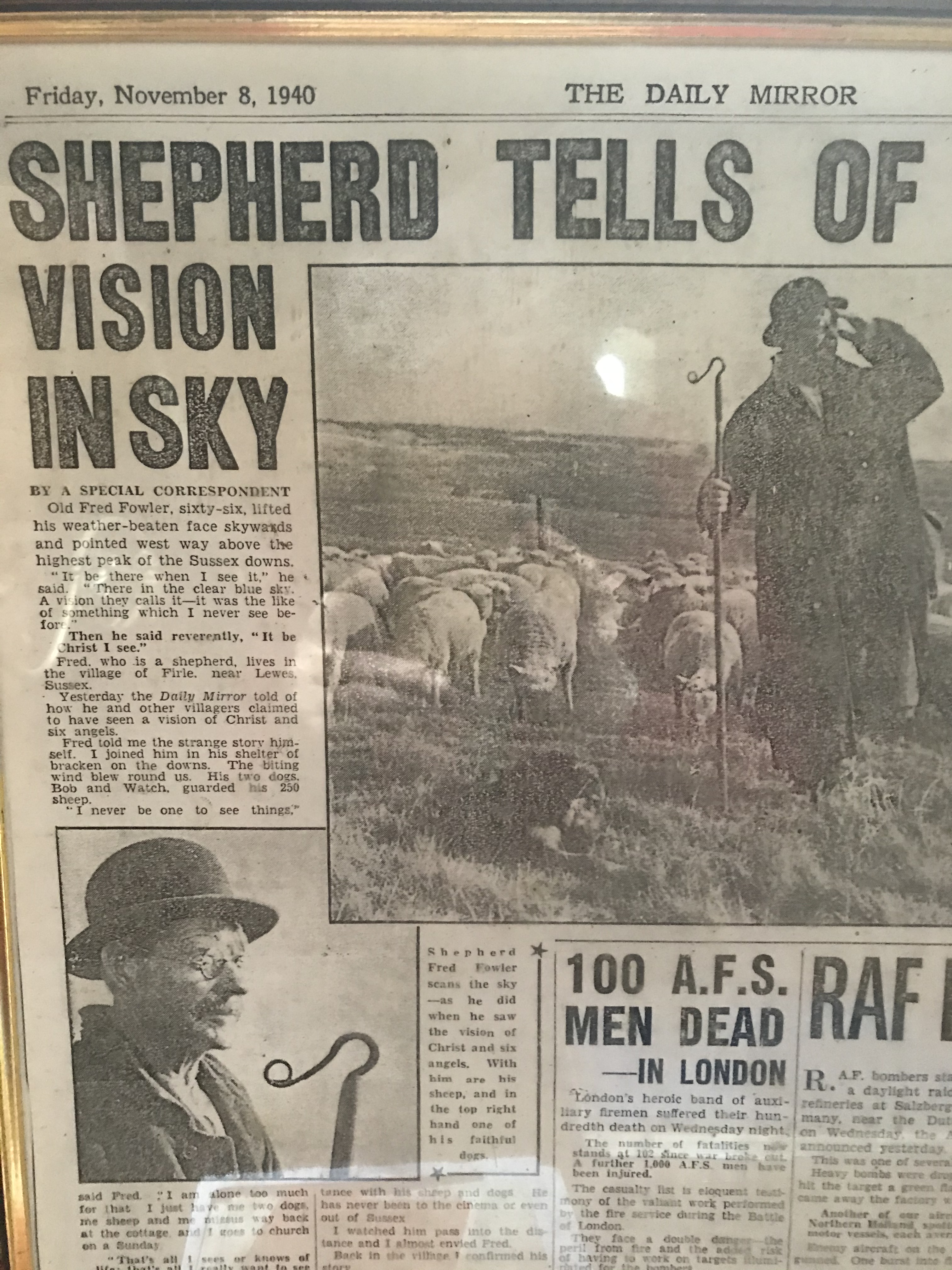
Inside the vestry, I am struck by a newspaper cutting displayed there, from the Daily Mirror of November 8th 1940, with the headline: “Shepherd Tells Of Vision In Sky”.  The article, “by a Special Correspondent”, tells such an intriguing tale that I can’t resist quoting from it extensively:

Daily Mirror

A cutting from the Daily Mirror dated 8th November 1940, which is displayed in the vestry of St Peter’s Church, Firle. Fred Fowler, the shepherd, is holding a Pyecombe hook, a special kind of shepherd’s crook made in the Sussex village of Pyecombe for use with the narrow-legged Southdown breed of sheep local to the area.

“Old Fred Fowler, sixty-six, lifted his weather-beaten face skywards and pointed west way above the highest peak of the Sussex downs. ‘It be there when I see it,’ he said. ‘There in the clear blue sky. A vision they calls it – it was the like of something which I never see before’. Then he said reverently, ‘It be Christ I see.’

Fred, who is a shepherd, lives in the village of Firle, near Lewes, Sussex. Yesterday the Daily Mirror told of how he and other villagers claimed to have seen a vision of Christ and six angels.

Fred told me the strange story himself. I joined him in his shelter of bracken on the downs. The biting wind blew round us. His two dogs, Bob and Watch, guarded his 150 sheep.

‘I never be one to see things’, said Fred. ‘I am alone too much for that. (…) I’d just rounded up the flock that morning – it be about eleven. I says to meself it’s a nice clear day and I looks up west at the sky. Then I sees it. It be like what they tells me the cinema is like, but I thinks it be more real. There came a kind of panel across the sky’.

‘Inside the panel of white there was a cross, with Christ, his head to one side, nailed on to it. Round him were six angels. I counted ‘em, and they wore white cloudy robes to the feet. I know it was to the feet because I even saw their feet. I even saw their toes’.

‘When I got to the village I knew what I had seen was really there. There were other people who had seen it, too. But mine’s a simple life – I just have me two dogs, me sheep and me missus way back at the cottage and I come to church on a Sunday. That’s all I sees or knows of life; that’s all I really want to see or know’.

‘I forgot,’ he smiled. ‘There’s my pint I always have of a night’.

‘Sometimes though, if I think of it all now, the vision I mean, I wonders whether it really was Christ come to help put our world straight again’.

Old Fred walked away into the distance with his sheep and dogs. He has never been to the cinema or even out of Sussex. I watched him pass into the distance and I almost envied Fred.

Back in the village I confirmed his story. There were two sisters, widows, evacuated from London, Mrs Grace Evans and Mrs E M Steer who had seen the vision, and also a neighbour, Mrs Stevens. ‘Actually, we must have seen it a second or so before the shepherd did’, Mrs Evans told me, ‘because when I first looked into the sky it was clear blue. Gradually I saw the panel of kind of white cloud appear. I called my sister because it looked so pretty, then all at once we saw the crucifix and Christ. I saw every detail, to the nails in his crossed feet and the angels rose around him’.

‘One held a harp, another an old-fashioned pitcher with two handles. It was as clear as a picture and then, when I had got over my surprise, I called my neighbour to see the wonderful sight’.

‘Yes’, said Mrs Steer, it was so real it almost frightened me. I am not one to imagine things, and I used to smile at the story about the Angels of Mons – I always thought the soldiers who saw them imagined things, but now I can believe it’.

I called to see the vicar, the Reverend A G Gregor.

‘I saw nothing’, he said, ‘and I think the whole thing is nonsense’.


However, the vicar of Firle’s neighbour, the Reverend JR Lawson, the vicar of Glynde, said in an article published a week later in the newspaper:

‘I think those people who say they saw the vision were too much in earnest to be discredited. After all, our Christian religion is based on the vision of Bethlehem, which was only seen by a few. Therefore, why should not the story of apparently quite earnest people living today be equally believed? I certainly think the vision was seen and I only wish I had seen it myself’.


This is a lovely story and reminds me of The Shepherds’ Play from the Oberufer Christmas plays, not just because of shepherds and angels but because of the simple faith of Fred Fowler. A shepherd’s life consists of tending, watching, minding and guarding his flock, all of which can be summed up in one word: caring. The risen Christ said to Peter, “Feed my sheep”, but the Vicar of Firle’s brusque dismissal of the story sounds as though he was rather in the same vein as Peter, who at first didn’t believe the tales of the women who had visited the tomb on that first Easter Day.

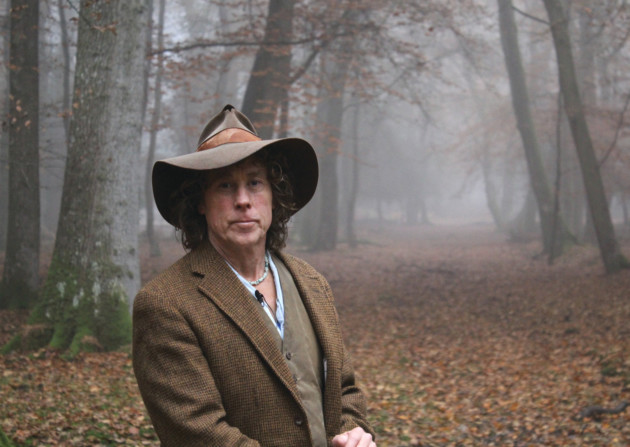
I should add that the present-day Vicar of Firle, the Reverend Peter Owen Jones, is a very different sort of person from the Reverend A G Gregor.

SSX MAY15 Peter Owen Jones

The Reverend Peter Owen Jones, Vicar of Firle. (Photo via Sussex Life)

Firle has other Bloomsbury Group associations besides Virginia Woolf; Charleston Farmhouse, which was the home of several Group members, is just a short distance from Firle. In the churchyard at Firle are found the graves of Vanessa Bell, Duncan Grant, Angelica Garnett (the only child of Vanessa and Duncan), Quentin Bell (art historian, author and biographer of his aunt Virginia Woolf, and the second son of Vanessa Bell by her husband, Clive Bell) and Quentin’s wife Anne Olivier Bell, whose five-volume edition of the diaries of Virginia Woolf is a superb work of scholarship and elucidation.

When we get home, Sophia reminds me of an interesting coincidence: the date of Fred Fowler’s vision of Christ in 1940 is very close to the introduction of the ‘Big Ben Silent Minute’ on the BBC on November 10th 1940. The Silent Minute was an initiative of the adept Wellesley Tudor Pole, in which people in Britain and throughout the Commonwealth were asked to devote one minute of their time at 9.00pm each evening to pray for peace and thus create a channel between the visible and subtle realms through which divine help and inspiration could be received. The prime minister, Winston Churchill, and King George VI, offered their support and accepted Tudor Pole’s suggestion that it should coincide with the chiming of Big Ben in London. On Remembrance Sunday, November 10th, 1940, the BBC broadcast the chimes of Big Ben as a signal for the Silent Minute. This then continued throughout the war years and on up until the late 1950s.

Did the Silent Minute offer some kind of help against the Nazis, in a similar way that Fred Fowler imagined Christ coming “to help put our world straight again”? In a letter to President Roosevelt dated August 11th 1953, Tudor Pole said the following:

“At the end of the War a Staff Officer of the German Intelligence Corps made this remark when under interrogation at British H.Q. in Germany: ‘During the war you had a secret weapon for which we could find no counter-measure and which we did not understand, but it was very powerful. It was associated with the striking of Big Ben at 9pm each evening. I believe you called it the ‘Silent Minute’.”


30 Comments

Filed under Firle, Silent Minute, Vision of Christ

Anthroposophy and social justice

My eye is caught by an interview in The Guardian with Fran Russell, the recently-appointed executive director of the Steiner Waldorf Schools Fellowship. My daughter also spotted the article and sent me the link, with the comment: “To my casual eye, she sounds like the sort of pragmatic, worldly advocate we need!”

That is exactly right – I have known Fran from when she was the administrator at the Greenwich Steiner School and have a high regard for her, both as a human being and as the right person at the right time for a very difficult job; Steiner schools in England, as anyone who is a regular reader of this blog will know, have been going through hard times in recent years, a period in which they have been under intense scrutiny from Ofsted.

What I noticed about Fran’s interview, though, is that she does not appear to have used the word “anthroposophy” once. One clue as to why this may be so can be found in the comments from readers appearing under the interview, in which quite a few people disparage both Steiner and anthroposophy.

I decided to take a look at the website of the Bristol Steiner School, whose head teacher, Ruth Glover, is mentioned in the interview. The school has clearly learnt its Ofsted lessons well and is now rated as ‘Good’. What is also notable is that there does not appear to be a single mention of Rudolf Steiner or anthroposophy anywhere in the website.

Presumably the reason for this absence is that a hard-headed and pragmatic conclusion has been reached that Rudolf Steiner and anthroposophy detract from the message that the school wishes to convey about the benefits of its educational methods. This is a great triumph for Ofsted and the Waldorf critics, who have thus succeeded in separating Steiner from Steiner schools.

Perhaps such an outcome was inevitable, now that Steiner schools have been in existence for around one hundred years, during which time they and the wider anthroposophical movement have accumulated a quantity of historical baggage that has been unhelpful in today’s circumstances. I find it very sad, however, and worry that a Steiner school which cannot bring itself to mention Rudolf Steiner will eventually lose its way, as those running the school will find it politic to bend this way and that in order either to meet the latest Ofsted demands, or avoid the attention of internet critics.

I thought of these pragmatists and trimmers while reading a book called The Living Rudolf Steiner – Apologia by a Dutch medical doctor called Mieke Mossmuller. Here is a passage that drew my attention:

“One does not have to take blindly what he says and writes, one can simply leave it to Rudolf Steiner’s responsibility. Only dogmatists have to answer for their dogmas. A free man does not have to apologise for the statements of another free man. He knows that the free man reflects more deeply on his statements than the unfree man and thus knows that these free statements of free people are perfectly understandable. However, one must not surrender to the lack of freedom of public opinion. Judgements are widely prevalent there which are not intelligent and spiritual enough to bring about free statements or appreciate these statements. Thus, when a contemporary Anthroposophical Society wants to apologise for statements that Rudolf Steiner has made, it shows itself to be a dogmatic sectarian association in doing so. Or else it has striven itself finally to free itself from this Master of the Occident by pulling this master down to its own spiritless level”

This is perhaps a rather harsh and unforgiving verdict on people who are doubtless trying to defend and preserve aspects of anthroposophy within the hostile climate engendered by “the lack of freedom of public opinion”.  Such a pragmatic tendency is probably an inevitable necessity during the present phase of Steiner schools in England and their intense encounter with Ofsted. It is nevertheless one of two distorting tendencies for anthroposophy which have been identified in a perceptive essay by Robert Karp, a former director of the Biodynamic Association in the USA.

Talking about biodynamics but in remarks which are equally applicable to other anthroposophical endeavours, Karp says:

“We do not understand biodynamic agriculture, as well as Waldorf education, anthroposophical medicine and all the other diverse offshoots of anthroposophy, correctly if we think of them simply as “applications” of spiritual science to different vocations. This is an abstraction. In reality, these movements are the result of powerful forces of social conscience living in different individuals and groups of people in the early 20th century, which then received from Rudolf Steiner and spiritual science a certain direction, a certain form through which their social impulses were channelled and further cultivated”

(…) In his lectures published under the title Awakening to Community, (Steiner) describes ‘three acts in the soul drama’ of an anthroposophist, i.e. of a modern human being striving to work in the world out of the impulses of spiritual science.

The first act of this drama Rudolf Steiner describes as the emergence in our biography of a kind of inner refusal to participate in the destructiveness and superficiality of modern civilisation. He calls this a withdrawal or turning inward of the will away from conventionality—conventional thought forms, social forms, and ways of being—in search of something deeper. 

This turning inward of the will is the very ground of the social conscience, wherever it emerges. The tragic conditions of the modern world touch us in some way: through war, poverty, ecological destruction, racial discrimination, childhood abuse, illness, and so on. Whatever these events or trends are, and however they have impacted us, we can find ourselves disgusted, wounded, angered, depressed, sick, offended. Our will is hindered in its natural outward embrace of the world and we go inward in search for something new and different—we are thrust onto a quest for meaning and healing, both personal and collective. For millions of people in our time, this is the beginning of their hero’s journey of liberation from the oppression, violence, and emptiness of modern life.

(…) Biodynamics is not an agricultural impulse derived from the teachings of spiritual science; it is rather, a powerful social impulse working in the domain of agriculture that has united itself with the spiritual substance of anthroposophy. Biodynamics is thus not something that needs to be wedded to, or have grafted onto it, any type of social impulse, movement, or worldview from outside—it is a social impulse in and of itself— with an inexhaustible wellspring of inspiration for social deeds. The same can be said of all the different so-called “daughter movements” of anthroposophy. This uniting of our social impulses with the insights of spiritual science is what Rudolf Steiner refers to as the second act in the soul drama of an anthroposophist”.

Karp then goes on to observe that the social impulses that fuel movements at their founding are not identical to the social impulses that continue to fuel them over time; and therefore it is necessary for two different things to take place:

“First, that it is refreshed, again and again, by new people flowing into it with their unique social impulses and perspectives; and second, that these social impulses are continually wedded to and illuminated by the social and spiritual substance of anthroposophy; just as took place for the founders of the movement.”

If neither of these things happen, Karp suggests that an anthroposophical movement can be distorted in two different ways:

“a. It can close itself off to the fresh social impulses of succeeding generations or from people in very different regions and cultures, and thereby become less and less relevant to the present time, enclosing itself, as it were, in a kind of sectarian skin formed by devotion to the experiences of the founders and to an ever smaller circle of people in the present. We could call this the sectarian tendency. Or:


b. It can welcome new people and fresh social impulses but neglect the process of uniting these social impulses with, and illuminating them through, the substance of anthroposophy; instead adopting and grafting onto itself all kinds of perspectives, narratives, and agenda from movements outside itself. We could call this the grafting tendency.

I find this to be a very acute observation. It is clear that Steiner schools in England, because of the need to accommodate themselves to Ofsted’s requirements, are currently in the grip of (b), what Karp calls the grafting tendency.

One might also say that many Steiner schools find themselves in this position partly because of having been for far too long caught up in (a) the sectarian tendency.

This brings us on to what Steiner called Act III of the soul drama of the anthroposophist: 

“Essentially, he suggests we reach a crisis point in our biography as we seek to embody the universal impulses of anthroposophy within the unique circumstances of our destiny—a process that requires us to confront, ever more deeply, the limitations, wounds and weaknesses of our personality, which includes, of course, the limitations of our familial and cultural heritage. This is a drama marked by great inner struggle with our lower selves: our illusions, our biases, our fears. Yet through this process of self-confrontation and self-emptying, new capacities arise, new-born powers of soul that ultimately can allow us to unite our personal destiny with the destiny of the time and place in which we live. (…) We are reborn, you could say, as world citizens from the confines of our intimate anthroposophical and biodynamic communities. Rudolf Steiner calls this the awakening of a Sophia power in our souls, thus connecting this initiation, in a certain way, with the mysteries of the divine feminine in our time.”

In Karp’s view, the tragedy of the sectarian tendency is that certain existential questions of the time simply don’t get asked or answered, or the people who could ask and answer these questions are not invited to the table. The tragedy of the grafting tendency is that the right questions are asked, but they are not brought into relationship with the being of anthroposophy for illumination and guidance. 

What is the solution to these dilemmas? Significantly, at a time when the death of George Floyd in Minneapolis has brought the spotlight as never before on racism and inequality, Karp suggests that what has been missing in our movement is an individualised approach or response to the questions of social justice drawn from the profound social and spiritual heart of anthroposophy.

Rudolf Steiner addressed with urgency the social justice issues of his time, including education; and together with the businessman Emil Molt, he founded the first Steiner school in Stuttgart in 1919 on the basis that it had to be accessible to both boys and girls from all walks of life, fees must not be charged, and the teachers needed to have complete autonomy to teach as they saw fit. Being free from most standards imposed by the state was seen as a way to teach to the child’s needs, rather than to fit that child into a social order.

This social mission is still felt in many places and Steiner schools around the world. In the US and the UK, however, Steiner schools began as private, fee-paying schools which by definition exclude many children who would benefit from such an education. The roots of anthroposophy are in social justice so it is sobering to reflect that today, one hundred years after that first school opened in Stuttgart, we are no nearer to achieving an educational system that is both free to all and free from state interference.

17 Comments

Filed under Anthroposophy, Biodynamics, Social justice

Whitsun: the Festival for Our Time

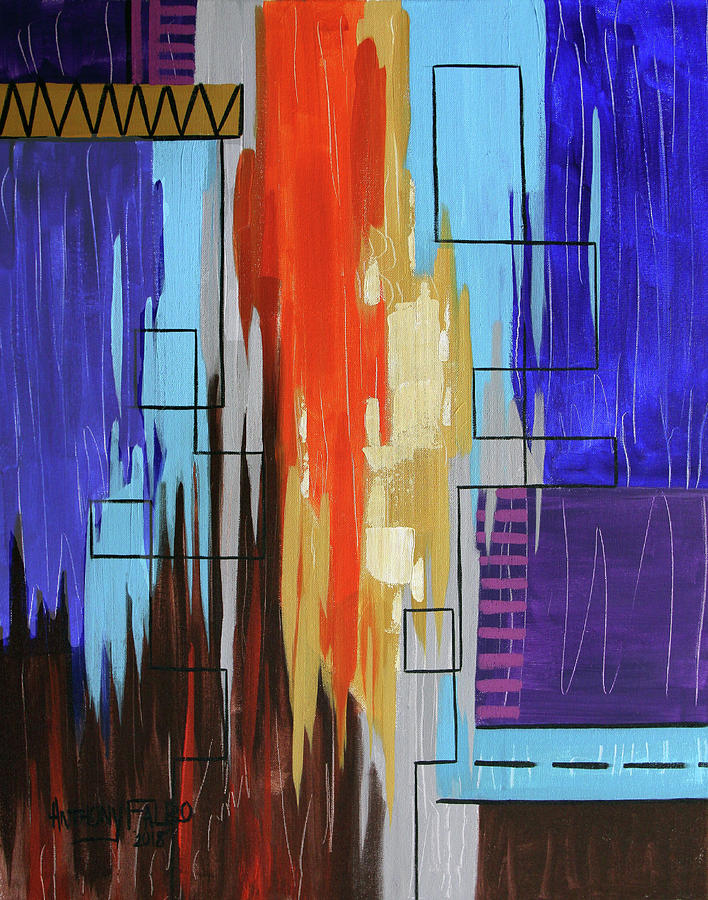
Pentecost Acts 2-2-4 by Anthony Falbo (via Pixels)

I was born into a non-churchgoing family and while I was growing up did not pay much attention at school to the Religious Knowledge lessons; so by the time my formal education had finished, I had acquired only the haziest notion of the Christian festivals and their significance.

Since becoming profoundly inspired by the work of Rudolf Steiner and learning of the absolute centrality Steiner gave to what he called the Mystery of Golgotha, I’ve regretted my lack of knowledge and have been trying ever since to catch up on the meaning of the various Christian terms that are used in his lectures. I’ve learnt, for example, that what Steiner meant by the Mystery of Golgotha was Christ’s crucifixion and death, his descent into the underworld (“the Harrowing of Hell”) and subsequent resurrection.

Rudolf Steiner in Europe in the early days of the 20thcentury was of course secure in assuming that the vast majority of the people listening to his lectures would have immediately understood terms such as ‘Resurrection’, ‘Ascension’, ‘Pentecost’ or ‘Whitsun’. I suppose there was a time up until the 1950s or ‘60s when most people in many parts of the world would have shared a common culture based on a knowledge of the Bible.

There were still remnants of this shared culture when I was growing up; but those days have now largely gone and today, to use a reference deriving from the Christian story will be to leave many of one’s audience in the dark about what is meant. Worse than this, some people will jump to the conclusion that, to use Christian terms of reference somehow belittles or marginalises people of other faiths, or those of no faith. But even if one is familiar with the Bible, the esoteric Christianity taught by Rudolf Steiner can come as both a shock and a revelation if you are new to it.

For these reasons, I am now approaching with some hesitation the task of making the case that the Christian festival of Whitsun is of huge relevance at this particular time for each one of us, whether we are Christians or not.  I did not previously have much awareness of Whitsun, certainly by comparison with Christmas or Easter. Yet I’ve discovered that Whitsun has a special relevance for us today because it is the Festival that celebrates the birth of the free human being as we attempt to overcome the desires of the lower self and surrender to the Higher Self. It has also become clear to me that there are fundamental connections between Christmas, Easter and Whitsun of which I was previously unaware.

Perhaps a good starting point for those who, like me, did not have a formal Christian upbringing and may be a little bit vague about the meaning of Ascension and Whitsun, would be to clarify some terms. Whitsun and Pentecost are two names for exactly the same Festival, which is the commemoration of the fiftieth day after the resurrection of Jesus Christ (‘Pentekostos’ is the Greek for 50). It was at Whitsun when the Holy Spirit descended upon the disciples and they began speaking in tongues. Ten days before Whitsun (and forty days after the Resurrection and always on a Thursday) is the Feast of Ascension, which marks the day when the disciples witnessed the physical departure of Christ as he ascended into the presence of God in Heaven.

But what does this all mean, and why should it be highly relevant for every one of us today, irrespective of whether we have some religious belief or none?

To answer that, I have found it very helpful to refer to what Rudolf Steiner has said about the reasons for the incarnation of Christ the Sun Spirit within the human body of Jesus of Nazareth during the last three years of his life and why Steiner saw this as the most important event not only in human history but also in the evolution of life on Earth.

The Son-Aspect of God made the stupendous sacrifice of experiencing human death through crucifixion. A stupendous sacrifice, because according to Steiner, beings of the higher hierarchies have never experienced birth and death in their own worlds; in the divine worlds, there is no birth or death, only transformation or metamorphosis from one state of existence to another. Steiner has described in his lecture ‘The Etherisation of the Blood’ how Christ’s divine blood ran into the earth from the body on the Cross and in so doing transformed the whole etheric field of the Earth. The Resurrection occurred three days later, and has been commemorated by Christians on Easter Sunday ever since.

But I suspect that most Christians will find Steiner’s comments on aspects of the Resurrection to be astonishing and controversial. I personally find these comments deeply moving and they help me to understand part of what the Resurrection was really about. I can recommend here that one should read the lecture cycle ‘From Jesus to Christ’ and especially Lecture 6 for some truly mind-expanding concepts of the meaning of the Resurrection and in particular, the nature of the Resurrection Body. (As an aside, it is striking that in his 1924 lecture series on The Book of Revelation (not online but available from Rudolf Steiner Press), Rudolf Steiner says that the words of St John must be taken literally – and he explains in great detail how these are to be understood.) But of course, at our present stage of development, we can only understand a tiny part of the significance of the Resurrection for humankind, the Earth and the Cosmos. As St John put it in the last sentence of his Gospel, if all the deeds of Christ were to be written down, ‘I suppose that even the world itself could not contain the books that should be written.’

For six weeks after the Resurrection the Risen Christ showed himself to the disciples in the Resurrection Body, able to come and go and be in more than one place at a time. Then came the Ascension, when the disciples appeared to lose Christ as he was taken ‘up to heaven’.  According to Steiner, this is where the Christ moves into the realm of the etheric field and thus disappears from physical view; but from now on and into our own times, the Christ is everywhere and within the etheric body of every plant, tree, animal or human being. On Ascension Day, further conditions for Whitsun were created.

Why did the Christ need to incarnate in a physical body and then experience death? The form in which the physical forces of Christ appeared to the disciples after the Resurrection was not, according to Rudolf Steiner, a body of flesh and blood, but a spirit body perceptible to the eyes of the soul of the disciples and women who had been prepared to perceive it. This Resurrection body, which Steiner calls the ‘phantom’, was the archetype of the physical body existing in the external world, with all the attributes of the physical body. It was this phantom body or archetype of the physical human being which had been under systematic attack by the adversarial forces; by the time of Christ’s incarnation these forces had so advanced the hardening and condensing processes on Earth that it was becoming likely that human beings would have lost all touch with their spiritual origins.  Part of what the Deed of Christ brought about was to rescue the physical-etheric nature of human beings from the clutches of those beings who wished to destroy it. Steiner spoke more about this here.

So the Mystery of Golgotha was for all human beings and for all life on Earth, not just for Christians. Just as the physical sun shines on everyone on Earth, so has the Deed of Christ affected every single one of us ever since.  The irony of course is that in modern times, as Wikipedia’s article on the Ascension of Jesus puts it: “a literal reading of the ascension-stories has become problematic, due to the differences between the pre-scientific cosmology of the times of Jesus, and the scientific worldview that leaves no place for a Heaven above us.”

Despite this, let us press on to Whitsun, even though we may lose some scientists along the way. Ten days after the Ascension came the event of Pentecost at Whitsun, and the descent of the tongues of fire upon the heads of the disciples. Here the Holy Spirit came in the form of the Gifts of the Spirit on the first Pentecost. Before he was crucified, Christ had told the disciples: “And I will ask the Father, and he will give you another Counsellor to be with you forever — the Spirit of truth. The world cannot accept him, because it neither sees him nor knows him. But you know him, for he lives with you and will be in you. I will not leave you as orphans; I will come to you”. John 14:16–18

That promise was fulfilled when Peter and members of the early Church were in Jerusalem for the Feast of Weeks:

“When the day of Pentecost came, they were all together in one place. Suddenly a sound like the blowing of a violent wind came from heaven and filled the whole house where they were sitting. They saw what seemed to be tongues of fire that separated and came to rest on each of them. All of them were filled with the Holy Spirit and began to speak in other tongues as the Spirit enabled them”. Acts 2:1–4

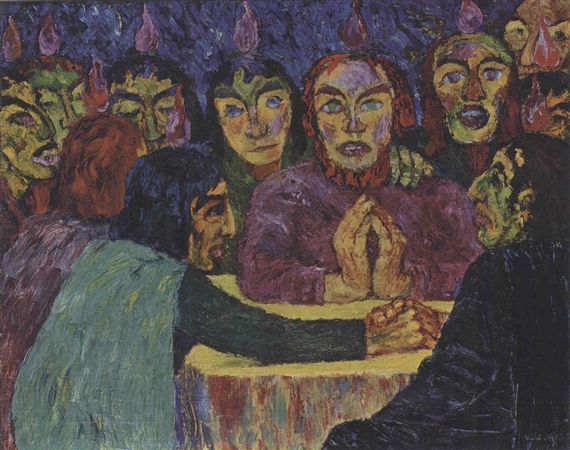
Emil Nolde 1909 via MutualArt

Pentecost by Emil Nolde (1909) via MutualArt

The apostles were inspired to talk in tongues when the Holy Spirit descended on them as they prayed together. Upon hearing the unfamiliar language spoken, the gathered onlookers in Jerusalem believed them to be drunk. But, Peter explained, they were in fact inspired by the spirit. He then delivered the first Christian sermon, which led to the conversion and baptism of 3,000 people. It is this sermon that many believe was the birth of the Christian church as an official movement.

Whitsun is, in fact, the completion of Easter and the completion of Christ’s mission on Earth. At Whitsun the spirit of a community or of a humanity based on the will of free individuals prevails, rather than that of a group soul or a bloodline. For an understanding of the Whitsun event from an esoteric perspective, I can do no better than urge you to read Judith von Halle’s lecture, ‘The Whitsun event at the time of Christ’, which is to be found in her book And If He Has Not Been Raised…  Here are some quotations from that lecture:

“With the completion of Christ’s mission every human being was given the possibility of comprehending the Trinity without having to leave his body. The mission of Christ, the plan of the Gods, encompassed the festivals of Christmas, Easter, and Whitsun. On Christmas Day the body was prepared into which the Father God could send His Son. The power of the Father God is expressed in this event: Ex deo nascimur. Since then the human being can feel that he as well is born out of the immense Godhead and into his earthly body.

There then follows the Easter festival, in which the human being can know the Son of God while on Earth. The human being has to become aware that of course he inhabits a body but he is not just a body. The human being can understand that in death his soul can rise again in Christ: In Christo morimur.

Rudolf Steiner once said: ‘From the moment of this inner experience of Easter, if we now suffuse the spirit which has become centred within itself with meaning that is not from this world but from the spiritual world, we will experience Whitsun. It depends on this inner experience of Easter whether we experience Whitsun’. This is why Whitsun is firmly linked to the movable feast of Easter”.

Judith von Halle continues:

“The Father sends the Son to the Earth. The Son experiences earthly death, He penetrates the body of the Earth, and the Resurrection takes place. From now on, through the Holy Spirit, the human being is able to bring about the return to the Father. This is the basis for understanding karma. You can only understand the idea of karma when you have first come to an understanding of the idea of Whitsun, for Whitsun is not a ‘passive’ festival of grace like Easter, for which the human need do nothing, Whitsun is rather a festival where the human being is active. Here the human being can work positively on his karma if the Rosicrucian saying lives within him. He knows that he is at home in the spiritual world: Per spiritum sanctum reviviscimus. Reviviscimus means, we will live again. The human being must take this step himself within evolution on the Earth: the fully conscious step of returning to the Father, developing himself through all his incarnations. The possibility of taking this step has been given to him by the Son of God (‘No one cometh to the Father, but by me’ – John 14:6). But it is up to the human being to carry it out.”

The Pentecost event at Whitsun gave us the possibility that the individual soul who is willing to ask for help out of his or her spiritual striving could be flooded with Christ Power. Each one of us has his or her Higher Self or spiritual principle, which is Christ-filled.  But it does require our individual effort.  Steiner puts it like this:

“…because this essence and meaning can be fully grasped by spiritual knowledge alone, not by material knowledge, it follows that the truth of the Whitsun festival can be grasped only when men realise that the sending of the Holy Spirit is the challenge to humanity more and more to achieve Spirit-knowledge, through which alone the Mystery of Golgotha can be understood”.

Steiner also said:

“Thus we now understand what the power of the Holy Spirit is: it is the power which will raise each man ever more and more above all that differentiates and separates him from others, and makes him a member of the whole of humanity on the earth, a power which works as a bond of soul between each and every soul, no matter in what bodies they may be”.

This is why Whitsun is the festival for our age, the epoch of the Cosmic Whitsuntide. It gives us the possibility for the community of the future, in which each one of us is able not only to move into full individual consciousness but also to develop a sense for universal brotherhood – but only if we can find it within ourselves to resist the dangers inherent in this emphasis on the individual – which are selfishness, egoism and materialism.

The Christ impulse pours in at this time but it needs the inner initiative of the individual soul to lift and open itself to that impulse. To end, here is another quotation from Judith von Halle:

“Whitsun is the birth of the conscious and free fourfold human being, is the birth of the free human being not only in the way it has given the fullness of grace of the Easter event to each human being, regardless of how he stands in relation to Christ, but is also the birth of the free human being in his astral body and in his individual self, in his soul and in his spirit.  Because every human being must and above all can create by himself this connection to Christ in his soul and in his self, it is also clear that the outpouring of the Holy Spirit is not only intended for the disciples at the time of Christ, but can be for every person who is presently in the world.”

43 Comments

Filed under Pentecost, Whitsun

Guest Post: CoronaControversies

by Steve Briault

Steve Briault is the Director of Development at Emerson College, where he is responsible for the College’s education programme as well as its capital assets and finances. He was previously an  organisation  consultant  with  25  years’  experience  of  advising companies,  government and voluntary organisations on management processes and structure. He is currently also Chair of Trustees at The Mount Camphill Community and has been trustee and/ or Chair of a range of other charities. His early career included co-founding and managing the Pennine Camphill Community, and restoring the financial stability of a Waldorf School in the role of Administrator. He taught at the Centre for Social Development at Emerson College in the 1980s and has been connected with the College since then. Steve is the author of two books: ‘Working It Out’, a handbook for violence prevention in working with young people, and ‘The Mystery of Meeting – relationships as a path of discovery’. He is also joint editor, with Martin Large, of ‘Free, Equal and Mutual – Rebalancing Society for the Common Good’, a collection of essays to mark the centenary of Rudolf Steiner’s social threefolding initiative.

Steve Briault

Like many people, I have continually been receiving messages, links, videos and documents containing different narratives about the source, severity, nature, meaning and indeed existence of COVID-19. Alternative theories are flying around the internet, some almost seeming to become viruses in themselves.  Many such materials are sent with an exhortation to “wake up” (i.e. believe their content) and/or to circulate them further.  In this infected and confusing landscape it can be hard to orientate oneself, to avoid paranoia or complacency and to make balanced judgements and decisions.  Having immersed oneself in anthroposophy, even over many years, does not, I observe, guarantee clear thinking, wise discernment or immunity from the temptation of assuming that one automatically knows better than others, particularly than the so-called mainstream view of events.

As part of my own efforts to orient myself in this toxic force-field, I have tried in this document to outline some principles which I believe are important in assessing and responding to diverse claims, and also to categorise and evaluate as far as I am able the different types of theory  which are circulating.  (I prefer to avoid the term “conspiracy theory” which is often used to dismiss controversial ideas.  Just because there is a conspiracy theory, doesn’t mean there isn’t a conspiracy: equally, it doesn’t mean there is one…).

Principles I would hope to follow:

  1. Respect conventional science. Steiner repeatedly made clear that natural science is not wrong, but rather, incomplete; and requires spiritual science in addition to create a full picture of the human being and the universe. He also emphasised that the methods of modern science – sound logical thinking, observation and experiment – are the basis on which anthroposophy differs from other and earlier spiritual disciplines. I’m uncomfortable with the use of “materialist” as a term of abuse: materialism is one of twelve legitimate world-views, valid in its own terms though needing the other eleven to balance it.
  2. Enquire rather than asserting. Many of the materials, videos, texts etc. currently circulating which “question” the mainstream narrative do not actually question at all, but simply assert – often in aggressive, dogmatic or self-congratulatory tones – the certainties of the author/presenter.  If present at all in such messages, questions are mainly rhetorical or sarcastic. One of the most impressive aspects I experience from many “mainstream experts” is their frankness about what they don’t know or where they are uncertain – e.g. the origin of the virus, the accuracy of the tests, the predictions about and measurement of the rate of infection etc. Questioning, and the testing of hypotheses against evidence, are healthy scientific principles which we should also adopt. We should enquire open-mindedly, not jump to adopt extreme assertions which we have not ourselves independently verified.
  3. Avoid vilification of individuals or categories of people. Calling those who promote vaccination “mass murderers”, accusing people like Bill Gates of genocide and attempted world domination, or painting the BBC as an inveterate purveyor of disinformation, does no service to legitimate questioning of current practice and reporting.  I have worked with many people in the civil service, the BBC, production and service industries, and with hundreds of NHS doctors, nurses, researchers, statisticians and managers, and found them with very few exceptions to be men and women of intelligence, probity and good intention.  The idea that these and hundreds of thousands like them are either so stupid and naïve, or so corrupt, as to be part of a massive plot to deceive and harm the general population, seems to me completely incredible as well as highly disrespectful.
  4. Exercise modesty and responsibility in what we say and what we circulate. It is remarkable how many non-scientists – cultural workers like myself – now feel themselves able to speak with confidence about issues well outside their own competence, on the basis of having been convinced by something posted on YouTube.  Questioning the authority of conventional scientists should not lead to unquestioning acceptance of the authority of alternative, self-designated “experts”.   I think it’s unwise and irresponsible to propagate narratives that could create unnecessary alarm – as may or may not be the case with 5G – or indeed complacency where there should be alarm – as with climate change – unless one has checked the evidence and its source oneself.  Encouragingly, I have also been sent links recently in which people who had propagated a controversial view have retracted this and apologised in the light of what they subsequently discovered.
  5. Think for oneself. As anthroposophists, we should be mindful of Steiner’s repeated enjoinders to develop clear thinking and independent judgement. In assessing controversial claims, I think this would include asking oneself, and if possible researching, questions such as:
    • What is the background and qualification of the person making these statements?
    • Do their claims make sense in the context of other knowledge and experience I have?
    • Is it plausible that the alleged conspirators would behave as described? Why would it be in their interests to do so?
    • Where my own expertise is limited, whom would I trust to give me informed comment? In my own case, it has been very helpful to be able to consult two of my sons, both Waldorf-educated and scientifically trained – one an environmental engineer, the other a hospital anaesthetist currently treating coronavirus patients.

A typology of controversialism:

These are some of the main categories of theory I have seen recently:

  • Minimalizing: this is the narrative that suggests that the virus, if there is one, is in itself relatively harmless, only dangerous for small sections of the population and essentially little different from many other viruses and coronaviruses that create colds, flu etc. The argument is that for whatever reason, with whatever motivation, the danger has been exaggerated and therefore the lockdown measures unnecessary. This account seems mainly to have come from a number of German doctors: in that country the infection and mortality rate has been far lower than elsewhere in Europe and the US – less than 10,000 deaths compared to c.40,000 in the UK – and it is quite likely that most of those fatalities were indeed people whose age or existing conditions made them particularly vulnerable.  Donald Trump started his erratic and politicised approach to the epidemic by denying, then minimising the threat; now in the face of more than 80,000 deaths he declares it “the worst ever attack” on the US.

 The clearest evidence seems to suggest that although harmless for many, COVID-19 can be deadly not only for the well-known high-risk groups, but also for some who are neither elderly nor otherwise unhealthy, and the reasons for this are still unknown.  My medical son has seen a previously healthy 52-year-old man with no pre-existing conditions die from the virus – “no matter how much oxygen we put into him, his body just couldn’t absorb it…one after another his organs just went down; and there was nothing we could do”.  Besides this unpredictable severity, the coronavirus does seem to be much more easily transferred than other viruses, meaning that without controlling the spread, and with no vaccine and no treatment, an indefinite and potentially very large number of individuals could die in this way.

  • Unlockdownism: the minimisation narrative naturally questions the necessity for the social isolation measures which have been imposed in the UK and elsewhere. There are undoubtedly severe, widespread and damaging unintended consequences to the lockdown – economic, social, psychological and indeed medical – and it is absolutely legitimate to question whether and for how long they should continue.  At the same time, it is also clear that those countries – especially ones with obedient populations – which reacted quickly, consistently and radically to the arrival of the virus, escaped much more lightly in terms of infection and mortality rates. South Korea, Hong Kong, Singapore and China are examples of this, but also Germany and Switzerland.  Mask-wearing, contact tracing, testing and full social distancing were effective in controlling the spread; the initial policy of the UK government, which relied on the gradual acquisition of “herd immunity”, failed and had to be replaced by the current controls, which may as a consequence have to be in place for much longer than elsewhere.

If the authorities are clear that a “second peak” must be avoided to protect the NHS, the policy of maintaining restrictions to keep the “R” number less than 1 makes sense.  Whether we agree with this policy or not, it’s also clear that to succeed it needs all or most of us to adhere to it; and it is therefore understandable that the government avoids dwelling on the disadvantages in order not to undermine the primary message.  In Germany the infection rate is now (10thMay) rising again as a result of easing the lockdown.

A 70-year old friend who is unhappy about the lockdown wrote to me that she would embrace her own death (from the virus) if that would serve the freedom of her children and grandchildren. I would want to respond: that is indeed very noble, but it’s not about you and your choices, it’s about those people whom the restrictions are designed to protect, and who might prefer not to die prematurely even in the notional cause of freedom.

  • Corporate conspiracy: there is a school of thought which suggests that the “plandemic” was deliberately created or fabricated in order to serve commercial interests, which are variously suggested as profiting from vaccination products, bail-outs from governments, or the development of testing or tracking technology. I am as suspicious as anyone of the influence and motivation of large corporations and the owners of capital who control them, and appalled that the impact of coronavirus is disproportionately affecting those who are already disadvantaged.  Nevertheless, the idea that the epidemic was somehow designed to serve corporate interests overall does not bear scrutiny. The impact on share prices, financial institutions and government debt has been enormous and highly disadvantageous to global capital.  This is why Trump and his neo-con supporters, who desperately need a strong US economy to facilitate DT’s re-election, initially denied and minimised the problem.  Of course, some people and businesses will always find ways of profiting from human suffering, and the pharmaceutical industry in particular has a lot to answer for in this respect;  but it will rightly come under great pressure to make products than can prevent or treat COVID-19 as widely and affordably available as possible.
  • World domination: another source of anxiety is the prospect of some kind of “world government” being created, using (or perhaps manufacturing) the pandemic as an excuse to subject us all to centralised authority. (The same accusation has been made in relation to climate change.) This is a genuine concern and dilemma: on the one hand, the dangers of global governance and its potential for oppression, corruption, and loss of diversity and liberty, are obvious; on the other hand, the lack of international coordination and cooperation has clearly inhibited a coherent and effective response to a global threat – as indeed has been the case, tragically, in relation to climate change.

One fruitful approach to this dilemma is clearly the principle of social threefolding, whereby equality in the sphere of rights – e.g. legal restrictions on the right to pollute, to destroy eco-systems, or to put others at risk of disease – is balanced by liberty in the purely cultural realm where one person’s freedom does not impinge on another’s, and mutuality in an economy which genuinely serves the needs of all consumers.  Another is the principle of subsidiarity, which suggests that only those issues which cannot be resolved at “lower”, more local levels should be devolved “upwards” to more general bodies.

International and supra-national bodies such as the EU, the WHO, the UN and the IPCC, for all their imperfections, are necessary in order for humanity to research and agree how to address global challenges.  The alternative is a nationalistic or individualistic free-for-all in which social Darwinism is the ruling force, and global catastrophe the likeliest outcome.

  • 5G: many people were of course concerned about this next step in electromagnetic technology long before “coronavirus” entered our everyday language. Some have sought to associate the roll-out of 5G with the incidence and severity of the epidemic – whether through a suspected weakening of the immune system, or the allegation that the wave radiation somehow directly creates viruses.  Such polemicists often use flawed “post hoc” arguments, suggesting that geographical correlation between 5G implementation and infection or death rates demonstrates a causal connection.  This is the equivalent of saying that because most possessors of facial hair wear trousers and very few wear dresses, it is clear that trousers cause beards and dresses prevent them.  In any case, there is no such geographical correlation, and plenty of counter-evidence: South Korea and Hong Kong are saturated with 5G yet have very low coronavirus rates; Iran has no 5G but has suffered a serious epidemic.

Moreover, there are extremely wide differences in susceptibility between individuals,within populations which can be assumed to have been exposed to similar levels of 5G or other radiation.  Any argument for causal influence would need to show that individuals who became ill or died had been “irradiated” more than their neighbours who had only mild or zero symptoms.  As far as I know, no such evidence exists.

On the question of 5G more generally, I personally have an open mind about the risks, but feel there are far more serious and urgent concerns, connected with the environment, human rights and inequality, that deserve higher priority.  My limited technical knowledge understands that the radiation emitted through 5G technology is, like radio and mobile phone waves, non-ionising and therefore unlikely to cause damage to humans.

I remember considerable paranoia in the 1990’s about the alleged dangers of mobile phone technology, yet I and most people I know have been using this daily since then, with no discernible impact on our physical well-being.

There are of course people who are sensitive to EMR, and at Emerson College we restrict wifi to certain areas and buildings out of respect for these individuals, who are perhaps more common among our students and visitors than in the general population, in the same way that we provide gluten-free meals for those with allergies. This does not imply that wheat – or wifi – are in themselves necessarily harmful.

  • Vaccination: I worked with vaccine-damaged children in Camphill in the 1970’s, so am well aware that some individuals react negatively, in some cases disastrously, to immunisation procedures. I remember Dr Thomas Weihs remarking that the approach was comparable to ancient religious practices in which an individual was sacrificed in order to save the larger tribe or community.

However, since then (it is claimed that) the safety of current vaccinations has improved, and I have had vigorous debates with my medic son in which he quotes alarming statistics about e.g. child deaths from measles in countries where vaccination is not available, as well as the fatal diseases that have been eliminated by vaccines.

Some anti-vaccine campaigners suggest that viruses do not actually spread diseases: however this seems to fly in the face of e.g. the historical fact that vast numbers of indigenous people in the Americas were wiped out by the introduction of viral illnesses brought by European invaders, long before any “electrical events”.  Smallpox and polio were both viral illnesses, clearly spread by inter-human infection.

I have never taken up the flu vaccine, relying on my generally very robust constitution.  I wouldn’t bother with a COVID vaccine either, unless I were convinced that by having it I would significantly reduce the likelihood of putting others at risk.  I had all the “normal” vaccinations as a child, and they didn’t prejudice my immune system or make me into a materialist: nor have I ever met anyone of my generation who claims to have been damaged by vaccination. Nevertheless I did not vaccinate my own children as infants, with the result that two of my sons went through a very painful episode of mumps in adolescence: whether this strengthened or weakened their later resilience I can’t judge…

  • Sinophobia: when reality contradicted Trump’s initial minimisation tactics, he quickly moved to blaming China in the attempt to make himself and his handling of the crisis – and foreign relations – defensible. Some of his more extreme right-wing, nationalistic supporters have suggested that the virus originated in a laboratory in Wuhan and was created and/or released as a biological weapon.  A milder variation is that the virus accidentally “escaped” from this virology research facility.

It does seem to be the case that the Chinese authorities originally tried to deal with the outbreak in secret, and were late in admitting and communicating the existence and nature of the disease. Once they did so, however, they seem to have done everything possible to warn other countries of the risks, share their own knowledge and indeed offer professional and practical help to affected populations.  From my visits to China I know that those people and their leaders are keen to be perceived as cooperative and responsible in their international relations.  The reality – in terms of the political and military powers – may in some cases be very different: however, if they actually wished to use a coronavirus to damage rival economies, they would certainly have found a better method than inflicting it on their own population first, shutting down their own industries and incurring huge economic losses before it affected other countries.  The Sinophobic hypothesis is simply not plausible.

  • Ecosophy: a virus, like every earthly organism, is a spiritual as well as a physical being: “Spirit never without matter; matter never without spirit”. It arises from and is integrally connected with a particular ecosystem within the overall biosphere.  Viruses are integral inhabitants of undamaged natural environments. When humans inflict damage, distortion, exploitation and cruelty on to other organisms, destructive forces are released which sooner or later also affect human populations.  The most credible “mainstream” hypothesis – scientists accept it is still unproven – is that COVID-19 “jumped species” from a wild-caught bat sold for food in the market in Wuhan.  This video https://www.youtube.com/watch?v=2cEXfJc6_d0 expresses most coherently and accessibly, if a little sentimentally, the ecological narrative which I find the most compelling and credible.

To move from “ecology” to “Ecosophy” – “wisdom of the household (of nature)”, as “Anthroposophy” enhances “anthropology” – one can consider, for example, how Steiner speaks about the way in which suffering inflicted on the group souls of animals can create beings which inflict necessary consequences, in the form of diseases, on humans.  This perspective is the most convincing for me, and calls on the responsibility of us all to work towards our own health in harmony with the healing regeneration of our earthly environment.

I will conclude with a passage by Georg Soldner, joint leader of the Medical Section at the Goetheanum, who writes: 

“For veterinarians, corona viruses are part of daily life, but now the corona virus SARS-CoV 2 has crossed the barrier to humans…. Where do these apparently novel viruses come from and why did they develop? Interestingly enough, many of the viruses come from animals. The corona virus probably comes from the Javanese bat. So why do viruses from the animal kingdom become dangerous for humans? We are currently inflicting untold suffering on animals: Mass slaughter and experimentation on laboratory animals causes pain that the animal kingdom is    helpless to bear. Can this suffering lead to consequences that alter viruses that are native to the animal organism? We are used to only looking at the physical and to seeing it as mostly separate from the mind and emotions. Research on intestinal flora, on the microbiome, which includes not only bacteria but also viruses, proves the opposite. This raises not only the microbiological question of the origin of the virus, but also the moral question of how to deal with the animal world. Rudolf Steiner pointed out these connections more than 100 years ago. Today it is up to us to investigate these relationships and to ask deeper questions in addition to scientific analysis”.


122 Comments

Filed under Coronavirus, Covid-19 pandemic

Being human is an Easter experience

Some months ago, I was asked by the committee of the Anthroposophical Society in Sussex to give an address on a theme of my choice at our Easter Festival, which was to be held at Emerson College on Easter Day, 12th April 2020. I was honoured and enthused by this request and decided to give a talk on the theme of ‘Anthroposophy as an Easter experience.’

The inspiration for this theme came from a remark by Rudolf Steiner during a lecture he gave on April 22nd 1924: “Anthroposophy in all its working, is an Easter experience, an experience of resurrection bound up with the experience of the grave.” Steiner was speaking in the context of the deliberate destruction by arson of the first Goetheanum on New Year’s Eve 1922, an event which he was able to relate to the similar destruction of the Temple at Ephesus in the year 356 BC by the arsonist Herostratus.

The Goetheanum had been intended as a modern mystery temple; its burning had been for Steiner a kind of crucifixion.  Steiner now called for a renewal of the Mysteries, saying that: “The Anthroposophical Society must consciously cultivate this renewal. The Society was, after all, witness to an event that, like the burning of the Temple at Ephesus, can be turned to good historical account. In both cases a grievous wrong was perpetrated. However, what is a terrible wrong on one level can turn out to be useful for human freedom on another level. Such harrowing events can indeed call forth a true step forward in human evolution.”

Steiner also recognised that the destiny of human beings is to achieve freedom, “which meant that the Mysteries’ powerful influence had to diminish and for a time leave human beings more or less to their own devices.”  This, of course, in the age of the Consciousness Soul, is where we are today, with many people pulled this way and that because they have no foundational philosophical base on which to gauge their response to world phenomena.

All of this was to have been the context for my talk, which cannot now take place owing to the Covid-19 pandemic which has closed down Emerson College and many of the other aspects of our normal, everyday life. I would also have talked about some of the anthroposophical enterprises which have experienced significant difficulties in recent times, particularly the Steiner schools. I had even found a quotation from Steiner, to the effect that whatever good intention we start off with, it is inevitable that the way of the world will eventually turn it into its opposite. It comes from Lecture 4 in the cycle ‘The Fall of the Spirits of Darkness’, given in Dornach on 6thOctober 1917:

“ ‘Surely’, people will say, ‘it must be a good thing to be more and more perfect?’ And ‘What better ideal can there be but to have a programme that will make us more and more perfect?’ But this is not in accord with the law of reality. It is right, and good, to be more and more perfect, or at least aim to be so, but when people are actually seeking to be perfect in a particular direction, this search for perfection will after a time change into what in reality is imperfection. A change occurs through which the desire for perfection becomes a weakness. Benevolence will after a time become prejudicial behaviour. And however good the right may be that you want to bring to realisation — it will turn into a wrong in the course of time. The reality is that there are no absolutes in this world. You work towards something that is good, and the way of the world will turn it into something bad. We therefore must seek ever-new ways, look for new forms over and over again. This is what really matters.”

But to have confined my remarks to the original theme of this talk would at the time of this pandemic have seemed not only beside the point but even frivolous, given the scale of what human beings are currently facing. It is not only anthroposophy which is having an Easter experience but humanity as a whole.

Each one of us is familiar in these apocalyptic times with what Steiner called ‘the experience of the grave’ . For many areas here in the UK, 2019 ended and 2020 continued with day after day of heavy rain and disastrous flooding. The rain never seemed to stop. On the other side of the world, Australia suffered huge bush fires which were then followed by floods. Climate change, which is affecting all parts of the world, is having a marked effect on weather patterns. Pollution is poisoning our land, seas and rivers and much of nature, including us. Migration and the associated resurgence of nationalism encouraged by populist politicians is undermining our sense of shared humanity and common goals. We know that the Sixth Great Extinction of species is underway, and this and so many other human-made problems are casting long shadows over all life on Earth. And just to add to the Biblical scenes of apocalypse, in Africa we are even seeing a vast plague of locusts, the worst there has been for nearly a century. Now the Covid-19 pandemic has joined these other phenomena to reinforce our sense of all-consuming crisis. For me this is epitomised by the “social distancing” that we are being exhorted to practise – literally to keep our distance one from another.

In Judith von Halle’s book Illness and Healing, she suggests that in this present age of the Consciousness Soul, many modern illnesses are in fact illnesses of the organism of humanity, ie the totality of all human beings. These illnesses arise from the collective effect of the actions, thoughts and feelings of each one of us and express themselves through human beings in the form of pandemics; but they also manifest in the Earth as extreme weather events, earthquakes, volcanic eruptions and so on.

This will, no doubt, strike many people as just fanciful – but as Steiner observed in another context, “Present day materialism will find it very hard to admit that the spirit creates everything material. It is, however, the tragedy of materialism that it understands the nature of matter least of all…”

But could it be, as ‘Midnight Rambler’ recently suggested on this blog, that the current pandemic may have a potentially positive outcome? His view was that, if we can grasp it, this global event could be an example of metanoia – a John the Baptist moment for a re-evaluation of how we want to live and how we want society to function. He also said: “Is everyone noticing how Natura is breathing more easily now that the world is slowing down?”

Let us hope so – we should never waste a good crisis; and unlike the Member of Parliament I heard on the radio the other week, I do not want to “get back to normal as soon as possible” after this crisis is over; because if we do go straight back to how life was before, we will soon have to suffer even more pandemics, extreme weather events, societal breakdowns etc., until we finally learn the lesson.

The lesson we need to learn is actually quite a simple one: how can we meet real human needs and care for each other and all life on Earth through our work? If we are to experience the resurrection as well as the grave, it is human solidarity, which is love expressed in practical action, which will get us through this present crisis and take us on to a better future. We are seeing this now, in the countless deeds of selfless work on behalf of the sick by hospital and health workers; and we see it, too, in the myriad acts of kindness offered towards the elderly and vulnerable by their neighbours.

At my own local level here in Forest Row, I’m often reminded of these simple truths; at Tablehurst Farm, for example, where I work at the farm’s care home, a small residential home for three adults with learning disabilities. I’m reminded of this, too, by the farm’s work in producing biodynamic and organic food for local people while demonstrating strong community values. The farm has recently started home deliveries for the elderly and those who are self-isolating (a service which I’ve just taken advantage of, as my wife Sophia and I are recovering from symptoms of the virus and so unable to leave home). Will this epidemic help society to make these kinds of initiatives part of the new normal, so that we don’t have to go back to what we had before?

Even better, might this experience make it possible for us humans to realise we can change our habits and our expectations without too much pain? Could those of us in the West learn to do with less so that the rest of the world can have a little more?  Can we prolong this welcome mini-break that the Earth has had from our polluting activities? It’s been wonderful to see evidence of reduced air pollution across major cities and I’m sure we’re all enjoying the diminution in aircraft and traffic noise. Could this be maintained into the future? Probably not, unless we can persuade governments that we do not want to resume the relentless emphasis on economic growth, even though it’s obvious that this is the only way for us to achieve the reduction in carbon emissions necessary if the twin crises of climate change and species extinction are to be averted. If change is what we want, then we all need to let our politicians know it, loud and clear.

I’ve been veering towards the positive so far on what this pandemic might mean for us; but there is also a possibility that I am being naïve and that we are all being ‘played’ by forces that are very far from benign towards human beings. One of the many disturbing features of this crisis is the astonishing speed with which our civil liberties have been taken away from us. At Easter time, amid all the other restrictions being placed on us, it is very strange that Covid-19 is making it impossible for churches to be open and for services to be held; and therefore “where two or more are gathered together in my Name, there I am present among them” is also rendered impossible. Sophia, who is a French national, tells me that in France people are now only allowed out of their homes if they are on their own – and only for one hour at a time and they can only go one kilometre from their home. This pandemic has created the circumstances in which all the aspects of a totalitarian dictatorship can be justified by governments and accepted meekly by most of us, not only in France but also in the UK and across the world.

Who would wish to bring about such a situation? Anthroposophists will of course have a ready candidate in mind, the infinitely clever being whom Jesus Christ called the Ruler of this World and whom Steiner called Ahriman.  It would be very much in the interests of Ahriman, whose incarnation may be imminent, to close down Easter and to force every person on the planet to submit themselves to government diktat for reasons that are apparently benign and claimed to be for the greater good.

What can we do as a form of gentle resistance to this closing-down of Easter and normal life? This Good Friday morning Sophia and I lit a candle and read through the Gospel of John, from the account of the last supper in the Upper Room through to the events of the Crucifixion; this was an incredibly powerful and moving experience for both of us. We will continue to read the rest of the story in the coming days. Outside, the sun was shining, the plants are burgeoning and there was a very strong sense of the Christ-filled elementals celebrating in the garden.

If I could have given my talk at Emerson College on Easter Day, Sunday 12th April, I would have begun with the great Easter poem by the Elizabethan poet Edmund Spenser. This is Sonnet 68 from the ‘Amoretti’ sequence of 89 sonnets, first published in 1595, which Spenser wrote for his fiancée, Elizabeth Boyle. Now it seems an appropriate way to end this piece:

Most glorious Lord of life, that on this day,

Didst make thy triumph over death and sin:

And having harrow’d hell, didst bring away

Captivity thence captive, us to win:

This joyous day, dear Lord, with joy begin,

And grant that we for whom thou diddest die,

Being with thy dear blood clean wash’d from sin,

May live for ever in felicity.

And that thy love we weighing worthily,

May likewise love thee for the same again:

And for thy sake, that all life dear didst buy,

With love may one another entertain.

So let us love, dear love, like as we ought,

Love is the lesson which the Lord us taught.

13 Comments

Filed under Ahriman, Covid-19 pandemic, Easter

Coronavirus: what is its significance for humanity at this time?

Since early January 2020, when news first broke of a strange respiratory disease connected with a wild animal market in the Chinese city of Wuhan, it has become clear that the world is facing the worst pandemic since the onset of Spanish flu at the end of the First World War. But unlike the situation in 1918, the Covid-19 strain of coronavirus is able to spread much faster around today’s hyper-mobile world, in which more than 12 million of us take commercial flights every day.

The virus seems to have its most damaging impact on people with poor health or compromised immune systems. Beside the lungs and respiratory tract, the virus can also affect the oesophagus, heart, kidneys, ileum and bladder. Coming to a diagnosis isn’t easy – the patient may have a cough or fever or be short of breath – but there are also many cases of asymptomatic infection, making an outbreak significantly harder to contain.  Some cases are so mild that they never reach the notice of medical professionals. But others as we know are much more serious: at the time of writing, the death toll worldwide is 4,970; while 126 countries are so far affected, with 134,511 recorded cases. The website Worldometers has a daily update of these totals.

Here in Britain, a leaked government memo seen by the Sun newspaper indicated that the government is planning for up to 80 per cent of the population becoming infected with the coronavirus in a worst-case scenario; and in the “reasonable worst case” would result in around half a million people in the UK dying from the disease. This does seem to me to be absurdly pessimistic; the Sars virus outbreak in 2002/3, which also emanated from China, led to predictions of an ultimate death toll in the UK very similar to that predicted now for Covid-19. In the end the total number of deaths was nil and the number of cases recorded only four.

The worst-affected EU country at the moment is Italy, which has 15,113 cases as of today’s date, resulting in 1,016 deaths. But nobody knows where all of this is going or how long it might last; perhaps the best one can do is to avoid the plethora of misinformation and disinformation on social media and just look only at reputable sources, such as the World Health Organisation (WHO), whose website has detailed information about the various types of coronavirus.

The WHO describes coronaviruses as “zoonotic, meaning they are transmitted between animals and people.” Commenting on the widespread belief that Chinese traditional medicine may have caused the outbreak, Wuhan inhabitant Wang Xiuying wrote in the London Review of Books that traditional medicine in China holds that some animal parts have near-magical properties: “Pangolin scales are supposed to help new mothers produce milk; manta ray gills clear the lungs and cure chickenpox; the penises of pandas, tigers and bears can do the same trick as Viagra; a bit of monkey brain can make you smarter.”

And in a recent article in The Spectator, Matt Ridley spelt out a possible connection between the current coronavirus pandemic and bats:

“I’m no Nostradamus, but 20 years ago when I was commissioned to write a short book about disease in the new millennium, I predicted that if a new pandemic did happen it would be a virus, not a bacterium or animal parasite, and that we would catch it from a wild animal. ‘My money is on bats,’ I wrote. We now know that the natural host and reservoir of the new coronavirus, Covid-19, is a bat, and that the virus probably got into people via a live-animal market in Wuhan.

This is not the first disease bats have given us. Rabies possibly originated in bats. So did, and does, Ebola, outbreaks of which usually trace back to people coming into contact with bat roosts in caves, trees or buildings. Marburg virus, similar to Ebola, first killed people in Germany in 1967 and is now known to be a bat virus. Since 1994 Hendra virus has occasionally jumped from Australian fruit bats into horses and rarely people, with lethal effect. Since 1998 another fruit-bat virus, Nipah, has also infected and killed people mainly in India and Bangladesh. Sars, which originated in China in 2003, is derived from bats, though possibly via civet cats. So is Mers, a similar bat-borne coronavirus that’s killed hundreds of people and camels in the Middle East since 2012. (…) Probably, captured pangolins, on sale in the live-animal market in Wuhan and mainly imported from Malaysia, had somehow caught the virus from bats. Pangolins are globally endangered because of demand from China.”

I have seen three respectable clinical studies (here, here and here) which back up Matt Ridley’s assertion of a connection between Covid-19 and bats; and this reminded me of Rudolf Steiner’s comments on bats, given in Lecture 5 of the cycle “Man as Symphony of the Creative Word.”

Be that as it may, all that this tells us is the likely source of the infection rather than the more interesting question of why it has happened. Let us put aside the conspiracy theories such as those of Dr Francis Boyle, the man who was apparently responsible for drafting the Biological Weapons Anti-terrorism Act of 1989, the American-implementing legislation for the biological weapons convention, which was later adopted worldwide. Dr Boyle says that coronavirus is a weaponised biological warfare agent that came out of the BSL-3 biowarfare lab at the University of North Carolina. Read the whole article from Natural News in which Dr Boyle sets out his allegations and then draw your own conclusions. While I’m completely prepared to believe that the biowarfare lab at UNC is very far from Rudolf Steiner’s ideal of the “laboratory table as altar”, personally, I’m unconvinced by Dr Boyle’s assertions. It’s also worthwhile looking at the website of Full Fact, a UK-based fact-checking charitable organisation, for a selection of other paranoid conspiracies about coronavirus.

So why is the world facing a pandemic of coronavirus? As an anthroposophist, I’m inclined to take a particular view on the causes of modern illness, which is that illnesses are brought about by the conditions and circumstances which we human beings create for ourselves – and not just by our actions but also our feelings and thoughts. I’m going to quote now from the book Illness and Healing by Judith von Halle, who says that since the beginning of the age of the consciousness soul, illnesses are increasingly becoming an expression of the soul-spiritual state of the whole human race and that humanity needs to see itself as a social organism which can fall ill just as much as the individual standing within it:

“We have to regard it as a tragic fate but at the same time as evidence and illustration of the context described here that the Spanish flu (…) broke over humanity like a scourge during the First World War – at a time therefore when huge losses of human life were already being inflicted. At this time, scientific advances had not only brought new developments in scientific medicine but also in the field of technology and thus in the domain of warfare. Machine guns and nerve gas are just two of the countless inventions of the modern age (…) which human beings used in a bestial way to rob their brothers of health and life. All this ensued from the dishonest politics of the time, from delusional ideas about nations and races, law and history. The beast that humanity created at this time in its thinking and emotions finally took a form corresponding to such thinking and emotions as countless millions of viruses.”

In an esoteric lesson given on 5th December 1907 (ie long before the First World War had started), Rudolf Steiner made a connection between the formation of bacilli and the god Mammon (Ahriman). Commenting on this, Judith von Halle says:

“No one today, at least, will doubt the link between Mammon and the commercial position of chemical and pharmaceutical companies in western society, which benefit financially from the ever-increasing outbreaks of epidemics. Humanity’s way of thinking has become so corrupt that it can no longer even realise how absurd it is that production of medicines is subject to financial interests – for instance that the treatment of millions of people with AIDS is, in all seriousness, dependent on the activities of profit-oriented stock market speculators.”

Referring to the rise of epidemics, Judith von Halle says that:

(…) “the organism of humanity is showing the same reaction to poor treatment as the earth organism does to the treatment which it receives. As reaction to the general deeds of humanity, the organism of humanity throws up epidemics, while the earth organism is rent with earthquakes and volcanic eruptions. Those who have not caused the harm are usually in fact the ones who suffer most. (…) … the social organism can only be brought back into equilibrium by innocent people having in a certain sense – with Christ as exemplar – to give up their health and life for that of the perpetrators. This will continue until humanity eventually learns, bitterly, that it is a single organism, and that through chauvinistic nationalism or economic disparity it differentiates itself into either less or more advantaged social groups or nations, and in doing so cuts off its own limbs, like arms and legs. Then we will realise that our thinking and actions have inevitably impacted on the overall social organism.”

According to Dr Dietrich Klinghardt of the Klinghardt Institute, there does seem to be a connection between the worst cases of coronavirus infection and places where there is the highest degree of 5G installation. Wuhan was one of the first cities in China for the rollout of 5G technology.  In Washington USA, there have been six deaths from coronavirus infection in the same hospital (Evergreen Hospital in Kirkland). Kirkland has prided itself as being one of the first towns in the US wired for 5G. Evergreen Hospital has, according to Dr Klinghardt’s measurements, the highest levels of WiFi exposure ever measured in a hospital. (Though I have to record that Full Fact UK, referred to above, regards any connection between 5G and coronavirus as false; nevertheless, to my mind the possibility that 5G compromises the human immune system and therefore makes us more vulnerable to viruses seems highly probable.)  The only attention that 5G gets in the British mainstream media is whether or not the Chinese company Huawei should have any part in building the UK’s 5G infrastructure. If the current pandemic raises people’s awareness of the health dangers of 5G, it will have done some good.

What are some other unexpected benefits that may emerge from this crisis? Here are a few, in no particular order:

  • The coronavirus, by itself, will not put an end to our current form of globalisation. But by serving as a reminder of how the health of humanity has been mutually dependent across borders for millennia, the latest outbreak could prompt a rethinking of how the world works together.
  • The crisis is a reminder to American politicians that there are major faults in the USA health system. Health in the USA is a perfect example of the late J.K. Galbraith’s observation that in America there is an obscene divide between private affluence and public squalor. The usual political responses won’t work – diseases can’t be deterred with overwhelming military force or bombed into submission. The federal government can’t bankrupt the virus through a heavy set of economic sanctions. Covid-19 doesn’t care how much money you make or what a big shot you are in society. This crisis could cause many more Americans to recognise that their health system is in need of fundamental reform.
  • Passenger aviation is in big trouble, because it’s clear that the virus has spread via air travel – and now the airlines have also been hit by Trump’s travel ban on Europeans flying to the US. Airlines worldwide are now in survival mode, with many implementing emergency cost-cutting measures and cutting back their flight schedules. The owners of Flybe said the coronavirus was the final blow that pushed Europe’s largest regional airline into administration this month. According to the International Air Transport Association (IATA), the impact of the coronavirus could cost passenger airlines up to $113 billion (£87bn) in lost revenues this year. But the rest of us could be seeing bluer, less polluted skies, as was evident before when flying had to stop in 2010 after erupting volcanoes in Iceland stopped many flights.
  • Both coronavirus and climate change are crises that need humanity to unite to plan for better outcomes. The drop in global emissions caused by the coronavirus is also evidence of the level of its impact on global economic activity. No doubt many of you will have seen the astonishing “before and after” pictures issued by NASA and the European Space Agency of nitrogen dioxide pollution over China prior to the crisis and the amazing reduction in that pollution since.
  • Governments around the world need to help economies and societies that have suffered through coronavirus to recover by starting the shift to a low emissions future. They could seize this moment to enact new climate policies, remove subsidies for fossil fuels or raise taxes on carbon dioxide emissions, since lower oil prices resulting from the fight between Russia and Saudi Arabia make it less likely that consumers will feel the same level of impact as when prices were high.
  • There may be greater acceptance of the need to make sacrifices and accept restraints for both the common good and personal wellbeing. This could pave the way for many more of us to understand that, if we are to address the climate crisis not only are huge shifts in government regulation needed but also in the personal behaviour and expectations of consumers.

We live in apocalyptic times – there’s even a vast plague of locusts in Africa. The coronavirus pandemic is of course a global tragedy.  But coronavirus is also helping to strengthen recognition of our interdependence – that everyone’s health and wellbeing is everyone else’s business – and it could increase recognition that compassion and empathy are essential parts of what it means to be a human being.  Will the pandemic produce changes in society which make us more willing to act on the climate crisis and the other issues which threaten life on earth at the present time? In the end, it’s up to all of us, as it always has been.

244 Comments

Filed under Climate change, Coronavirus, Existential Threats

Is farming finished?

Bad things are usually done by people who think they are doing good things. Bad things are almost everywhere done by people who imagine that they are acting for the benefit of humanity. I was reminded of this recently by the apparent convergence of views about the future of farming from both the right and the left of the political spectrum. 

First, let’s take a look at the perspective from the left. The vegan environmentalist and campaigning journalist, George Monbiot, has been very much in the public eye recently, using a TV programme on the UK’s Channel 4 together with an appearance at the Oxford Real Farming Conference and an article in The Guardian to set out his views on the future of farming and food production.

In his TV programme, Apocalypse Cow: How Meat Killed the Planet, Monbiot argues the biggest problem driving us towards global disaster is how we feed ourselves, particularly on meat. He instances the ways in which agriculture, particularly the rearing of animals for meat and milk, has rid the UK of the trees and shrubs vital for a thriving ecosystem. Grazing sheep prevent tree saplings from growing, cattle emit greenhouse gases and take up land that otherwise could be re-wilded for the benefit of nature and animals, as has been demonstrated at Knepp Castle in West Sussex. Monbiot also says that English cows in conventional farming systems are fed on imported food based on palm oil kernels and soya; and thus our consumption of meat is an indirect contributor to the devastation of rainforests in other parts of the world. What is more, fertiliser, excrement and pesticides leach into rivers causing toxic algae blooms, the planet faces a soil fertility crisis, and we do not have enough space to feed a growing population. 

Monbiot believes that the existential threat posed by runaway global warming necessitates a radical reimagining of food production, as part of which we must get away from the idea of ‘farming with the grain of nature’. He argues that, to save humanity, we must stop raising animals in fields and instead, produce protein and other nutrients in laboratories. He visited a lab in Helsinki in which a company called Solar Foods grows a flour-like substance from water, air and bacteria alone. The process does require electricity, but with the rise of renewable energy, this could also be sustainable. Currently, the resulting product is ready to be used as a flour-substitute.  The programme showed Monbiot eating a pancake made from the stuff, and saying that it tasted no different from one made with conventional flour and eggs. The scientists say that, in the future, bacteria will be modified so as to produce the proteins needed for lab-grown meat, milk and eggs.

This is of course a step further even than current lab-grown meat experiments, which Monbiot says are less than ideal because they still require crops to be grown and valuable land utilised in order to ‘feed’ the proteins. Monbiot argues that the subsidies currently provided to farms by the government should continue, but be directed into re-wilding and tree-planting projects instead. 

On the morning of 8th January, the day that Apocalypse Cow was to be broadcast, I listened to an interview that Monbiot gave to Charlotte Smith for BBC Radio 4’s Farming Today programme. She asked him why he thought the future was going to be about synthetic food. He replied that farming had served humanity well for the past 12,000 years but that the Agricultural Age was coming to an end, because factory food was going to be much cheaper. Casein, whey and milk proteins (which constitute only 3% of the contents of milk) are now starting to be made at very low cost in factories and as a result dairy farming won’t be profitable any more. By the middle of this century, most farming in the world will have gone the same way.  People like cheap food and what he called “farm-free food” will be much cheaper than farmed; meat, for example, will be made in factories on what he called “collagen frameworks” from fermented water and soil microbia. For farmers, this will be like the closure of coal mines was for miners and his advice to them was “Get Out Now.” 

Speaking at the Oxford Real Farming Conference later on the same day, Monbiot said:

“I don’t think I’m going to make many friends here today. We are on the cusp of seeing one of the greatest technological advancements for years.  We’re about to see a shift of food production from farm to factories. Farming to fermentation. Farming as we practice it today is not resilient. The shift from the farm to factory, much as you may hate it, comes in the nick of time. The only sector to be unaffected will be fruit and veg. The environment will be absolutely minimal. The best news humanity has had for a long time. I want there to be a way out for farmers, and a massive restoration of nature”.

And it’s here where we begin to see a convergence of views between Left and Right. Both sides believe that technology will save us from ourselves. Here, for example, is Dr Madsen Pirie, a founder and current president of the neo-liberal think tank, the Adam Smith Institute, in an article written for Free Market Conservatives:

“One of the most promising (technological innovations) is the move to create farm-free foods, ones that promise to greatly reduce the massive environmental footprint that farming makes. A paper I co-authored 17 months ago explored the development of cultured (“lab-grown”) meats, pointing out that the price reduction since its inception means it is poised to compete commercially with animal-grown meat, but using only 1% of the land, and leaching no fertilisers or pesticides into the environment, nor releasing methane into the atmosphere.The meat is cultured from a few animal cells that are fed with nutrients to produce what could be tons of meat. Scientists have managed to give it the texture and taste of animal meat. 

This year the Finnish firm, Solar Foods, revealed it has created protein “from thin air,” combining hydrogen split from water with atmospheric carbon dioxide and nitrogen to enable soil bacteria to produce a protein flour they call “solein.” This is done more efficiently than plants grown with photosynthesis, and could within a decade compete with soya on price, without requiring land cleared from forests to grow on.

These developments raise the prospect of using only a fraction of current farmland to meet future food demands, leaving the way clear to reforest and “rewild” much of the land currently needed for agriculture. They herald an agriculture revolution as profound as that which happened 12,000 years ago, when humans shifted from being hunter-gatherers to using crops and animal husbandry as their main food sources.

There will be a massive impact on the agricultural industry, as there are with many technological innovations, but the development will generate the wealth that can deal with this. The biggest impact, however, will not be upon the industry, but upon the planet, as we vastly reduce the footprint that agriculture makes upon it. As so often, it is the unlimited resource, that of human creativity and ingenuity, that is solving the problems.”

One irony in all of this is that many advocates of sustainable farming largely agree with Monbiot’s diagnosis of what ails conventional farming. Here, for example, is Richard Young, policy director of the Sustainable Food Trust: 

“The SFT agrees with almost all of George’s genuine concerns about the impact of intensive agriculture and the serious threat from global warming. But strongly disagrees with him about grazing animals, which we see as central to the development of sustainable food systems, especially in countries like the UK where grass grows exceptionally well and over half our farmland is unsuitable for cropping”.

Young also pointed out that Monbiot has built his position on exaggerated claims, occasional misquoting of a source and global statistics not relevant to the UK.  

Nir Halfon, from Plaw Hatch Farm in Forest Row, has written an excellent account of his experiences at the ORFC, including listening to the debate in which George Monbiot took part. Nir concludes his piece as follows:

“In Biodynamics, we stand by the important role which livestock has to the farm organism. We recognise the importance for them to live in alignment with their essence and character. For them to be able to experience their true nature. Imagine the landscape without cows or sheep grazing in fields or pigs rooting in woodlands. How would that look like? The land needs these animals to maintain itself and keep it fertile.

Clean air, water, shelter and food are the most important human needs. Over the years farms have become solely food production systems. This industrial food producing has had a big part to play in causing the social and environmental issues we face today. In my opinion, local, small, mixed (biodynamic) farms offer all the solutions for these issues; this needs to be highlighted in the media and the British public.”

As I indicated at the beginning of this piece, the adversarial spiritual forces work through the good intentions of human beings. Scientists, technologists – and, yes, environmentalists – are particularly vulnerable.

What both Monbiot and Pirie appear to be blind to is that food is much more than just fodder for our bodies. I have written more about this here. To quote from that piece:

“ Today we still think of food as primarily a kind of fuel for our engines; and therefore we are still without a science that can distinguish the innate qualities of foods beyond their value as fuel. Conventional medicine recognises only the physical aspect of food, which mainly amounts to counting calories and identifying the material nutrients such as protein, fat, carbohydrates etc. But are foods a mere assembly of matter – or is there something more, such as an invisible life-energy, and a coherent, ordered template conveying essential information? (…)

…when we first put food into our mouths, what happens is that the subtle energy of the food enters into our subtle body. The food first gives us its life, its wealth of information, its capacities, its knowledge, its order force (life design principle), its memories and experiences. All these are stored in the subtle body of the food. Foods are in fact highly developed information systems that sustain life. Foods are, of course, also fuels for our engine but only at the very end of the digestive process, and after our organism has first used the food in many other ways.”

Does anyone imagine that the orange froth turned into a flour substitute in Helsinki has any subtle energy or life force left within it?

Of course, health problems won’t become apparent until people have been eating such stuff for some time. What I suspect is that richer people will continue to eat real food which nourishes body, soul and spirit and keeps alive the possibility of accessing the non-physical side of human nature; while the poor will be strongly encouraged and incentivised to eat this new factory ‘food’ which will gradually deprive them of the ability to perceive anything other than the material. We shall then see what Rudolf Steiner foresaw in this blackboard drawing:

It depicts the bifurcation of the human race into those who have the potential to know, and those who will no longer have access to knowing, what it truly means to be a human being. If farming is finished, this will be our future.

21 Comments

Filed under Agriculture, Biodynamic farming, Climate change, Farming, Organic vs Non-Organic Foods