Monthly Archives: March 2015

Is the establishment endorsing biodynamics?

I’ve often said that when biodynamic agriculture starts to go mainstream, it will be largely because the chattering classes and opinion-formers have discovered the special qualities of biodynamic wines. There is a delicious irony to this, of course, because anthroposophists on the whole do not approve of alcohol; so to see biodynamics beginning to win widespread and influential support through the excellence of biodynamic wine must be quite provoking to the more dyed-in-the-wool kind of anthropop.

Nevertheless, even I was taken aback to discover that the Financial Times’ distinguished wine correspondent, Jancis Robinson, is now speculating about the merits of biodynamic viticulture in improving the quality of wines at a time when climate change is causing difficulties for vine-growers. Here is what she had to say in her FT column of March 14/15:

“Vine-growers in the southern hemisphere are grappling with their earliest vintage ever, just one more effect of climate change. For us wine drinkers, the most striking effect has been the rise in alcohol levels. Hotter summers have played a key part in boosting average percentages of alcohol from roughly 12 – 12.5 in the 1980s to 13.5 – 14.5 today.

Growers have observed to their dismay that grapes have been accumulating the sugars that ferment into alcohol much faster than they have been accumulating all the interesting elements that result in a wine’s flavour, colour and tannins – the phenolics. … Who wants to drink a wine that can offer little other than alcohol?”

Ms Robinson then lists the various stratagems adopted by vine-growers to get around this problem, including picking grapes earlier, keeping grapes on the vine much longer and then adding acid, reducing the alcohol through intrusive techniques, experimenting with cunningly-timed irrigation to push phenolic ripening closer to sugar ripening etc – none of which sounds likely to improve the quality of the finished wine.

And here is Ms Robinson’s intriguing conclusion:

“But for many growers the world over, what makes balanced wines is balanced vines, which tends to mean old vines, dry farmed. And those who have adopted biodynamic viticulture – the barmy-sounding, hands-on nurturing of vines according to phases of the moon” (actually, Jancis, there’s rather more to it than that) – “report that vines ripen well-balanced grapes earlier and more completely than their conventionally farmed neighbours. Perhaps this is the answer.”

Well…when the FT’s wine correspondent can write in such terms, something is clearly going on. And here is a link to more evidence that biodynamics is receiving endorsement from the heights of the establishment, this time from Prince Charles.

The newspaper is having a pop at our future king, as usual; but the story must be absolutely true, because I read it in the Daily Mail.
1 Comment

Filed under Biodynamic farming, biodynamic viticulture, Biodynamics, Jancis Robinson, Prince Charles

Why Easter should remain a moveable feast

As we all know, journalists have staple seasonal themes that they return to with slight variations year after year. Thus in the summer, they write about school exam results and how A levels are not as rigorous as they used to be; in the autumn, when the clocks go back, they call for the abandonment of British Summer Time and if that should disadvantage the Scots, it’s no more than they deserve for their nationalist importunings; and in Spring they ask why is Easter so early/so late this year and why can’t we just pluck a fixed date out of the air and settle on that?

These journalists usually manage to find some politicians and even church representatives to back up their call to settle on one date. Secularists have suggested that Easter should fall on the second Sunday of April each year. The World Council of Churches in 1997 suggested replacing the current equation-based system for calculating the date with direct astronomical observation.

For Easter is indeed a moveable feast. To state it as simply as possible, Easter falls on the first Sunday after the first Full Moon after the Spring Equinox on 21st March. It can be as early as 22nd March, as it was in 1761 and 1818, but will not be again until 2285. It can be as late as 25th April but that hasn’t happened since 1943 and won’t recur until 2038 (although as we will see later, the church authorities got the 1943 date wrong). The commonest date is 19th April though the full cycle of Easter dates only repeats after 5,700,000 years.

Now all this is of course very untidy and much annoys bureaucrats, atheists, skeptics and planners who would like to have fixed public holiday dates – but these people are wholly ignorant of the fact that on the true Easter Sunday intensified cosmic energies flow into the earth.

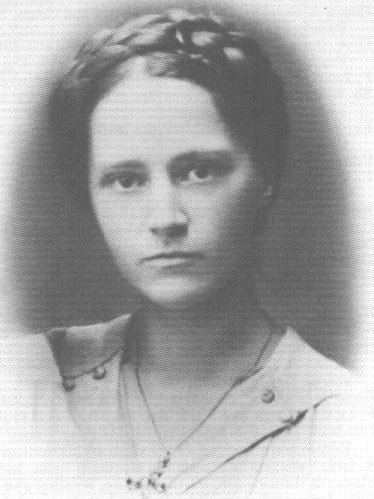
To back up that statement, I’m going to refer to some remarkable experiments done by Lili Kolisko (1889 – 1976), who did investigative scientific work into etheric formative forces, following indications given by Rudolf Steiner. She had shown that it was possible to get an image of the life-force of a plant by making a highly potentised solution of the plant essence through very great dilution, and then adding a solution of certain minerals which represent planetary forces – Silver Nitrate, Iron Sulphate or Gold Chloride. A piece of litmus paper is placed upright in a saucer with the solution and the liquid, rising to a certain height, shows the most striking colours and shapes which reveal the invisible etheric forces working in the plant. The technique is known as capillary dynamolysis.

Lili Kolisko

Lili Kolisko

In 1943, by which time Mrs Kolisko was living in the UK and carrying out daily experiments with capillary dynamolysis, Easter fell shortly after the equinox on 28th March. The church authorities in England had ruled that the Easter Full Moon should be considered to be a month later and that the festival should be celebrated on 25th April. The Astronomer Royal maintained that the earlier date was correct. Mrs Kolisko set out through her experiments to see which of them was right. Every day she repeated her experiments and a certain pattern showed itself again and again, until on Sunday 28th March a resplendent form of shape and colour appeared, quite different from the others.

On the church authorities’ preferred Sunday of 25th April there was no difference from the pattern of any other day.

A similar strengthening of the etheric forces was revealed on the true Whitsuntide, six weeks later. So to anyone looking at the photos of these experiments, there can be no doubt whatever that a remarkable inpouring of spiritual power takes place on the true Easter Sunday and at Whitsun. It indicates that both Easter and Whitsun are cosmic events. If any of you want to read more about this, there is a monograph by Lili Kolisko, called Spirit in Matter, available here.

And I’m tempted to quote one of Steiner’s remarks from his autobiography, that materialism “looks at matter but is unaware that it is really spirit that it is looking at, only it is appearing in material form.”

But I don’t expect that this will become a staple seasonal theme for journalists any time soon.

Leave a comment

Filed under Anthroposophy, Lili Kolisko, Spiritual Science